Hongdae & Sinchon Root Canal Treatment
in Seoul, Korea
Root canal treatment removes infected or inflamed pulp to help save the natural tooth.
The canals are cleaned, disinfected, filled, and sealed to prevent further infection.
A
root canal dentist in Hongdae or Sinchon may recommend treatment for deep decay, cracks, trauma, or pulp infection.
If you are experiencing severe tooth pain, prolonged sensitivity, pain when biting, or swelling, root canal treatment may help remove infection while preserving your natural tooth.
Hongdae and Sinchon are convenient areas for dental care in Seoul, especially for international residents, students, and travelers.
What Is Root Canal Treatment?
Inside each tooth is the dental pulp, which contains nerves and blood vessels. When it becomes severely inflamed or infected, root canal treatment may be needed.
The dentist removes the damaged pulp, cleans and seals the root canals, and restores the tooth with a filling or crown when necessary.
Remove infection → clean the canals → seal the tooth → preserve natural tooth function.
When Might You Need a Root Canal?
Common signs include:
- Severe toothache or pain when chewing
- Lingering sensitivity to hot or cold
- Swollen or tender gums
- Deep tooth decay
- Cracked or damaged teeth
- Dental abscess or infection
A dental examination and X-ray are needed to confirm whether root canal treatment is appropriate.
Common Reasons for Root Canal Treatment
Deep Tooth Decay
Decay that reaches the pulp can cause inflammation or infection.
Cracked or Damaged Teeth
Cracks or trauma may allow bacteria to reach the inside of the tooth.
Dental Infection
Untreated infection may spread around the tooth root and cause an abscess.
Root Canal Treatment Process
Treatment generally includes:
- Examination and X-ray
- Local anesthesia
- Removal of infected pulp
- Cleaning and shaping the canals
- Filling and sealing
- Final restoration
The exact process depends on the condition of the tooth.
Root Canal vs Tooth Extraction
Root canal treatment aims to preserve the natural tooth, while extraction removes it completely.
If the tooth can be restored, preserving it may help maintain normal chewing function. Severely damaged teeth, however, may require extraction.
Do You Need a Crown After Root Canal Treatment?
Not always.
A crown may be recommended when significant tooth structure has been lost.
International patients should confirm whether the quoted price includes:
- Root canal treatment
- Core or filling
- Crown or final restoration
How Many Visits Are Needed?
Many root canal treatments can be completed in one or two appointments, although complex cases may require more visits.
If you are visiting Korea for a limited time, tell the clinic your departure date before treatment begins.
Root Canal Treatment for International Patients
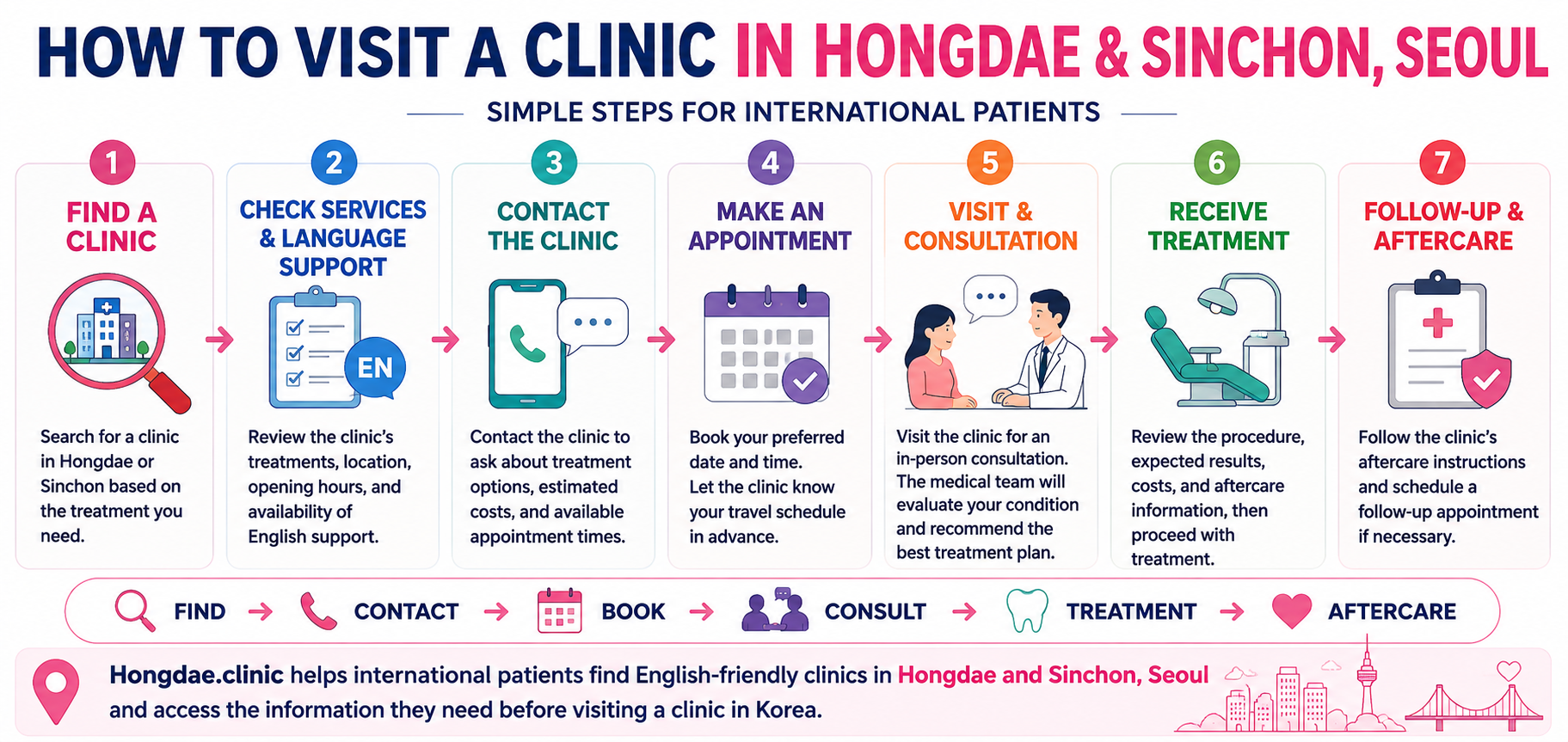
When contacting a dental clinic, consider asking:
- Is English consultation available?
- Can treatment be completed before I leave Korea?
- Does the price include the crown?
- How many appointments are expected?
- Can I receive my X-rays or dental records?
Clear communication about treatment, costs, and follow-up care is important for international patients.
Choosing a Root Canal Dentist in Hongdae or Sinchon
Consider more than price when choosing a clinic:
- Accurate diagnosis
- Appropriate dental imaging
- Proper final restoration
- English communication
- Transparent treatment costs
Hongdae & Sinchon Dental Care
Hongdae is convenient for patients around:
Hongik University · Yeonnam-dong · Hapjeong · Sangsu · Mapo
Sinchon is convenient for patients around:
Yonsei University · Ewha Womans University · Seodaemun · Mapo
Common searches include:
- Hongdae dentist
- English speaking dentist Hongdae
- Root canal Hongdae
- Sinchon dentist
- English speaking dentist Sinchon
- Root canal Sinchon
Frequently Asked Questions
What is root canal treatment?
It removes inflamed or infected pulp, cleans and seals the canals, and helps preserve the natural tooth.
Can foreigners get root canal treatment in Seoul?
Yes. International residents and visitors can receive dental treatment in Korea.
Does root canal treatment hurt?
Treatment is normally performed under local anesthesia. Mild tenderness may occur afterward.
Do I need a crown after a root canal?
It depends on how much healthy tooth structure remains.
How long does root canal treatment take?
Many cases require one or two visits, depending on the tooth and infection.