Hongdae & Sinchon Stem Cell
in Seoul, Korea
Stem cell treatments are regenerative approaches designed to support tissue repair, skin rejuvenation, and overall skin quality.
Treatment methods may vary depending on the source, preparation, and individual treatment goals.
Patients seeking
stem cell treatments in Hongdae or Sinchon should consider treatment suitability, safety, and personalized medical consultation.
If you are considering stem cell or regenerative treatments for skin rejuvenation, hair concerns, or other aesthetic goals, it is important to understand exactly what product or procedure is being offered and whether its safety and effectiveness are supported by evidence.
Hongdae and Sinchon are convenient areas for medical and aesthetic consultations in Seoul, especially for international residents, students, and travelers.
What Is Stem Cell Treatment?
Stem cell treatment is a broad term that may describe therapies involving living stem cells or products marketed as being derived from cells or regenerative materials.
Not every treatment advertised as “stem cell therapy” has been scientifically proven or approved for routine medical or cosmetic use. The ISSCR advises patients to distinguish established treatments from unproven commercial interventions.
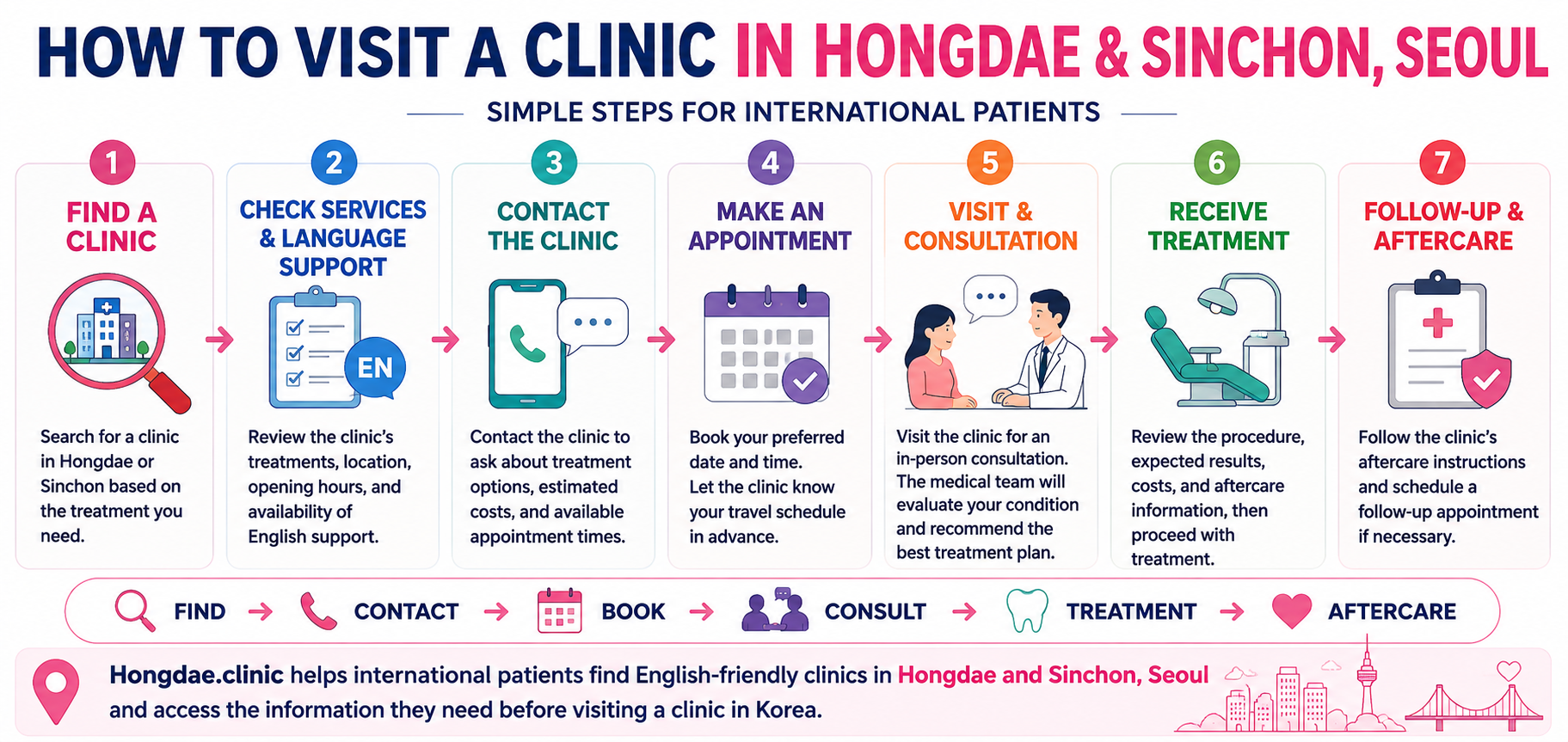
Consultation → treatment identification → medical assessment → procedure → follow-up.
Why Might Someone Consider Stem Cell Treatment?
In aesthetic settings, patients may encounter treatments marketed for concerns such as:
- Skin aging
- Reduced skin quality
- Hair or scalp concerns
- Tissue regeneration
- Post-procedure recovery
- General regenerative care
However, claimed benefits should be evaluated carefully because evidence varies significantly between different cell-based products and procedures.
What Should You Confirm Before Treatment?
What Product Is Being Used?
Ask whether the treatment contains actual living stem cells, processed cells, or another regenerative product.
Is It Approved?
Ask what regulatory authorization the product has for the specific treatment being offered.
Is There Clinical Evidence?
Commercial availability does not necessarily mean that a stem cell treatment has been proven safe and effective.
Stem Cell Treatment Process
Depending on the treatment, a consultation may include:
- Medical history review
- Discussion of treatment goals
- Identification of the exact product
- Explanation of evidence and approval status
- Treatment if medically appropriate
- Follow-up monitoring
Patients should receive clear information about expected benefits, alternatives, limitations, and possible risks before proceeding.
Stem Cells vs Exosomes
Stem cells are living cells, while exosomes are small extracellular particles released by cells and are not themselves stem cells.
The FDA states that there are currently no FDA-approved exosome products, and many regenerative products marketed directly to consumers remain unapproved.
Are Stem Cell Aesthetic Treatments Proven?
Evidence depends heavily on the exact treatment.
The ISSCR states that for the majority of conditions for which commercial “stem cell” or regenerative therapies are marketed, evidence is currently insufficient to justify routine commercial use.
Patients should therefore be cautious about guarantees such as dramatic rejuvenation or permanent regeneration.
What Are the Possible Risks?
Risks vary according to the product and method of administration.
Potential concerns reported with unapproved regenerative products include:
- Infection
- Inflammatory or immune reactions
- Tissue injury
- Abnormal cell or tissue growth
- Contamination during processing
- Failure to provide the expected benefit
Serious adverse events have been reported with some unapproved cell- and tissue-based products.
Stem Cell Treatment for International Patients
When contacting a clinic, consider asking:
- Is English consultation available?
- What exactly is being injected or administered?
- Where does the product come from?
- Is the treatment approved for this purpose?
- What clinical evidence supports it?
- What follow-up is required?
Ask for the exact product name and treatment description rather than relying only on terms such as “stem cell therapy” or “regenerative treatment.”
Choosing a Stem Cell Clinic in Hongdae or Sinchon
Consider:
- Detailed medical consultation
- Clear identification of the product
- Transparent regulatory status
- Evidence-based explanation of benefits
- Clear discussion of potential risks
- English communication
- Transparent treatment costs
Be cautious if a clinic claims that one stem cell treatment can reliably treat many unrelated conditions or guarantees dramatic results.
Hongdae & Sinchon Medical Care
Hongdae is convenient for patients around:
Hongik University · Yeonnam-dong · Hapjeong · Sangsu · Mapo
Sinchon is convenient for patients around:
Yonsei University · Ewha Womans University · Seodaemun · Mapo
Common searches include:
- Stem cell treatment Hongdae
- Regenerative treatment Hongdae
- English speaking clinic Hongdae
- Stem cell treatment Sinchon
- Regenerative medicine Sinchon
- English speaking clinic Sinchon
Frequently Asked Questions
What is stem cell treatment?
It is a broad term for treatments involving stem cells or related cell-based regenerative approaches, and the evidence and regulatory status vary greatly between products.
Can foreigners get stem cell treatment in Seoul?
International patients can contact medical clinics in Seoul to ask about consultation, treatment availability, regulatory status, and follow-up requirements.
Are all stem cell treatments approved?
No. Many commercially promoted regenerative treatments remain unproven or unapproved for the purposes for which they are marketed.
Are stem cells the same as exosomes?
No. Stem cells are living cells, while exosomes are cell-derived particles. The FDA currently has no approved exosome products.
What should I ask before treatment?
Ask about the
exact product, source, regulatory approval, clinical evidence, expected benefits, possible risks, and follow-up plan before deciding.