Hongdae & Sinchon IUD Insertion
in Seoul, Korea
IUD insertion is a contraceptive procedure that places a small device inside the uterus for long-term pregnancy prevention.
Treatment usually includes consultation, pelvic evaluation, device placement, and follow-up based on individual health needs.
Patients seeking
IUD insertion in Hongdae or Sinchon should consider IUD type, possible side effects, and follow-up care.
If you are looking for long-term, reversible birth control, IUD insertion may provide highly effective contraception without requiring a daily pill. Fewer than 1 in 100 IUD users become pregnant during the first year of typical use.
Hongdae and Sinchon are convenient areas for women’s health and contraceptive care in Seoul, especially for international residents, students, and long-term visitors.
What Is an IUD?
An IUD (intrauterine device) is a small contraceptive device placed inside the uterus by a healthcare professional.
IUDs are long-acting and reversible and can be removed when pregnancy is desired or another contraceptive method is preferred.
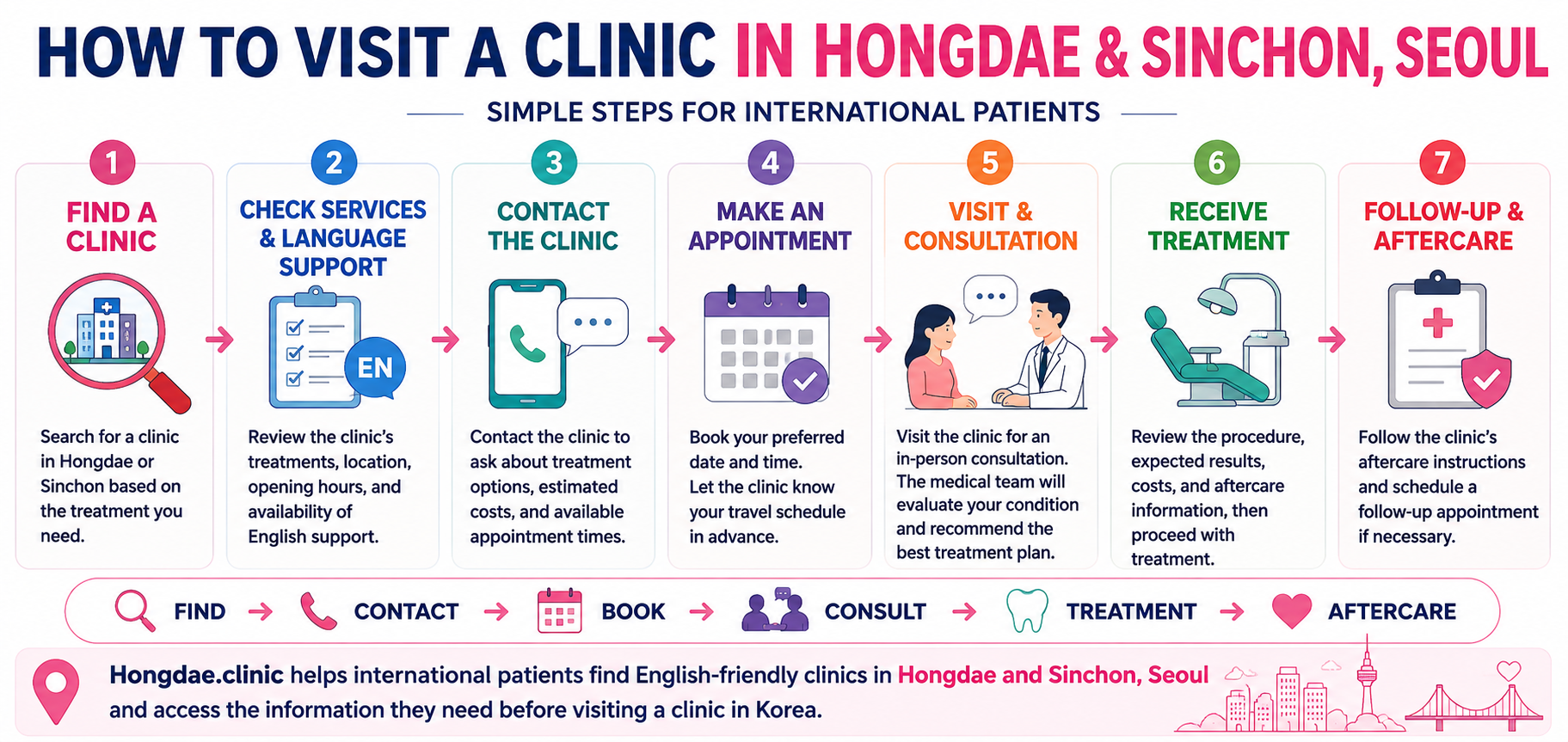
Consultation → examination → IUD insertion → adjustment period → follow-up.
Common Types of IUDs
Hormonal IUD
A hormonal IUD releases levonorgestrel (progestin) inside the uterus. Depending on the product, it may provide contraception for several years.
Copper IUD
A copper IUD is hormone-free and uses copper to interfere with sperm function and prevent fertilization.
Your healthcare provider can recommend an option based on your menstrual pattern, medical history, and preferences.
When Might You Consider an IUD?
IUD insertion may be considered if you:
- Want long-term contraception
- Prefer not to take a daily pill
- Want a reversible birth control method
- Prefer a hormonal or hormone-free option
- Want highly effective contraception
- Are planning contraception for several years
IUDs can be appropriate for both people who have and have not previously given birth.
IUD Insertion Process
A typical appointment may include:
- Medical consultation
- Pregnancy and health history review
- Pelvic examination
- Cervical preparation
- IUD insertion into the uterus
- Aftercare instructions
A pelvic examination and cervical inspection are recommended before placement.
Does IUD Insertion Hurt?
Pain during insertion varies significantly between individuals.
Cramping or discomfort may occur during and shortly after placement. Current CDC guidance recommends discussing pain-management options, and topical or paracervical lidocaine may be useful for some patients.
How Can an IUD Affect Your Period?
The effect depends on the type of IUD.
Hormonal IUDs may cause spotting or irregular bleeding during the first few months, with periods often becoming lighter over time.
Copper IUDs may initially cause heavier or longer periods and increased spotting, particularly during the first 3–6 months.
How Long Does an IUD Last?
The duration depends on the specific device.
Hormonal IUDs may be approved for approximately 3–8 years, while some copper IUDs can provide contraception for up to 10 years, depending on the product and country.
An IUD can also be removed earlier if desired.
Does an IUD Protect Against STDs?
No.
IUDs help prevent pregnancy but do not protect against sexually transmitted infections (STIs). Condoms may still be recommended for STI prevention.
IUD Insertion for International Patients
When contacting a clinic, consider asking:
- Is English consultation available?
- Which IUD types are available?
- Which option is recommended for me?
- What pain-management options are available?
- Is follow-up care included?
- How long can the IUD remain in place?
If you previously used an IUD or other contraception, bring relevant medical or contraceptive history if available.
Choosing an IUD Clinic in Hongdae or Sinchon
Consider:
- Detailed contraceptive consultation
- Gynecologic examination
- Choice of hormonal and non-hormonal options
- Pain-management discussion
- English communication
- Transparent treatment costs
If STI screening is indicated, it can often be performed at the time of IUD placement, although active cervical gonorrhea or chlamydia infection should be treated before insertion.
Hongdae & Sinchon Medical Care
Hongdae is convenient for patients around:
Hongik University · Yeonnam-dong · Hapjeong · Sangsu · Mapo
Sinchon is convenient for patients around:
Yonsei University · Ewha Womans University · Seodaemun · Mapo
Common searches include:
- IUD insertion Hongdae
- Birth control IUD Hongdae
- English speaking women’s clinic Hongdae
- IUD insertion Sinchon
- Hormonal IUD Sinchon
- English speaking women’s clinic Sinchon
Frequently Asked Questions
What is an IUD?
An IUD is a small contraceptive device placed inside the uterus to provide long-term, reversible pregnancy prevention.
Can foreigners get an IUD in Seoul?
International residents and visitors can contact women’s health clinics in Seoul to ask about IUD availability, insertion, and follow-up care.
Is a hormonal IUD the same as a copper IUD?
No. Hormonal IUDs release progestin, while copper IUDs provide hormone-free contraception.
Does IUD insertion hurt?
Cramping or discomfort can occur, and the experience varies between patients. Pain-management options can be discussed before insertion.
Can an IUD be removed early?
Yes. IUDs are reversible and can be removed by a healthcare professional before their maximum duration of use.