Hongdae & Sinchon Stem Cell Facial
in Seoul, Korea
Stem Cell Facial refers to regenerative-focused facial treatments marketed to support skin texture, hydration, and overall skin appearance. Treatment methods and products can vary, so consultation is important to understand what ingredients or regenerative materials are actually used. Patients seeking a Stem Cell Facial in Hongdae or Sinchon should consider treatment suitability, product safety, and personalized skin assessment.
If you are concerned about fine lines, uneven skin texture, dryness, or overall skin aging, a treatment marketed as a Stem Cell Facial may be considered after consultation with a qualified medical professional.
Hongdae and Sinchon are popular areas for aesthetic skin treatments in Seoul, especially for international residents, students, and travelers.
What Is a Stem Cell Facial?
Stem Cell Facial is not one standardized medical procedure. The term may refer to treatments using stem-cell-conditioned media or cell-derived products, sometimes combined with microneedling or laser procedures.
These products are different from treatments involving actual living stem cells, so patients should confirm exactly what is being used.
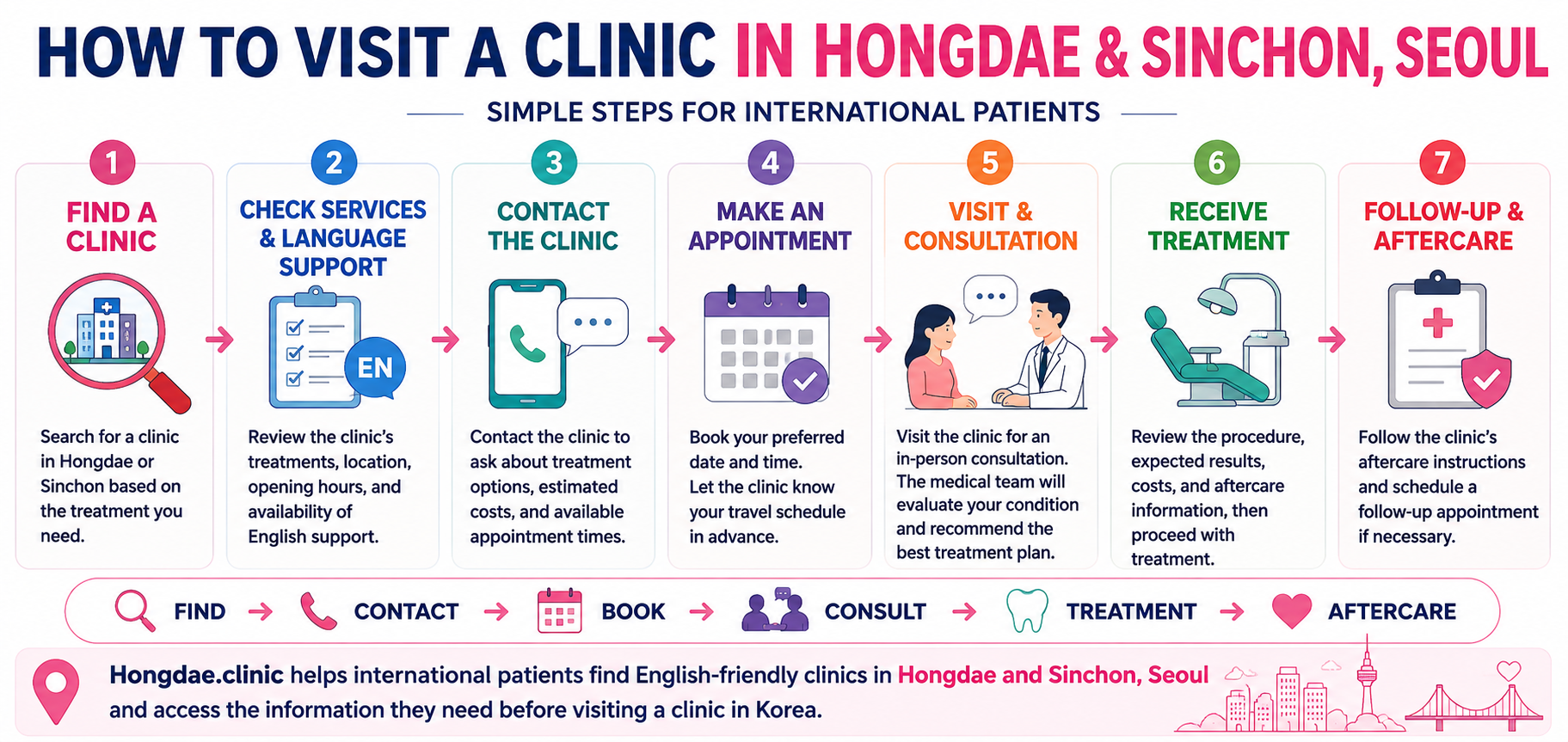
Consultation → skin assessment → product verification → treatment → recovery → follow-up.
When Might You Consider a Stem Cell Facial?
Treatments marketed in this category may target concerns such as:
- Fine lines
- Uneven skin texture
- Dry or dull-looking skin
- Enlarged pores
- Pigmentation
- General skin rejuvenation
Studies of topical stem-cell-conditioned media and exosome-based treatments have reported promising results, but available evidence remains limited and treatment methods are not standardized.
Common Treatment Approaches
Stem Cell Conditioned Media
These products contain substances released by cultured cells rather than the stem cells themselves. Research has evaluated topical conditioned media alongside treatments such as microneedling or laser resurfacing.
Exosome-Based Products
Some regenerative facial treatments use products marketed as containing exosomes or extracellular vesicles.
Exosomes are not stem cells, and clinical evidence for cosmetic skin rejuvenation is still developing.
Stem Cell Facial Treatment Process
A typical appointment may include:
- Medical consultation
- Skin assessment
- Identification of the exact product
- Microneedling, laser, or topical application if appropriate
- Application of the regenerative product
- Aftercare instructions
The procedure varies significantly depending on the product and delivery method.
Stem Cell Facial vs Exosome Facial
Stem cells are living cells, while exosomes are small particles released by cells.
The terms should not be used interchangeably, and patients should ask whether the treatment contains actual cells, conditioned media, or exosome-related material.
When Do Results Appear?
Some studies of topical exosome or conditioned-media treatments have reported improvements in hydration, elasticity, wrinkles, pigmentation, and skin texture.
However, current studies vary considerably in product source, treatment method, and follow-up period, so results should not be guaranteed.
Is There Downtime?
Downtime depends mainly on how the product is delivered.
Temporary reactions after combination treatments may include:
- Redness
- Swelling
- Dryness
- Tenderness
- Temporary sensitivity
Microneedling or laser-based procedures generally involve more visible recovery than simple topical application.
Are Stem Cell Facials FDA-Approved?
Patients should distinguish between cosmetic marketing and regulatory approval.
The FDA states that the only FDA-approved stem-cell products in the United States are certain cord-blood-derived blood-forming stem cells for hematologic disorders, and there are currently no FDA-approved exosome products.
Stem Cell Facial for International Patients
When contacting a clinic, consider asking:
- Is English consultation available?
- What exact product will be used?
- Does it contain cells, conditioned media, or exosomes?
- How will the product be applied?
- What downtime should I expect?
- Is follow-up included?
Ask for the exact product name and regulatory status rather than relying only on terms such as “stem cell facial” or “regenerative facial.”
Choosing a Stem Cell Facial Clinic in Hongdae or Sinchon
Consider:
- Detailed skin consultation
- Qualified medical provider
- Clear identification of the product
- Transparent regulatory information
- Realistic explanation of expected results
- English communication
- Transparent treatment costs
The ISSCR advises patients to distinguish scientifically supported stem-cell therapies from unproven commercially marketed regenerative interventions.
Hongdae & Sinchon Medical Care
Hongdae is convenient for patients around:
Hongik University · Yeonnam-dong · Hapjeong · Sangsu · Mapo
Sinchon is convenient for patients around:
Yonsei University · Ewha Womans University · Seodaemun · Mapo
Common searches include:
- Stem Cell Facial Hongdae
- Regenerative facial Hongdae
- Exosome facial Hongdae
- Stem Cell Facial Sinchon
- Skin rejuvenation Sinchon
- English speaking skin clinic Sinchon
Frequently Asked Questions
What is a Stem Cell Facial?
It is a broad marketing term that may refer to treatments using stem-cell-conditioned media, exosome-related products, or other regenerative materials rather than actual living stem cells.
Can foreigners get a Stem Cell Facial in Seoul?
International patients can contact aesthetic medical clinics about consultation, available products, and treatment methods.
Are stem cells and exosomes the same?
No. Stem cells are living cells, while exosomes are cell-released extracellular particles.
Are exosome facials proven?
Early studies are promising, but human clinical evidence remains limited and treatments are not yet well standardized.
What should I ask before treatment?
Confirm the
exact product, ingredients or source, method of application, regulatory status, expected benefits, risks, and aftercare before proceeding.