Hongdae & Sinchon Abdominal Liposuction
in Seoul, Korea
Abdominal liposuction is a surgical procedure designed to remove localized fat and create a slimmer, more defined abdominal contour. Treatment is customized based on fat distribution, skin elasticity, and individual body proportions.
Patients seeking
abdominal liposuction in Hongdae or Sinchon should consider treatment areas, surgical technique, and recovery needs.
If you are concerned about localized abdominal fat that remains despite relatively stable body weight, Abdominal Liposuction may be considered to create a flatter and more defined midsection. The procedure removes selected subcutaneous fat beneath the abdominal skin, but it does not remove visceral fat around the internal organs or directly correct significant loose skin.
Hongdae and Sinchon are convenient areas for Abdominal Liposuction consultations in Seoul, especially for international residents and travelers seeking body-contouring procedures.
What Is Abdominal Liposuction?
Abdominal Liposuction is a surgical body-contouring procedure that removes localized subcutaneous fat using a thin suction cannula.
Treatment may include:
- Upper abdomen
- Lower abdomen
- Areas around the belly button
- Lateral abdomen
- Waist and flanks when combined
- Selected lower-back transition areas
The upper and lower abdomen have different tissue characteristics, so fat removal should be adjusted according to the anatomical region rather than performed uniformly.
Consultation → abdominal assessment → surgical marking → tumescent infiltration → controlled fat removal → compression → recovery → follow-up.
When Might You Consider Abdominal Liposuction?
Abdominal Liposuction may be considered for:
- Persistent lower-abdominal fat
- Upper-abdominal fullness
- Localized fat despite stable weight
- Reduced waist definition
- Mild abdominal asymmetry
- Good or moderate skin elasticity
- Desire for abdominal contouring without substantial skin removal
- Abdominal fat combined with flank or love-handle fullness
The procedure is intended primarily for body contouring rather than major weight reduction. A randomized trial of small-volume abdominal Liposuction confirmed sustained reduction of subcutaneous abdominal fat while separately measuring visceral fat, illustrating that the procedure specifically targets the subcutaneous compartment.
What Type of Abdominal Fat Does Liposuction Remove?
Abdominal fat can be divided broadly into:
Subcutaneous Fat
This is the fat located beneath the skin and above the abdominal wall.
Liposuction directly removes this fat layer.
Visceral Fat
Visceral fat lies deeper inside the abdomen around the internal organs.
Liposuction does not directly remove visceral fat. Clinical CT studies have shown that abdominal Liposuction reduces subcutaneous fat without producing a corresponding reduction in visceral fat.
A firm, protruding abdomen caused mainly by visceral fat may therefore show limited improvement from Liposuction alone.
Abdominal Liposuction Surgery Process
A typical procedure may include:
- Plastic surgery consultation
- Assessment of abdominal fat and skin elasticity
- Evaluation of abdominal-wall laxity
- Standing surgical markings
- Tumescent fluid infiltration
- Controlled fat removal with a suction cannula
- Compression and postoperative follow-up
Careful treatment around the belly button and transitions between the upper and lower abdomen is important because uneven fat removal can create visible rings, depressions, or contour irregularities.
Abdominal Liposuction vs Tummy Tuck
These procedures address different anatomical concerns.
Abdominal Liposuction
- Removes subcutaneous fat
- Uses relatively small access incisions
- Does not directly remove substantial loose skin
- Does not routinely repair rectus diastasis
Tummy Tuck
- Removes excess abdominal skin
- Can repair rectus diastasis when indicated
- Requires a longer lower-abdominal incision
- May also incorporate Liposuction
Patients with significant loose skin or abdominal-wall laxity may receive limited improvement from Liposuction alone and may require abdominoplasty or another skin-removal procedure.
Abdominal Liposuction vs Mini Tummy Tuck
A Mini Tummy Tuck is generally more appropriate when the main concern includes mild loose skin below the belly button.
Abdominal Liposuction is better suited when:
- Skin quality is relatively good
- Localized fat is the primary concern
- Significant skin excision is unnecessary
The procedures can also be combined when both localized fat and limited lower-abdominal skin laxity are present.
Abdominal Liposuction vs Love Handle Liposuction
These treatments involve neighboring but different areas.
Abdominal Liposuction
- Treats the front of the torso
- Can address upper and lower abdominal fat
- Improves frontal abdominal contour
Love Handle Liposuction
- Treats the lateral waist and flanks
- Improves side and back waist definition
- Can create a smoother waist-to-hip transition
For patients with fat around both the front and sides of the torso, treating the areas together may produce a more continuous contour than addressing only one region.
Can Abdominal Liposuction Make the Stomach Flat?
It may make the abdomen appear flatter when subcutaneous fat is the main source of fullness.
However, abdominal projection can also result from:
- Visceral fat
- Rectus diastasis
- Abdominal-wall laxity
- Loose skin
- Skeletal anatomy
Because Liposuction does not remove visceral fat, a rounded abdomen caused primarily by deeper internal fat may remain prominent after surgery.
Can Abdominal Liposuction Create More Definition?
Yes, in selected patients.
Removing strategically located fat can make the natural abdominal shape more visible. A recent clinical series of 962 patients undergoing deep-layer abdominal Liposuction reported high patient satisfaction and low rates of contour irregularity using a technique designed to preserve a natural abdominal appearance.
The procedure does not create abdominal muscles. Final definition depends on:
- Existing muscle anatomy
- Fat thickness
- Skin quality
- Body composition
- Surgical technique
Can Abdominal Liposuction Tighten Loose Skin?
Some skin contraction can occur after fat removal, particularly when skin elasticity is good.
However, conventional Liposuction should not be considered a substitute for surgical skin removal when significant laxity is present.
Research evaluating tissue retraction after Liposuction has shown that skin response varies according to the treatment area and individual tissue characteristics.
A recent 59-patient study of laser-assisted abdominal Liposuction also found measurable supraumbilical skin retraction, with preoperative skin elasticity influencing the degree of contraction.
Who May Need a Tummy Tuck Instead?
A Tummy Tuck may be more appropriate when there is:
- Significant loose abdominal skin
- Hanging abdominal tissue
- Major postpartum skin stretching
- Significant rectus diastasis
- Abdominal skin folds after major weight loss
- Limited expected skin contraction
Removing more fat from already loose skin does not necessarily create a tighter abdomen and can sometimes make laxity more noticeable.
Can Too Much Abdominal Fat Be Removed?
Yes.
Excessively aggressive Liposuction can contribute to:
- Surface depressions
- Abdominal waviness
- Irregular fat thickness
- Visible transitions
- Asymmetry
- Fibrosis
- Excessively thin soft-tissue coverage
A large analysis of 2,398 superficial Liposuction procedures found contour irregularity to be the most common postoperative complication and emphasized avoiding overly aggressive superficial suction.
The goal should therefore be smooth proportional contouring rather than maximum fat removal.
Contour Irregularities After Abdominal Liposuction
Contour irregularity is one of the most important aesthetic complications.
Possible problems include:
- Depressions
- Residual fat pockets
- Surface waviness
- Unevenness around the belly button
- Left-right asymmetry
- Fibrotic areas
A recent case series of patients requiring correction after previous abdominal Liposuction described deformities caused by combinations of fibrosis, residual fat, and skin laxity. Revision treatment sometimes required Liposuction, fibrosis release, fat grafting, Mini Tummy Tuck, or full abdominoplasty.
Does Abdominal Liposuction Leave Scars?
Yes, although the access incisions are usually small.
They may be positioned around relatively concealed areas such as:
- Lower abdomen
- Belly-button region
- Waist
- Other access points selected by the surgeon
Scar visibility depends on incision placement, skin pigmentation, individual healing, and previous scars.
When Do Results Appear?
Fat is removed during surgery, but early swelling can temporarily hide the final abdominal contour.
Patients may initially experience:
- Swelling
- Bruising
- Temporary firmness
- Fluid retention
- Temporary asymmetry
- Numbness
The contour gradually becomes easier to evaluate as swelling and fibrosis decrease.
What Is Recovery Like?
Temporary postoperative effects may include:
- Abdominal swelling
- Bruising
- Tenderness
- Tightness
- Temporary numbness
- Firm areas beneath the skin
- Temporary contour irregularities
Compression garments may be recommended according to the surgeon's postoperative protocol.
Recovery depends on the amount of fat removed, the number of treated areas, anesthesia, and whether Liposuction is combined with other procedures.
Possible Risks and Complications
Potential complications include:
- Hematoma
- Seroma
- Infection
- Contour irregularity
- Asymmetry
- Temporary or persistent numbness
- Skin-healing problems
- Pigmentation changes
- Fibrosis
- Venous thromboembolism
- Need for revision surgery
In a prospective database of 31,010 cosmetic Liposuction procedures, isolated Liposuction had a 0.7% major-complication rate. Major complications included hematoma, pulmonary events, infection, and confirmed venous thromboembolism.
Blood Clot Risk
Deep vein thrombosis and pulmonary embolism are uncommon but potentially serious postoperative complications.
In the same 31,010-procedure study, confirmed VTE occurred in approximately 0.06% of isolated Liposuction procedures. The risk of major complications and VTE was higher when Liposuction was combined with other cosmetic procedures.
Risk should be assessed according to factors such as:
- BMI
- Medical history
- Previous blood clots
- Procedure duration
- Mobility
- Number of combined procedures
Can Abdominal Fat Return After Liposuction?
The removed subcutaneous fat does not simply regenerate to its original amount, but future body composition can still change.
A randomized clinical trial found that the reduction in subcutaneous abdominal fat persisted six months after small-volume Liposuction. However, participants who did not exercise developed an increase in visceral fat, while this effect was counteracted in the exercise group.
Maintaining stable weight and regular physical activity therefore remains important after surgery.
Is Abdominal Liposuction a Weight-Loss Treatment?
No.
Liposuction removes localized fat but generally represents only a limited proportion of total body fat. Earlier body-composition research showed that even relatively large-volume Liposuction removed only a modest percentage of overall body fat.
The procedure should be viewed as body contouring rather than obesity treatment.
Revision Abdominal Liposuction
Revision may be considered for:
- Residual fat
- Asymmetry
- Depressions
- Fibrosis
- Under-correction
- Excessive fat removal
- Persistent loose skin
Published revision strategies include:
- Additional Liposuction
- Fat grafting
- Fibrosis release
- Mini Tummy Tuck
- Full abdominoplasty
A classic clinical series of 22 patients with 43 post-Liposuction contour deformities found that corrective Liposuction and fat grafting could improve many irregularities, although some patients required more than one procedure.
Can Abdominal Liposuction Look Natural?
Yes.
Natural-looking results generally depend on:
- Even fat reduction
- Maintaining appropriate tissue thickness
- Smooth upper-to-lower abdominal transitions
- Careful treatment around the belly button
- Balanced waist and flank contour
- Avoiding aggressive superficial suction
A recent 962-patient series reported contour irregularity in 1.2% of patients after deep-layer Liposuction and overall satisfaction of 96%, supporting the importance of controlled technique and appropriate tissue-plane selection.
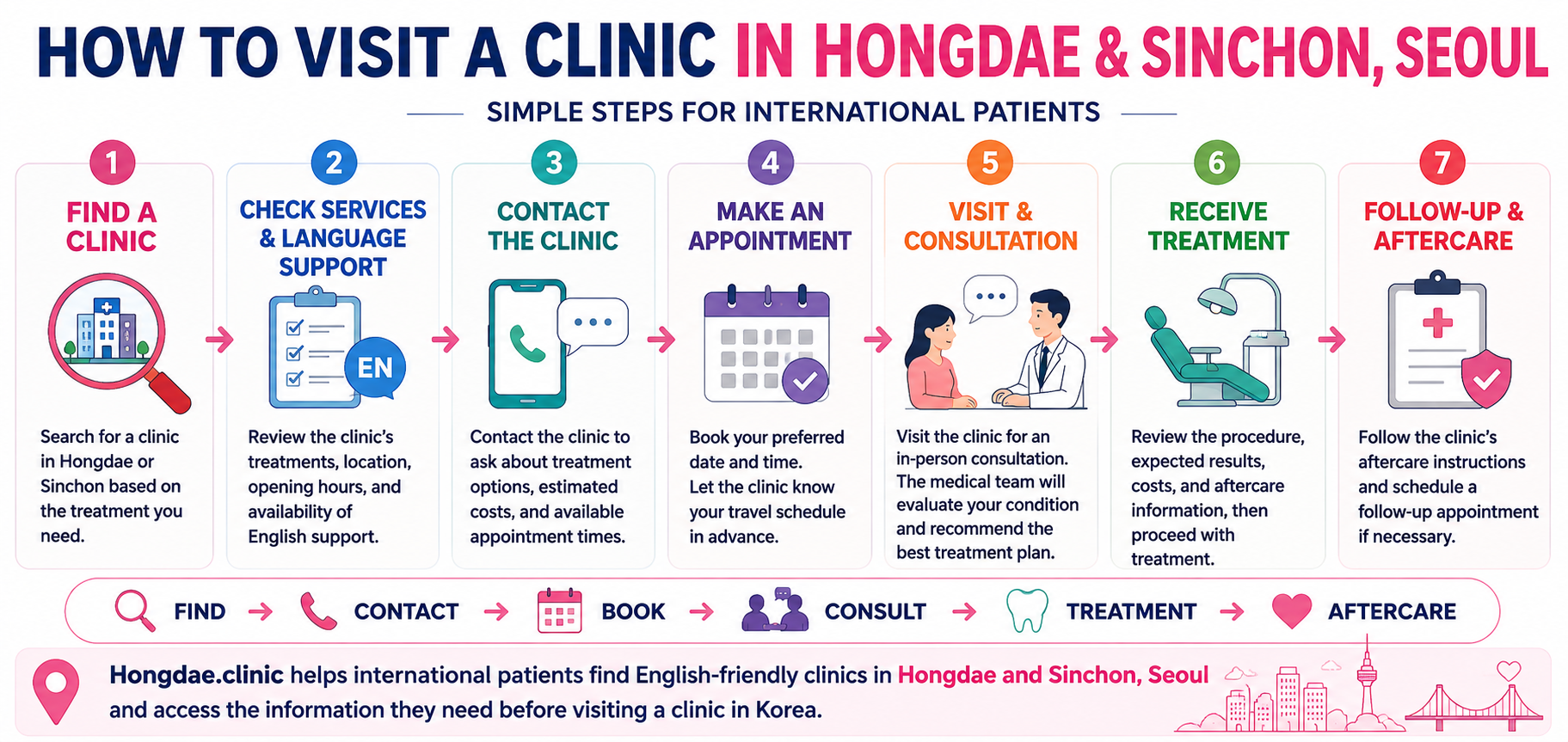
Abdominal Liposuction for International Patients
When contacting a plastic surgery clinic, consider asking:
- Is English consultation available?
- Is my abdominal fullness mainly subcutaneous or visceral fat?
- Is my skin elasticity suitable for Liposuction alone?
- Do I need Abdominal Liposuction or a Tummy Tuck?
- Should my flanks also be treated?
- How much fat removal is appropriate?
- What is the risk of contour irregularity?
- How long should I wear compression?
- How long should I stay in Korea?
- When can I safely take a long-distance flight?
- Is postoperative follow-up included?
If you have previously undergone Abdominal Liposuction, Tummy Tuck, Mini Tummy Tuck, cesarean section, hernia repair, or other abdominal surgery, tell the surgeon because previous scars and fibrosis can affect treatment planning. Revision studies show that post-Liposuction fibrosis and skin laxity may significantly influence secondary surgery.
Choosing an Abdominal Liposuction Clinic in Hongdae or Sinchon
Consider:
- Qualified plastic surgeon
- Experience with abdominal Liposuction
- Detailed assessment of subcutaneous vs visceral fullness
- Evaluation of skin elasticity
- Three-dimensional abdomen and waist planning
- Conservative fat-removal strategy
- Clear discussion of contour irregularity
- Appropriate anesthesia and VTE assessment
- English communication
- Transparent surgery costs
Clinical evidence shows that good abdominal Liposuction outcomes depend on patient selection, correct treatment depth, controlled fat removal, and careful management of skin and surrounding torso proportions.
Hongdae & Sinchon Medical Care
Hongdae is convenient for patients around:
Hongik University · Yeonnam-dong · Hapjeong · Sangsu · Mapo
Sinchon is convenient for patients around:
Yonsei University · Ewha Womans University · Seodaemun · Mapo
Common searches include:
- Abdominal Liposuction Hongdae
- Belly Fat Liposuction Hongdae
- Stomach Liposuction Hongdae
- Abdominal Liposuction Sinchon
- Abdominal Fat Removal Sinchon
- English speaking plastic surgery clinic Sinchon
Frequently Asked Questions
What is Abdominal Liposuction?
Abdominal Liposuction removes selected subcutaneous fat beneath the abdominal skin using a suction cannula to improve body contour. It does not directly remove visceral fat around the internal organs.
Can Abdominal Liposuction make my stomach completely flat?
It may significantly improve fullness caused by subcutaneous fat, but visceral fat, loose skin, skeletal anatomy, or rectus diastasis can continue to create abdominal projection.
Can Abdominal Liposuction tighten loose skin?
Some contraction may occur, especially when skin elasticity is good, but substantial loose skin may require a Mini Tummy Tuck or full Tummy Tuck instead.
Can Abdominal Liposuction cause unevenness?
Yes. Contour irregularity, fibrosis, depressions, and asymmetry are recognized complications, particularly after overly aggressive or uneven fat removal.
Can foreigners get Abdominal Liposuction in Seoul?
Yes. International patients can contact plastic surgery clinics in Seoul regarding abdominal assessment, treatment-area planning, anesthesia, compression, recovery, postoperative monitoring, and English-language support.