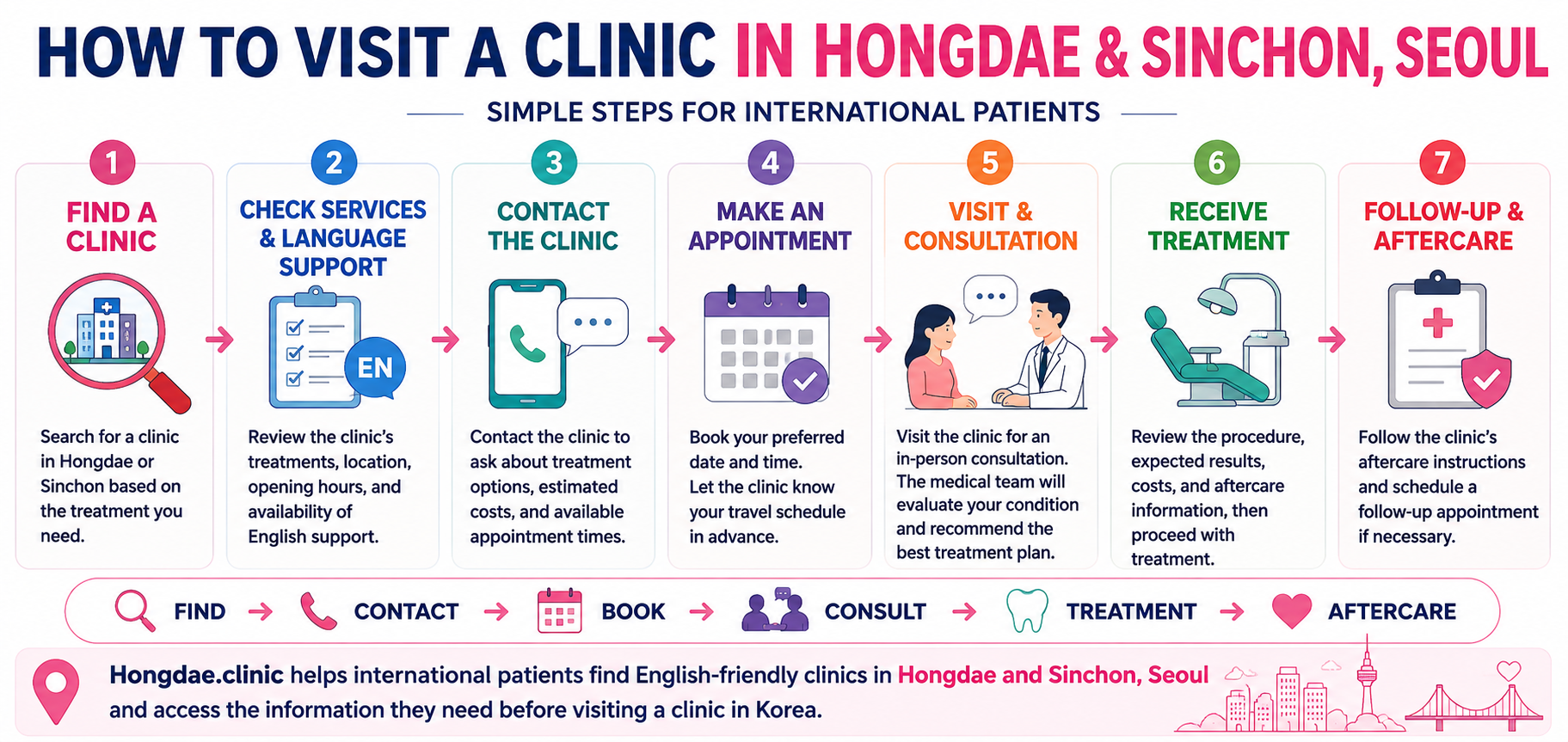
Hongdae & Sinchon Areola Reduction
in Seoul, Korea
Areola reduction is a surgical procedure designed to reduce the size or improve the symmetry of the areola for better breast proportion. Treatment is customized based on individual anatomy, aesthetic goals, and the desired shape and size.
Patients seeking
areola reduction in Hongdae or Sinchon should consider surgical technique, scarring, and recovery needs.
If you are concerned about large, stretched, asymmetric, or disproportionate areolas, areola reduction surgery may be considered to create a smaller and more balanced nipple-areola appearance. Surgical planning should consider areola diameter, breast shape, skin tension, symmetry, and whether additional breast lifting or reduction is needed.
Hongdae and Sinchon are convenient areas for plastic surgery consultations in Seoul, especially for international residents, students, and travelers.
What Is Areola Reduction?
Areola Reduction Surgery is a cosmetic procedure designed to decrease the diameter of the pigmented skin surrounding the nipple.
A common approach uses concentric circular markings around the areola, removes a ring of selected tissue, and closes the area using a periareolar or purse-string technique.
Consultation → breast assessment → areola measurement → surgical design → reduction and reshaping → recovery → follow-up.
When Might You Consider Areola Reduction?
Areola reduction may be considered for:
- Naturally large areolas
- Stretched areolas
- Areola asymmetry
- Changes after pregnancy or breastfeeding
- Enlarged areolas after breast surgery
- Tuberous breast-related areola concerns
- Desire for better nipple-areola proportions
- Areola correction combined with breast lift or reduction
Because tension around the areola can influence postoperative shape and size, treatment should be individualized rather than based on a single standard diameter.
What Can Areola Reduction Change?
Areola Diameter
The primary goal is to reduce the visible diameter of the areola while maintaining a natural circular shape.
Areola Symmetry
Different amounts of tissue may be removed from each side when one areola is larger than the other.
Breast Proportion
Reducing an enlarged areola can improve the visual balance between the nipple-areola complex and the surrounding breast. Long-term studies of breast reduction show that postoperative areolar shape and symmetry can influence overall aesthetic satisfaction.
Areola Reduction Surgery Process
A typical surgical process may include:
- Plastic surgery consultation
- Measurement of both areolas
- Assessment of breast shape and symmetry
- Circular surgical markings
- Removal of selected periareolar tissue
- Purse-string or layered closure
- Postoperative follow-up
Periareolar techniques rely on careful control of skin tension and circular closure because excessive tension can contribute to scar widening or recurrent enlargement.
Common Areola Reduction Techniques
Periareolar Reduction
A ring of tissue is removed around the outer edge of the areola, and the surrounding skin is brought inward to create a smaller diameter.
This approach leaves the scar around the border between the areola and surrounding breast skin.
Purse-String Closure
A circular suture can help maintain the new areola size by distributing tension around the circumference.
Different suture techniques have been developed specifically to reduce the risk of areolar widening and shape distortion after periareolar surgery.
Areola Reduction vs Nipple Reduction
These are different procedures.
Areola reduction decreases the diameter of the pigmented skin surrounding the nipple.
Nipple reduction changes the size, width, or projection of the central projecting nipple.
Some patients may consider both procedures when both the nipple and areola appear disproportionately large, but each should be assessed separately.
Areola Reduction vs Breast Lift
Areola reduction changes areola size, while a breast lift, or mastopexy, primarily reshapes and elevates sagging breast tissue.
Periareolar mastopexy can also reduce areola size, but studies have shown that this technique is better suited to selected patients with relatively limited breast ptosis because excessive tension may contribute to areola spreading, flattened shape, or widened scars.
Patients with significant breast sagging may therefore require a broader breast-lift technique rather than isolated areola reduction.
Can Areola Reduction Correct Asymmetry?
Yes. If one areola is larger or shaped differently, surgery can use customized markings to improve diameter and shape symmetry.
However, perfect symmetry cannot always be guaranteed. Long-term studies following breast surgery have documented that postoperative areola shape, size, scars, and symmetry can continue to vary over time.
Can the Areola Become Larger Again?
Yes. Some degree of recurrent widening or stretching is possible.
Published research on periareolar surgery identifies areola enlargement, scar widening, and shape distortion as recognized concerns, particularly when significant tension is placed on the circular closure.
Factors that may influence long-term appearance include:
- Skin elasticity
- Breast weight
- Pregnancy-related changes
- Weight changes
- Surgical technique
- Tension around the incision
Does Areola Reduction Leave a Scar?
Yes. Most conventional areola reduction techniques create a circular scar around the edge of the areola.
The transition between pigmented areolar skin and surrounding breast skin can help camouflage the incision, but the scar may remain visible in some patients.
Periareolar surgery literature identifies scar enlargement and areolar widening as important postoperative concerns.
When Do Results Appear?
The reduced areola size is visible immediately after surgery, but swelling, tension, and temporary shape irregularities can affect the early appearance.
The incision gradually matures as healing progresses, and the areola may settle into a more natural shape over time.
Because areolar widening can develop gradually, longer-term follow-up is useful when evaluating the final result.
What Is Recovery Like?
Temporary postoperative symptoms may include:
- Swelling
- Tenderness
- Bruising
- Incision redness
- Temporary tightness
- Temporary changes in sensation
- Mild asymmetry during healing
Research on nipple-areola surgery demonstrates that sensory changes can occur after breast procedures, although the degree and duration depend significantly on the surgical technique and tissues involved.
Patients should follow their surgeon's instructions regarding wound care, bras, exercise, and pressure on the breast area.
Possible Risks and Complications
Potential complications may include:
- Bleeding
- Infection
- Visible or widened scarring
- Areola asymmetry
- Irregular areola shape
- Recurrent areola enlargement
- Temporary or persistent sensory changes
- Delayed wound healing
- Pigment changes around the scar
- Need for revision surgery
Research on periareolar procedures highlights scar widening, recurrent areola enlargement, and areolar deformity among the important technique-specific complications.
Can Areola Reduction Affect Sensation?
Changes in sensation are possible whenever surgery involves the nipple-areola complex.
Studies of breast reduction demonstrate that postoperative nipple and areola sensation can temporarily or, in some cases, persistently change, with outcomes influenced by the surgical technique used.
For isolated areola reduction, the exact risk depends on the amount and depth of tissue manipulation, so patients should discuss sensation preservation with their surgeon before treatment.
Can Areola Reduction Affect Breastfeeding?
Isolated superficial areola reduction is different from a full breast reduction, but any surgery around the nipple-areola complex should be planned carefully in patients who want to breastfeed in the future.
Evidence from reduction mammaplasty shows that preservation of glandular tissue, ducts, blood supply, and nipple-areola function can influence postoperative breastfeeding ability.
Patients planning pregnancy or breastfeeding should specifically discuss this priority before surgery.
Can Areola Reduction Be Combined With Other Breast Surgery?
Yes. Areola reduction may be performed alone or incorporated into procedures such as:
- Breast augmentation
- Breast lift
- Breast reduction
- Nipple reduction
- Tuberous breast correction
- Revision breast surgery
Periareolar techniques are commonly incorporated into mastopexy and reduction procedures when areola size and breast shape need to be addressed together.
Can Areola Reduction Look Natural?
Yes. A natural-looking result generally depends on maintaining:
- Round areola shape
- Appropriate diameter
- Balanced left-right symmetry
- Natural nipple position
- Smooth periareolar contour
- Controlled scar tension
Recent periareolar techniques specifically aim to reduce areolar enlargement and distortion by improving how tension is distributed around the circular closure.
The goal should be proportional improvement rather than making the areola as small as possible.
Areola Reduction for International Patients
When contacting a plastic surgery clinic, consider asking:
- Is English consultation available?
- What areola diameter is appropriate for my breast shape?
- Where will the scar be located?
- What technique will be used to prevent widening?
- Can both sides be made more symmetrical?
- Could surgery affect nipple or areola sensation?
- Can it be combined with a breast lift or nipple reduction?
- How long should I stay in Korea?
- Is postoperative follow-up included?
If you have previously undergone breast augmentation, breast reduction, mastopexy, nipple surgery, or previous areola reduction, tell the surgeon because previous scars and tissue changes may affect surgical planning.
Choosing an Areola Reduction Clinic in Hongdae or Sinchon
Consider:
- Qualified plastic surgeon
- Experience with nipple-areola surgery
- Detailed breast and areola measurements
- Customized circular surgical design
- Techniques to control periareolar tension
- Attention to symmetry and scar placement
- Discussion of sensation and future breastfeeding
- English communication
- Transparent surgery costs
Because periareolar surgery can be affected by skin tension, breast shape, and postoperative stretching, careful patient selection and surgical planning are important for maintaining a stable result.
Hongdae & Sinchon Medical Care
Hongdae is convenient for patients around:
Hongik University · Yeonnam-dong · Hapjeong · Sangsu · Mapo
Sinchon is convenient for patients around:
Yonsei University · Ewha Womans University · Seodaemun · Mapo
Common searches include:
- Areola Reduction Hongdae
- Areola Reduction Surgery Hongdae
- Nipple Areola Surgery Hongdae
- Areola Reduction Sinchon
- Areola Correction Surgery Sinchon
- English speaking plastic surgery clinic Sinchon
Frequently Asked Questions
What is Areola Reduction Surgery?
Areola reduction is a cosmetic procedure that decreases the diameter of the pigmented skin surrounding the nipple, commonly using a circular or periareolar surgical technique.
Can foreigners get Areola Reduction in Seoul?
Yes. International patients can contact plastic surgery clinics in Seoul regarding consultation, surgical planning, recovery, and English-language support.
Does Areola Reduction leave a scar?
Yes. Conventional techniques generally leave a scar around the border of the areola. Scar widening or visibility can occur, particularly when significant tension develops around the closure.
Can the areola become larger again after surgery?
Yes. Some postoperative widening can occur because of skin tension, tissue stretching, and healing, which is why several surgical techniques focus on maintaining the reduced diameter.
Can Areola Reduction be combined with a breast lift?
Yes. Areola reduction can be incorporated into
periareolar mastopexy or other breast-lift procedures when both areola size and breast position need correction.