Hongdae & Sinchon Buttock Implants
in Seoul, Korea
Buttock implants are surgical implants designed to enhance buttock volume, shape, and overall body proportions.
Treatment involves implant selection and placement based on individual anatomy, desired projection, and aesthetic goals.
Patients seeking
buttock implants in Hongdae or Sinchon should consider implant size, surgical technique, and recovery needs.
If you are concerned about limited buttock projection, a flat gluteal contour, or insufficient donor fat for substantial fat-transfer augmentation, Buttock Implants may be considered to create additional volume and shape. Also called gluteal implants or implant-based gluteal augmentation, the procedure places silicone implants within a surgically created pocket in the buttock region. Published clinical series show that results can be durable, but wound healing, seroma, infection, implant displacement, asymmetry, and revision are important considerations.
Hongdae and Sinchon are convenient areas for Buttock Implant consultations in Seoul, especially for international residents and travelers considering body-contouring procedures.
What Are Buttock Implants?
Buttock Implants are silicone prostheses surgically placed within the gluteal region to increase buttock volume and modify shape.
Unlike a Brazilian Butt Lift, which transfers the patient's own fat, implants provide augmentation without requiring a large amount of donor fat. Implant shape, size, projection, and placement plane should be selected according to the patient's existing gluteal anatomy and desired proportions. An Asian clinical series of 130 patients using intramuscular implants reported high patient satisfaction when implant selection and positioning were individualized.
Consultation → gluteal assessment → implant selection → pocket creation → implant placement → wound closure → recovery → follow-up.
When Might You Consider Buttock Implants?
Buttock Implants may be considered for:
- Naturally flat buttocks
- Limited gluteal projection
- Desire for more predictable structural volume
- Insufficient donor fat for a larger BBL
- Significant loss of buttock volume
- Left-right gluteal asymmetry
- Desire for a more projected buttock contour
- Previous fat grafting with insufficient augmentation
Candidate selection should consider skin quality, muscle anatomy, body proportions, previous surgery, implant size, and expectations regarding shape rather than volume alone. Clinical studies have also found that larger implant sizes can be associated with greater complication risk in some patient groups.
Where Are Buttock Implants Placed?
Several surgical planes have been described.
Intramuscular Placement
The implant is positioned within the gluteus maximus muscle.
Intramuscular placement can provide substantial soft-tissue coverage and has been widely used for aesthetic gluteal augmentation. In a prospective CT study, implants remained within the intramuscular plane, although measurable gluteal muscle atrophy and some implant rotation occurred during follow-up.
Submuscular Placement
The implant is placed deeper, beneath the gluteus maximus.
A 100-patient series using submuscular placement reported delayed wound healing and implant flipping as the most frequent complications, without implant removal in that cohort.
An additional 80-patient series found wound dehiscence to be the most frequent complication and reported that larger implants were associated with more complications.
Subfascial Placement
The implant is positioned beneath the fascia but above the gluteal muscle.
This plane provides less muscular coverage than intramuscular or submuscular placement. In a 200-patient series comparing subfascial and intramuscular implants, both approaches were used successfully, although seroma was the most common complication overall.
Buttock Implant Surgery Process
A typical surgical process may include:
- Plastic surgery consultation
- Assessment of buttock shape and tissue thickness
- Selection of implant size and shape
- Planning of incision and implant pocket
- Creation of the intramuscular, submuscular, or selected alternative pocket
- Placement and symmetry assessment
- Closure, postoperative monitoring, and follow-up
Surgical technique matters because the gluteal region experiences substantial pressure, movement, and tension during sitting and walking. A recent comparative study of 181 implant patients found fewer complications per implant with a double-incision approach than with a single-incision approach, with delayed wound healing being the most common complication in both groups.
Buttock Implants vs Brazilian Butt Lift
These procedures use fundamentally different methods.
Buttock Implants
- Use silicone implants
- Do not require substantial donor fat
- Provide a predetermined implant volume
- Require creation of a surgical pocket
- Have implant-specific risks such as displacement and capsular contracture
Brazilian Butt Lift
- Uses the patient's own fat
- Requires adequate donor fat
- Includes Liposuction
- Some transferred fat is naturally absorbed
- Does not leave a permanent prosthetic implant
Patients with very little body fat may be more suitable for implant augmentation, while patients with sufficient donor fat may prefer fat grafting depending on anatomy and goals.
Can Buttock Implants Create More Projection?
Yes.
Implants can provide a defined increase in posterior gluteal projection, particularly in patients who lack enough donor fat for substantial fat transfer.
Implant size should not be selected solely according to the largest volume a patient requests. In the 80-patient submuscular series, larger implants were statistically associated with more significant complications.
The goal should therefore be appropriate projection with adequate tissue coverage, rather than maximum implant size.
Round vs Anatomical Buttock Implants
Implants may differ in:
- Shape
- Base dimensions
- Projection
- Firmness
- Surface characteristics
Round implants may create relatively centralized projection, while oval or anatomically shaped designs can be selected according to the intended contour.
In a prospective CT evaluation of intramuscular implants, oval implants initially inserted vertically tended to rotate toward an oblique orientation corresponding to muscle-fiber direction, although satisfactory clinical outcomes were still reported.
Implant selection should therefore consider both aesthetic goals and the mechanics of the chosen pocket.
Can Buttock Implants Look Natural?
Yes, in appropriately selected patients.
Natural-looking results generally depend on:
- Appropriate implant dimensions
- Sufficient tissue coverage
- Correct pocket position
- Balanced left-right placement
- Harmony with the waist and thighs
- Avoiding excessive implant size
An intramuscular augmentation series involving 130 Asian patients reported a mean patient satisfaction score of 4.6 out of 5, demonstrating favorable aesthetic acceptance in that study population.
The implant should enhance the patient's existing anatomy rather than appear as a separate visible structure.
Can the Implant Be Visible or Palpable?
Yes.
Visibility or palpability becomes more likely when:
- Tissue coverage is thin
- The implant is relatively superficial
- The implant is too large
- The pocket is poorly matched to the implant
- Significant weight loss occurs
Deeper intramuscular or submuscular placement is often used partly to provide more soft-tissue coverage. In the 100-patient submuscular series, the authors reported that this plane provided substantial muscular coverage, helping conceal the implant.
Implant Displacement or Flipping
Buttock implants can move from their intended position.
Potential problems include:
- Implant rotation
- Upward or downward displacement
- Left-right asymmetry
- Implant flipping
- Enlargement of the implant pocket
Clinical studies have specifically documented implant displacement and flipping after augmentation. In the 100-patient submuscular series, implant flipping occurred in seven patients, while a 175-patient dual-plane series also reported implant migration among its complications.
Revision surgery may be required if displacement produces persistent asymmetry or discomfort.
Muscle Changes After Buttock Implants
Intramuscular implants interact directly with the gluteus maximus.
A prospective CT study examining 23 women found measurable muscle atrophy after intramuscular implant placement. At 12 months, average residual atrophy was approximately 4.3% on the right and 2.6% on the left in the evaluated muscles. No associated physical limitations were reported in that study.
The clinical significance varies, but patients should understand that implant surgery changes the relationship between the prosthesis and surrounding muscle.
Incision and Scar
Buttock implants commonly use incisions positioned around the intergluteal cleft, where scars may be relatively concealed.
Surgeons may use:
- One central incision
- Two separate incisions
- Modified approaches according to technique
A retrospective comparison involving 181 patients found an overall complication rate per implant of 16.6% with the single-incision technique versus 6.6% with the double-incision technique. Delayed wound healing was the most frequent complication.
Scar appearance and wound healing vary between patients.
Wound Dehiscence
Wound dehiscence means partial separation of the surgical incision.
It is particularly relevant in gluteal implant surgery because the incision is located in a region exposed to movement, moisture, pressure, and sitting.
A prospective study of 20 patients evaluating modified wound-management techniques reduced wound complications from 35% to 5% compared with the authors' earlier experience, suggesting that careful preservation of blood supply and management of tissue tension can substantially affect healing.
Infection After Buttock Implants
Infection is an important implant-related complication.
Symptoms requiring medical assessment may include:
- Increasing redness
- Increasing pain
- Swelling
- Drainage
- Fever
- Wound opening
In a 200-patient series, infection occurred in 6.5% of patients, with an implant-level infection rate of 3.8%.
A separate 175-patient dual-plane series reported infection in 7.43% of patients, although more than half of those infections were superficial and did not require surgical intervention.
Severe infection can require implant removal or replacement.
Seroma After Buttock Implants
A seroma is a collection of fluid around surgically treated tissues.
Seroma rates vary considerably between techniques and clinical series. In the 200-patient study comparing subfascial and intramuscular implants, seroma occurred in 28% of patients and was the most frequent complication.
Seromas may require:
- Observation
- Compression
- Needle aspiration
- Drainage
- Additional surgery in selected cases
Persistent fluid around an implant should be evaluated by the treating surgeon.
Sciatic Nerve-Related Symptoms
The sciatic nerve lies deep within the gluteal region and must be considered during deep pocket dissection.
Temporary sciatic pain has been reported after implant surgery. In the 100-patient submuscular series, six patients experienced sciatic pain lasting more than 10 days, while no complete sciatic palsy occurred in that cohort.
The depth and boundaries of the implant pocket are therefore important for avoiding injury or excessive pressure on deep neurovascular structures.
Capsular Contracture
The body naturally forms scar tissue around an implant.
When the capsule becomes abnormally firm or contracts, it may produce:
- Hardness
- Pain
- Altered shape
- Implant displacement
- Visible contour changes
Capsular contracture has been reported after gluteal implantation, although rates vary considerably between clinical series. In the 200-patient solid-implant study, capsular contracture occurred in 1% of patients.
What Is Recovery Like?
Temporary postoperative effects may include:
- Buttock swelling
- Bruising
- Tightness
- Incision discomfort
- Difficulty sitting comfortably
- Muscle soreness
- Temporary asymmetry
- Changes in sensation
Patients should receive specific instructions regarding sitting, sleeping, walking, wound care, and physical activity because excessive tension or pressure during early healing can affect the incision and implant pocket.
Recovery can differ significantly between intramuscular and submuscular techniques and according to implant size.
Possible Risks and Complications
Potential complications include:
- Wound dehiscence
- Delayed healing
- Seroma
- Hematoma
- Infection
- Implant displacement
- Implant flipping
- Asymmetry
- Capsular contracture
- Implant visibility or palpability
- Sciatic pain or nerve injury
- Unfavorable scarring
- Implant removal
- Need for revision surgery
A multicenter survey covering 2,226 patients documented 848 complications across participating surgeons, illustrating that implant-based gluteal augmentation has a meaningful complication burden and that technique selection and postoperative management are important.
Are Buttock Implants Permanent?
Buttock Implants are intended to provide long-lasting augmentation, but having an implant does not guarantee that no future surgery will be required.
Revision may become necessary because of:
- Implant displacement
- Infection
- Capsular contracture
- Changing aesthetic goals
- Tissue aging
- Implant-related discomfort
- Asymmetry
Patients should therefore view implant augmentation as long-term prosthetic surgery that may require future monitoring or revision, rather than a guaranteed one-time procedure.
Revision Buttock Implant Surgery
Revision may be considered for:
- Implant malposition
- Flipping
- Excessive implant size
- Asymmetry
- Infection
- Recurrent wound problems
- Unnatural contour
- Persistent pain
Secondary surgery can be more complex because the previous implant creates scar tissue and changes normal surgical planes.
A recent series of 108 revision patients described replacement of problematic intramuscular implants into a submuscular pocket; temporary nerve pain and disruption between the old and new surgical pockets were among the reported issues.
Buttock Implants for International Patients
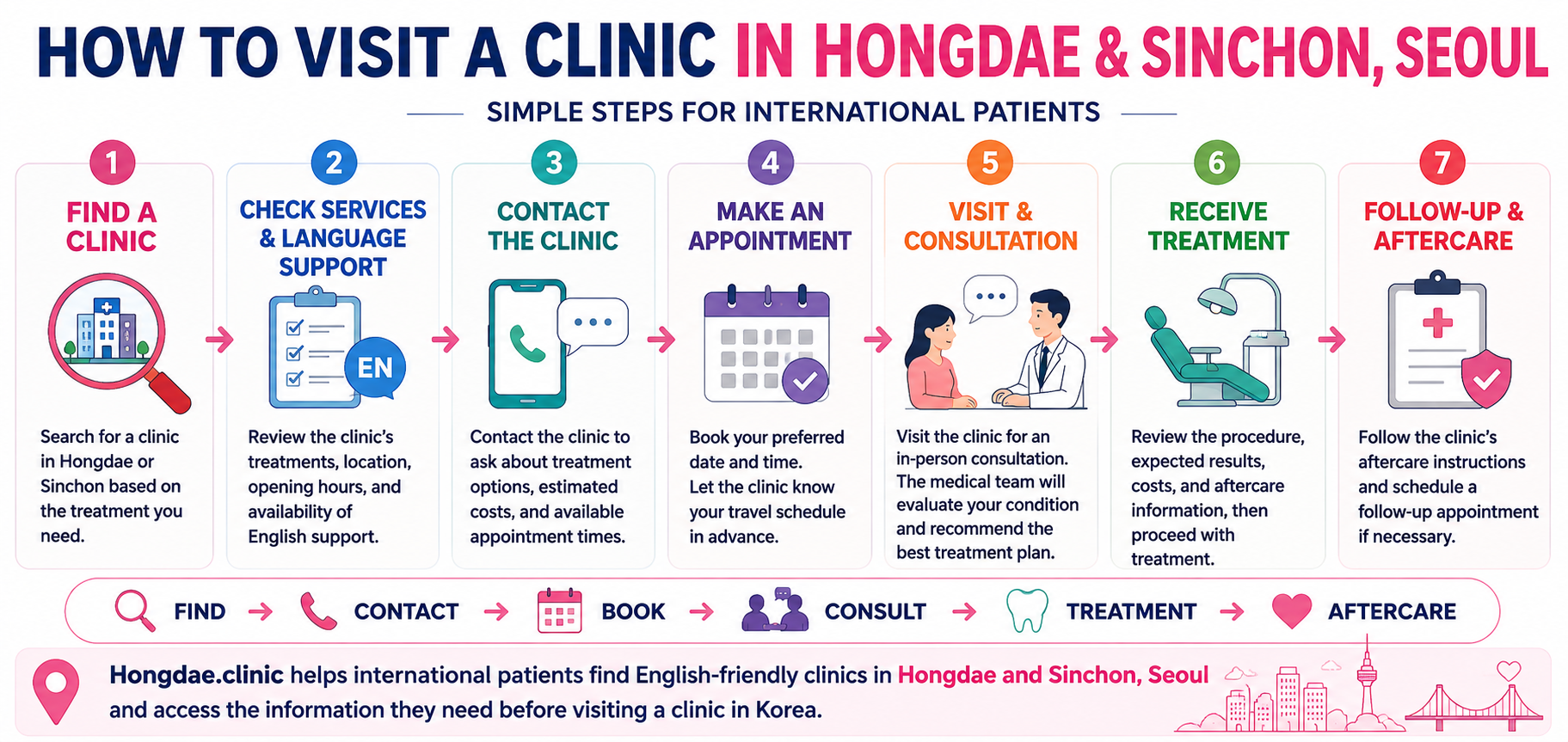
When contacting a plastic surgery clinic, consider asking:
- Is English consultation available?
- Which implant shape and size are recommended?
- Will the implant be intramuscular or submuscular?
- Why is that pocket appropriate for my anatomy?
- Will one or two incisions be used?
- What is the risk of wound dehiscence or infection?
- What happens if the implant moves or flips?
- How should I sit and sleep after surgery?
- How long should I stay in Korea?
- Is postoperative follow-up included?
If you have previously undergone Brazilian Butt Lift, Buttock Implants, gluteal fat grafting, Liposuction, or body-contouring surgery, tell the surgeon because previous treatment may affect tissue thickness and pocket planning.
Choosing a Buttock Implant Clinic in Hongdae or Sinchon
Consider:
- Qualified plastic surgeon
- Experience with gluteal implant surgery
- Detailed gluteal anatomy assessment
- Clear explanation of implant plane
- Conservative implant sizing
- Strong wound-management protocols
- Experience managing implant displacement
- Clear infection and revision protocols
- English communication
- Transparent surgery costs
Published clinical series show meaningful differences in outcomes according to implant size, surgical pocket, incision design, and wound-management technique, so the specific surgical plan is more important than the procedure name alone.
Hongdae & Sinchon Medical Care
Hongdae is convenient for patients around:
Hongik University · Yeonnam-dong · Hapjeong · Sangsu · Mapo
Sinchon is convenient for patients around:
Yonsei University · Ewha Womans University · Seodaemun · Mapo
Common searches include:
- Buttock Implants Hongdae
- Gluteal Implants Hongdae
- Buttock Augmentation Hongdae
- Buttock Implants Sinchon
- Gluteal Augmentation Sinchon
- English speaking plastic surgery clinic Sinchon
Frequently Asked Questions
What are Buttock Implants?
Buttock Implants are silicone implants surgically positioned within the gluteal region to increase projection and reshape the buttocks. Intramuscular, submuscular, and other pocket techniques have been described.
Are Buttock Implants the same as a Brazilian Butt Lift?
No. Buttock Implants use a prosthetic implant, while a Brazilian Butt Lift transfers your own fat from donor areas into the buttocks.
Can Buttock Implants move?
Yes. Displacement, rotation, and implant flipping are recognized complications and may occasionally require revision surgery.
Can Buttock Implants cause infection?
Yes. Infection is a recognized implant complication and can range from superficial wound infection to deeper infection requiring surgical treatment or implant removal.
Can foreigners get Buttock Implants in Seoul?
Yes. International patients can contact plastic surgery clinics in Seoul regarding implant selection, placement technique, recovery, sitting restrictions, postoperative monitoring, and English-language support.