Hongdae & Sinchon Calf Reduction Surgery
in Seoul, Korea
Calf reduction surgery is a procedure designed to reduce calf bulk and create a slimmer, more balanced lower-leg contour.
Treatment may involve muscle or tissue reduction depending on individual calf structure and aesthetic goals.
Patients seeking
calf reduction surgery in Hongdae or Sinchon should consider surgical technique, expected results, and recovery needs.
If you are concerned about large or muscular calves that remain prominent despite weight management, Calf Reduction Surgery may be considered to create a slimmer lower-leg contour. Unlike Calf Liposuction, which removes subcutaneous fat, surgical calf reduction commonly targets an enlarged gastrocnemius muscle through muscle resection or selective treatment of its motor nerves. Clinical studies in Asian patients have reported measurable reductions in calf circumference with both approaches.
Hongdae and Sinchon are convenient areas for Calf Reduction Surgery consultations in Seoul, especially for international residents and travelers seeking lower-leg contouring procedures.
What Is Calf Reduction Surgery?
Calf Reduction Surgery is a group of procedures designed to decrease excessive calf volume, particularly when muscular hypertrophy contributes to a bulky lower-leg appearance.
Depending on the anatomy, treatment may involve:
- Gastrocnemius muscle resection
- Partial or subtotal muscle reduction
- Endoscopic muscle reduction
- Selective gastrocnemius neurectomy
- Radiofrequency neurocoagulation
- Liposuction when substantial subcutaneous fat is also present
Calf reduction is therefore not one standardized operation. The appropriate technique depends on whether calf size comes mainly from muscle, fat, skeletal anatomy, or a combination of these factors.
Consultation → calf composition assessment → technique selection → muscle or nerve treatment → contour evaluation → recovery → follow-up.
When Might You Consider Calf Reduction Surgery?
Calf Reduction Surgery may be considered for:
- Prominent muscular calves
- Gastrocnemius hypertrophy
- Calves that remain large despite stable body weight
- Significant medial or lateral calf bulging
- Lower-leg asymmetry
- Limited improvement expected from Liposuction alone
- Desire for a longer-lasting reduction than temporary muscle-relaxing injections
Research specifically notes that Liposuction may provide little improvement when large calf size is primarily caused by gastrocnemius muscle hypertrophy rather than subcutaneous fat.
What Causes Large Calves?
Large calves can result from several different structures:
- Gastrocnemius muscle hypertrophy
- Soleus muscle development
- Subcutaneous fat
- Skeletal proportions
- Fluid or medical conditions
- A combination of muscle and fat
Correctly identifying the cause is important before surgery. In a 193-patient clinical series, surgeons classified calf shape and severity and added Liposuction when subcutaneous fat thickness was substantial.
Gastrocnemius Muscle Reduction
The gastrocnemius is the prominent superficial calf muscle with medial and lateral heads.
Surgical reduction may remove part or most of selected gastrocnemius tissue. A 20-patient subtotal-resection study reported an average calf-circumference reduction of 4.7 cm, while a 300-case endoscope-assisted series reported an average reduction of 5.2 cm.
The amount of reduction should be individualized because aggressive muscle removal can affect contour, sensation, recovery, and function.
Endoscopic Gastrocnemius Reduction
Endoscopic techniques use a smaller access incision while allowing the surgeon to visualize and remove selected gastrocnemius tissue.
In a clinical series of 300 patients, endoscope-assisted gastrocnemius resection reduced maximal calf circumference from an average of 36.1 cm to 30.9 cm. The reported complication rate was 2%, and no patients complained of impaired gait or sports activity at three to six months.
A smaller 20-patient mini-incision series also demonstrated significant calf reduction after medial gastrocnemius resection without severe complications in that cohort.
Selective Neurectomy for Calf Reduction
Selective neurectomy reduces calf muscle volume by interrupting selected motor nerve branches supplying the gastrocnemius, leading to gradual muscle atrophy.
In a retrospective study of 300 patients, average calf circumference decreased by approximately 3.2 cm. Six patients reported temporary fatigue while walking, four developed temporary scar pigmentation, and two experienced calf asymmetry; motor-function scores remained normal at three months in that series.
Neurectomy can produce significant contour change without physically removing large amounts of muscle, but it still permanently alters neuromuscular anatomy.
Can Calf Reduction Be Combined With Liposuction?
Yes, when both muscular hypertrophy and subcutaneous fat contribute to calf size.
A study of 193 Asian patients combined selective neurectomy with Liposuction in patients with thicker subcutaneous tissue. Average calf-circumference reductions ranged from approximately 3.7 to 4.3 cm depending on severity, with 97.5% patient satisfaction reported during follow-up.
Liposuction alone, however, cannot substantially reduce a calf whose bulk comes primarily from muscle.
Calf Reduction Surgery vs Calf Liposuction
These procedures target different tissues.
Calf Reduction Surgery
- Primarily targets muscle or its motor nerve supply
- Suitable for muscular calf hypertrophy
- Can create substantial circumference reduction
- Has muscle- and nerve-specific risks
Calf Liposuction
- Removes subcutaneous fat
- Does not reduce gastrocnemius muscle size directly
- Is more appropriate for fatty lower-leg fullness
- Requires adequate skin elasticity
The correct treatment depends on whether the visible fullness comes primarily from fat or muscle.
Calf Reduction Surgery vs Calf Botox
Botulinum toxin temporarily reduces gastrocnemius activity and can produce gradual muscle-volume reduction without surgery.
In a randomized multicenter study of 40 Asian women with gastrocnemius hypertrophy, botulinum toxin reduced muscle size without observed gait disturbance, abnormal sensation, edema, hematoma, or infection during the study period.
Calf Botox
- Non-surgical
- Temporary
- Usually produces more modest reduction
- Requires repeat treatment to maintain the effect
Calf Reduction Surgery
- More invasive
- Can produce larger structural changes
- Has longer recovery
- Carries surgical and nerve-related risks
Radiofrequency Calf Reduction
Radiofrequency techniques can reduce muscular calf volume by producing controlled changes within the gastrocnemius or its nerve supply.
A Korean clinical study of 250 patients treated with radiofrequency applied to the gastrocnemius reported an average circumference reduction of approximately 2.5 cm at six months, with no functional disabilities reported in that series.
A newer clinical series has also evaluated selective radiofrequency neurocoagulation involving the gastrocnemius and lateral soleus muscles.
Can Calf Reduction Make the Legs Look Slimmer?
Yes, particularly when prominent calf muscle is responsible for the bulky appearance.
Clinical series have reported average circumference reductions ranging from approximately 2 cm with partial muscle shaving to more than 5 cm with more extensive gastrocnemius resection, although these figures represent different procedures and patient populations and should not be treated as guaranteed results.
The goal should be proportional contouring rather than maximum muscle reduction.
Can Calf Reduction Correct Asymmetry?
Selected asymmetry may be improved by treating the two legs differently according to their muscle and fat distribution.
However, perfect symmetry cannot be guaranteed. In the 300-patient selective-neurectomy series, postoperative asymmetry occurred in two patients.
Asymmetry may also result from skeletal alignment, previous injury, neurologic conditions, or differences in muscle use.
Can Calf Muscles Become Larger Again?
Some recurrence or contour change is possible after nerve-based procedures.
Experimental research investigating selective neurectomy demonstrated nerve regeneration after denervation, with muscle weight decreasing initially and then increasing later in the experimental model. The authors noted that nerve recovery may help explain recurrence seen clinically.
Compensatory enlargement of untreated calf muscles has also been reported after selective neurectomy, potentially changing the aesthetic contour over time.
Can Calf Reduction Affect Walking or Strength?
It can.
The gastrocnemius contributes to ankle plantar flexion, walking, running, jumping, and push-off, so altering the muscle or its nerve supply has functional implications.
Some large clinical series have reported no measurable lasting gait or sports impairment after selected procedures. For example, the 300-case endoscopic muscle-resection series reported no functional complaints at three to six months, while the 300-patient neurectomy study recorded normal motor-function assessments at three months.
However, these results do not eliminate the possibility of functional complications.
Nerve Injury and Numbness
The sural nerve and other sensory structures run near the surgical region.
In an early 15-patient total gastrocnemius-resection series, two patients experienced sural nerve stretching or injury, resulting in numbness around the lateral ankle and foot that persisted for nine and thirteen months.
In a 71-case partial muscle-resection series, numbness of the lateral ankle or foot occurred in 12.7% of patients.
Careful anatomical dissection is therefore important.
Ankle Contracture Risk
A rare but potentially serious complication is ankle plantar-flexion contracture, in which the ankle becomes difficult to dorsiflex normally.
A clinical report described 11 patients requiring corrective surgery after developing significant contracture following aesthetic calf-reduction procedures involving selective neurectomy. MRI demonstrated denervation-related muscle changes and fibrosis in the affected legs.
A separate partial-resection series also documented one plantar-flexion contracture associated with excessively tight prolonged postoperative bandaging.
Possible Risks and Complications
Potential complications may include:
- Hematoma
- Seroma
- Infection
- Calf asymmetry
- Surface irregularity
- Temporary weakness or fatigue
- Persistent sensory changes
- Sural nerve injury
- Abnormal muscle atrophy
- Compensatory muscle enlargement
- Scar pigmentation or hypertrophic scarring
- Ankle contracture
- Under-correction or recurrence
- Need for revision surgery
In the 71-patient partial gastrocnemius-resection series, reported complications included hematoma requiring evacuation, numbness, surface irregularity, prolonged seroma, scar problems, and one ankle contracture.
Does Calf Reduction Leave a Scar?
Yes.
Scar location depends on the technique and may be positioned:
- Along the crease behind the knee
- Near the popliteal region
- Through smaller endoscopic access sites
- At Liposuction access points when fat removal is combined
Endoscopic approaches have been developed partly to avoid more visible mid-calf scars. In the 300-case endoscopic series, six patients required additional treatment for hyperpigmented or hypertrophic scars around the popliteal incision.
What Is Recovery Like?
Temporary postoperative symptoms may include:
- Calf swelling
- Bruising
- Tightness
- Muscle soreness
- Difficulty walking normally at first
- Temporary weakness or fatigue
- Numbness
- Scar redness
Recovery varies significantly between muscle resection, neurectomy, RF treatment, and combined Liposuction.
Patients undergoing more extensive muscle surgery should receive specific instructions about walking, stretching, compression, exercise, and return to sports.
Are Calf Reduction Results Permanent?
Results after actual muscle resection are generally structural and long-lasting because muscle tissue has been physically removed. However, remaining muscles and body composition can still change.
In a partial-resection study with an average follow-up of 36.5 months, two patients developed larger calves later—one associated with weight gain and another with weight training.
Neurectomy-based results may also change if nerve regeneration or compensatory hypertrophy occurs.
Can Calf Reduction Look Natural?
Yes, when treatment is conservative and matched to the patient's anatomy.
Natural-looking results depend on:
- Correctly identifying muscle vs fat
- Maintaining balanced gastrocnemius proportions
- Avoiding excessive muscle removal
- Preserving smooth medial and lateral contours
- Maintaining left-right balance
- Considering the soleus and ankle shape
The goal should be a smoother and proportionate leg rather than creating the smallest possible calf.
Revision Calf Reduction Surgery
Revision treatment may be considered for:
- Residual calf bulk
- Asymmetry
- Surface irregularity
- Compensatory muscle enlargement
- Recurrence after nerve treatment
- Scar concerns
Revision can be more complicated because previous muscle or nerve procedures may alter normal anatomy, scar planes, nerve function, and muscle balance.
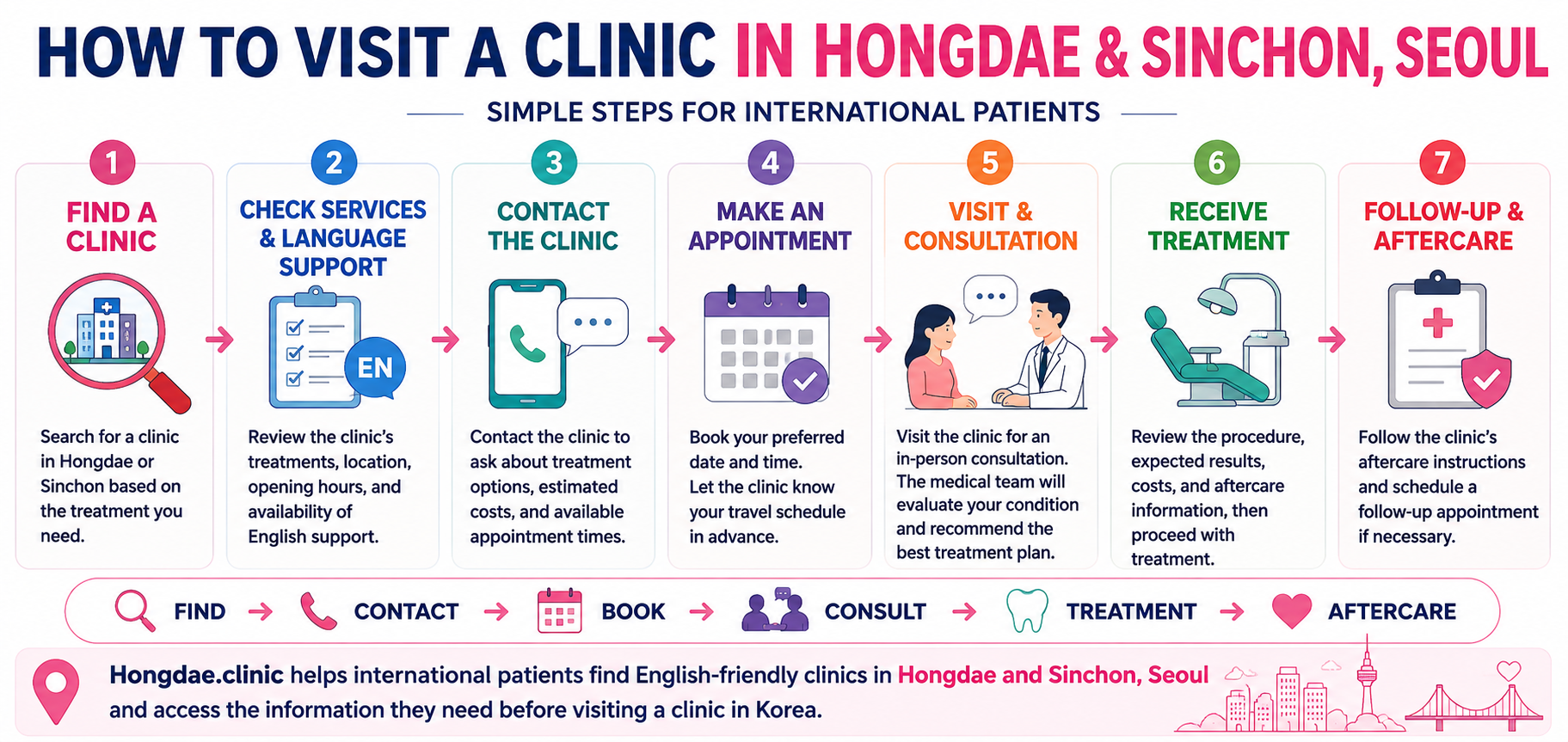
Calf Reduction Surgery for International Patients
When contacting a plastic surgery clinic, consider asking:
- Is English consultation available?
- Is my calf size caused mainly by muscle or fat?
- Will muscle resection, neurectomy, RF, or Liposuction be used?
- Which gastrocnemius heads will be treated?
- How much circumference reduction is realistic?
- What is the risk of weakness or gait changes?
- How will the sural nerve be protected?
- Where will the scars be located?
- When can I walk, exercise, and fly long-distance?
- How long should I stay in Korea?
- Is postoperative follow-up included?
If you have a history of Achilles tendon problems, neurologic disease, previous calf surgery, leg injury, vascular disease, or significant left-right asymmetry, disclose this during consultation because it may change treatment planning.
Choosing a Calf Reduction Surgery Clinic in Hongdae or Sinchon
Consider:
- Qualified plastic surgeon
- Experience with calf muscle anatomy
- Detailed assessment of muscle vs fat
- Clear explanation of the exact reduction technique
- Conservative muscle-removal planning
- Knowledge of sural and motor nerve anatomy
- Assessment of walking and ankle function
- Clear management plan for asymmetry or recurrence
- English communication
- Transparent surgery costs
Clinical research shows substantial differences between muscle resection, selective neurectomy, RF treatment, and Liposuction, so choosing the technique according to individual calf anatomy is particularly important.
Hongdae & Sinchon Medical Care
Hongdae is convenient for patients around:
Hongik University · Yeonnam-dong · Hapjeong · Sangsu · Mapo
Sinchon is convenient for patients around:
Yonsei University · Ewha Womans University · Seodaemun · Mapo
Common searches include:
- Calf Reduction Surgery Hongdae
- Gastrocnemius Reduction Hongdae
- Calf Muscle Reduction Hongdae
- Calf Reduction Surgery Sinchon
- Calf Contouring Sinchon
- English speaking plastic surgery clinic Sinchon
Frequently Asked Questions
What is Calf Reduction Surgery?
Calf Reduction Surgery reduces prominent lower-leg muscle through techniques such as gastrocnemius resection or selective neurectomy. The best method depends on whether calf fullness comes from muscle, fat, or both.
Is Calf Reduction the same as Calf Liposuction?
No. Liposuction removes subcutaneous fat, while surgical calf reduction can directly reduce enlarged gastrocnemius muscle or its nerve supply.
Can Calf Reduction affect walking?
Yes, because the gastrocnemius contributes to lower-leg function. Large clinical series have reported normal postoperative motor function in many patients, but temporary fatigue and rare serious functional complications have also been documented.
Can calf size return after surgery?
Some change is possible. Remaining muscles can enlarge, and nerve regeneration or compensatory hypertrophy may occur after selective neurectomy.
Can foreigners get Calf Reduction Surgery in Seoul?
Yes. International patients can contact plastic surgery clinics in Seoul regarding calf assessment, treatment selection, scar placement, functional risks, recovery, postoperative monitoring, and English-language support.