Hongdae & Sinchon Cat Eye Surgery
in Seoul, Korea
Cat eye surgery is a cosmetic eye procedure designed to create a more lifted and elongated outer eye appearance.
Treatment may involve canthoplasty or related techniques depending on individual eye shape and aesthetic goals.
Patients seeking
cat eye surgery in Hongdae or Sinchon should consider surgical technique, expected results, and recovery needs.
If you are concerned about drooping outer eye corners, a rounded eye shape, or want a more lifted and elongated appearance, Cat Eye Surgery may be considered to modify the lateral eye contour. The term commonly refers to procedures involving lateral canthoplasty or canthopexy, although the exact surgical technique varies between clinics.
Hongdae and Sinchon are convenient areas for plastic surgery consultations in Seoul, especially for international residents, students, and travelers.
What Is Cat Eye Surgery?
Cat Eye Surgery is a cosmetic term used for procedures designed to create a more elevated, elongated, or almond-shaped outer eye appearance.
Treatment usually involves modification or support of the lateral canthus, which is the outer corner where the upper and lower eyelids meet. Depending on the anatomy and desired result, a surgeon may use lateral canthoplasty, canthopexy, or a related technique.
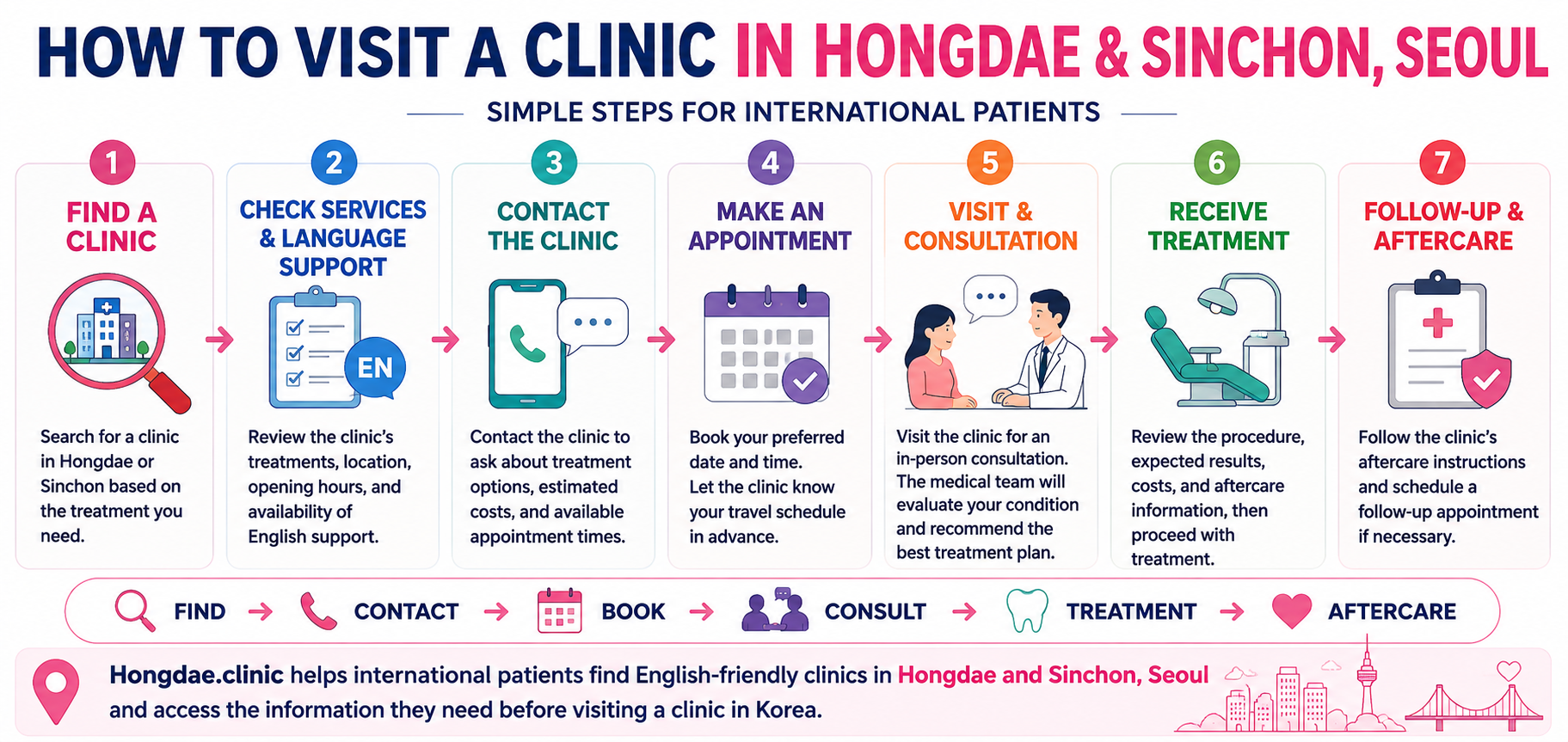
Consultation → eye-shape assessment → surgical planning → lateral eye correction → recovery → follow-up.
When Might You Consider Cat Eye Surgery?
Cat Eye Surgery may be considered for:
- Drooping outer eye corners
- Rounded-looking eye shape
- Desire for a more elongated appearance
- Low lateral canthal position
- Mild lower-eyelid laxity
- Eye-shape asymmetry
- Desire for a more lifted outer corner
- Combination with other eyelid surgery
Because the lateral canthus contributes to both appearance and lower-eyelid stability, the appropriate procedure depends on individual anatomy rather than aesthetic preference alone.
Common Cat Eye Surgery Procedures
Lateral Canthoplasty
Lateral canthoplasty surgically modifies the outer eye corner and can change the length, position, or angle of the lateral eyelid opening.
Canthopexy
Canthopexy supports or repositions the existing lateral canthal structures, generally without the same degree of surgical reconstruction used in canthoplasty.
Combined Eye Surgery
Cat eye procedures may sometimes be combined with upper or lower blepharoplasty, epicanthoplasty, or other eyelid procedures when several eye-shape concerns are present.
Cat Eye Surgery Treatment Process
A typical surgical process may include:
- Plastic surgery consultation
- Detailed eyelid and canthal assessment
- Evaluation of lower-eyelid support
- Customized surgical design
- Canthoplasty or canthopexy
- Careful fixation and wound closure
- Postoperative follow-up
The lateral canthus plays an important role in maintaining normal eyelid contour, so surgical planning should consider both cosmetic appearance and functional eyelid support.
Canthoplasty vs Canthopexy
Canthoplasty involves more extensive surgical modification of the lateral canthal structures.
Canthopexy generally reinforces or repositions the existing structures with less reconstruction. It may be appropriate when only modest support or repositioning is required.
The best technique depends on:
- Existing canthal position
- Lower-eyelid laxity
- Desired amount of lifting
- Eye prominence
- Previous eyelid surgery
- Individual anatomy
Cat Eye Surgery vs Lateral Canthoplasty
The terms are sometimes used interchangeably in cosmetic marketing, but they are not always identical.
Lateral canthoplasty is a specific surgical technique, while Cat Eye Surgery is a broader cosmetic term that may include lateral canthoplasty, canthopexy, or combined procedures intended to change the outer eye shape.
For this reason, patients should confirm exactly which procedure is being recommended.
Can Cat Eye Surgery Make the Eyes Look Longer?
Selected lateral canthoplasty techniques can increase the visible horizontal length of the palpebral fissure, particularly toward the outer corner.
However, the procedure does not physically enlarge the eyeball.
The achievable degree of lengthening depends on the patient's orbital anatomy and should remain within limits that preserve normal contact between the eyelids and the eye surface.
Can Cat Eye Surgery Lift the Outer Corners?
Yes. Selected canthoplasty or canthopexy techniques can reposition the lateral canthus, creating a more elevated outer-eye contour.
However, excessive lifting may create an unnatural appearance or affect lower-eyelid function.
The amount of elevation should therefore be planned according to:
- Natural canthal tilt
- Eye shape
- Lower-eyelid tension
- Facial proportions
- Desired result
Cat Eye Surgery for Asian Eyes
Asian aesthetic eyelid surgery may involve changes in several directions, including the medial, lateral, upper, and lower eye regions.
For patients seeking a more elongated or lifted outer eye appearance, lateral canthal procedures may be considered.
However, Asian eyelid anatomy varies significantly between individuals, so treatment should be based on:
- Existing lateral canthal angle
- Horizontal eye length
- Lower-eyelid support
- Eye prominence
- Eyelid crease
- Personal aesthetic preference
Does Cat Eye Surgery Leave a Scar?
Some degree of scarring is possible because surgical incisions may be placed around the outer eye corner or within nearby eyelid structures.
Cosmetic lateral canthoplasty techniques are designed to preserve a natural canthal angle and reduce noticeable scar formation, but scar visibility varies depending on surgical technique and individual healing.
When Do Results Appear?
The change in outer eye shape is visible after surgery, but swelling, bruising, and temporary asymmetry can affect the early appearance.
The eye contour usually becomes more natural as swelling decreases and tissues stabilize.
Because lateral canthal surgery changes structures that help support the lower eyelid, final results should be evaluated after adequate healing.
What Is Recovery Like?
Temporary postoperative symptoms may include:
- Swelling
- Bruising
- Redness
- Tenderness
- Temporary tightness
- Watery or irritated eyes
- Mild asymmetry
- Conjunctival swelling
Temporary chemosis, or swelling of the conjunctiva, has been reported after lateral canthal procedures.
Possible Risks and Complications
Potential complications may include:
- Visible scarring
- Eye-shape asymmetry
- Under-correction
- Over-correction
- Recurrence
- Rounded or distorted outer corner
- Lower-eyelid malposition
- Scleral show
- Ectropion
- Need for revision surgery
Maintaining appropriate lateral canthal position and eyelid support is important because poor positioning can affect both appearance and ocular-surface protection.
Can Cat Eye Surgery Recur?
Some loss of the initial correction can occur as tissues heal and contract.
Recurrence or lateral canthal deformity has been reported after canthal surgery, and some patients may eventually require additional correction.
For this reason, the goal should be stable and anatomically appropriate repositioning rather than excessive initial lifting.
Can Cat Eye Surgery Look Natural?
Yes. Natural-looking results depend on appropriate canthal position, conservative lifting, stable lower-eyelid support, and harmony with the overall facial shape.
Current approaches to lateral canthal surgery emphasize maintaining a balanced canthal angle because excessive alteration can contribute to scleral show, ectropion, or an unnatural contour.
Cat Eye Surgery for International Patients
When contacting a plastic surgery clinic, consider asking:
- Is English consultation available?
- Do I need canthoplasty or canthopexy?
- How much lifting is realistically possible?
- Will the eye also be horizontally lengthened?
- Is my lower eyelid sufficiently supported?
- Will another eyelid procedure be combined?
- How long should I stay in Korea?
- Is postoperative follow-up included?
Because “Cat Eye Surgery” is not one standardized procedure, confirm the exact surgical technique before comparing treatment plans or prices.
Choosing a Cat Eye Surgery Clinic in Hongdae or Sinchon
Consider:
- Qualified plastic surgeon
- Detailed lateral canthal assessment
- Experience with canthoplasty and canthopexy
- Evaluation of lower-eyelid support
- Customized surgical planning
- Conservative canthal repositioning
- Clear discussion of recurrence and complications
- English communication
- Transparent surgery costs
Proper evaluation of lateral canthal anatomy is important because surgical technique should be matched to the patient's specific eyelid position, laxity, and desired correction.
Hongdae & Sinchon Medical Care
Hongdae is convenient for patients around:
Hongik University · Yeonnam-dong · Hapjeong · Sangsu · Mapo
Sinchon is convenient for patients around:
Yonsei University · Ewha Womans University · Seodaemun · Mapo
Common searches include:
- Cat Eye Surgery Hongdae
- Canthoplasty Hongdae
- Outer Eye Lift Hongdae
- Cat Eye Surgery Sinchon
- Canthopexy Sinchon
- English speaking plastic surgery clinic Sinchon
Frequently Asked Questions
What is Cat Eye Surgery?
Cat Eye Surgery is a cosmetic term for procedures designed to create a more lifted or elongated outer eye shape, commonly using lateral canthoplasty or canthopexy.
Can foreigners get Cat Eye Surgery in Seoul?
Yes. International patients can contact plastic surgery clinics in Seoul regarding consultation, surgical planning, recovery, and English-language support.
Is Cat Eye Surgery the same as lateral canthoplasty?
Not necessarily. Lateral canthoplasty is a specific procedure, while Cat Eye Surgery may involve canthoplasty, canthopexy, or a combination of eyelid procedures.
Can Cat Eye Surgery make the eyes look longer?
Yes, selected lateral canthoplasty techniques can increase the visible horizontal length of the outer eye opening.
Can Cat Eye Surgery require revision?
Yes. Recurrence, asymmetry, lower-eyelid malposition, or lateral canthal deformity can occasionally require additional correction.