Hongdae & Sinchon Cheek Reduction
in Seoul, Korea
Cheek reduction is a surgical procedure designed to reduce cheek fullness and create a slimmer, more defined facial contour.
Treatment may involve buccal fat removal or other contouring techniques depending on individual anatomy and aesthetic goals.
Patients seeking
cheek reduction in Hongdae or Sinchon should consider facial balance, surgical method, and recovery needs.
If you are concerned about prominent cheekbones, a wide-looking midface, or excessive cheek fullness, Cheek Reduction may be considered to create a slimmer and more balanced facial contour. The term can describe different procedures, but in facial contouring surgery it commonly refers to zygomatic or malar reduction, while soft-tissue cheek fullness may instead require procedures such as buccal fat reduction.
Hongdae and Sinchon are convenient areas for facial contouring consultations in Seoul, especially for international residents, students, and travelers.
What Is Cheek Reduction?
Cheek Reduction Surgery is a facial contouring procedure designed to decrease excessive width or prominence of the cheek area.
When prominent cheekbones are caused by the facial skeleton, treatment may involve reduction malarplasty or zygoma reduction, in which the zygomatic body and arch are reshaped or repositioned.
Consultation → facial assessment → 3D skeletal evaluation → surgical planning → cheekbone reduction → fixation → recovery → follow-up.
When Might You Consider Cheek Reduction?
Cheek Reduction may be considered for:
- Prominent cheekbones
- Wide-looking midface
- Strong lateral zygomatic projection
- Excessive front cheekbone prominence
- Facial-width asymmetry
- Desire for a softer facial contour
- Cheek prominence that does not change with weight loss
- Facial contouring combined with jaw or chin surgery
The procedure should be selected according to whether the concern is caused by bone, fat, muscle, or a combination, because these require different treatments.
Cheekbone Reduction – Zygoma Reduction
Zygomatic Body Reduction
The zygomatic body contributes to the front and oblique projection of the cheek.
Depending on the anatomy, an osteotomy can reduce or reposition the prominent portion of the zygoma to create a smoother midface contour.
Zygomatic Arch Reduction
The zygomatic arch contributes significantly to lateral facial width.
Selected techniques reposition the arch inward to reduce the apparent width of the midface.
Combined Zygoma Reduction
Many reduction malarplasty techniques address both the zygomatic body and arch to create a more balanced reduction rather than treating only one area.
Cheek Reduction Surgery Process
A typical surgical process may include:
- Plastic surgery or maxillofacial consultation
- Facial photography and skeletal assessment
- Evaluation of cheekbone width and asymmetry
- Customized osteotomy planning
- Zygomatic body and/or arch repositioning
- Bone fixation when required
- Postoperative follow-up
Different osteotomy techniques have been developed to improve bone stability, facial contour, and complication prevention, so the exact procedure varies according to facial anatomy and surgeon technique.
Cheek Reduction vs Buccal Fat Removal
These procedures treat different causes of facial width.
Cheekbone reduction modifies the facial skeleton, particularly the zygomatic body and arch.
Buccal fat reduction removes part of the buccal fat pad to decrease soft-tissue fullness in the lower cheek.
A patient with prominent cheekbones may therefore gain little benefit from buccal fat removal alone, while someone whose fullness comes mainly from soft tissue may not need bone surgery.
Cheek Reduction vs Jaw Reduction
Cheek Reduction primarily affects midface width, while jaw reduction targets the lower facial skeleton, particularly the mandibular angle.
These procedures may be performed separately or together in selected patients seeking overall facial contouring. Reduction malarplasty and mandibular angle reduction are both established skeletal contouring operations in East Asian facial surgery.
The appropriate procedure depends on whether facial width is concentrated in the cheekbones, jaw angles, or both.
Can Cheek Reduction Make the Face Look Smaller?
Yes, in appropriately selected patients with prominent zygomas.
Moving the zygomatic body or arch inward can reduce bizygomatic width and create a narrower midface appearance.
However, the degree of visible reduction depends on:
- Original cheekbone width
- Zygomatic projection
- Facial soft-tissue thickness
- Jaw width
- Overall facial proportions
The goal should be balanced facial contour rather than maximum bone reduction.
Can Cheek Reduction Improve Facial Asymmetry?
Selected skeletal asymmetry may be improved by planning different movements for each side.
The surgeon should evaluate:
- Zygomatic body projection
- Zygomatic arch width
- Midface height
- Jaw asymmetry
- Soft-tissue differences
- Overall facial skeletal balance
Perfect symmetry cannot always be guaranteed because bone structure and overlying soft tissues may remain naturally different between sides.
Intraoral vs External Approaches
Many cheekbone reduction procedures use an intraoral incision to access the anterior zygomatic body.
Some techniques also use a small incision near the sideburn to address or control the posterior zygomatic arch.
The surgical approach depends on:
- Osteotomy design
- Degree of repositioning
- Fixation method
- Zygomatic anatomy
- Surgeon technique
Patients should ask where the incisions will be placed and whether any external scar is expected.
Why Is Bone Fixation Important?
After the zygomatic complex is repositioned, stable fixation may be important to prevent unwanted movement during healing.
Postoperative displacement has been associated with complications such as nonunion, malunion, asymmetry, and cheek drooping.
Different osteotomy and fixation techniques have therefore been developed to improve bone contact and postoperative stability.
Can Cheek Reduction Cause Cheek Drooping?
Yes.
Cheek soft-tissue drooping is a recognized complication after reduction malarplasty. A meta-analysis of intraoral reduction malarplasty studies reported drooping among the documented postoperative complications.
The risk may be influenced by:
- Degree of bone reduction
- Soft-tissue dissection
- Bone stability
- Patient age
- Skin elasticity
- Surgical technique
Conservative repositioning and stable fixation are important considerations.
When Do Results Appear?
The skeletal reduction occurs during surgery, but facial swelling can initially make the cheeks appear wider or uneven.
The contour becomes more visible as swelling decreases and the soft tissues adapt to the new bone position.
Because facial bone and surrounding tissues require time to heal, the final contour should not be judged during the early postoperative period.
What Is Recovery Like?
Temporary postoperative symptoms may include:
- Facial swelling
- Bruising
- Cheek tightness
- Temporary numbness
- Difficulty opening the mouth fully
- Temporary asymmetry
- Intraoral discomfort
A meta-analysis of reduction malarplasty reported temporary sensory changes and limited mouth opening among recognized postoperative complications.
Recovery varies according to the amount of osteotomy, fixation technique, and additional facial contouring procedures.
Possible Risks and Complications
Potential complications may include:
- Bleeding
- Infection
- Temporary sensory changes
- Facial asymmetry
- Cheek drooping
- Limited mouth opening
- Bone nonunion
- Bone malunion
- Facial nerve injury
- Unsatisfactory contour
- Need for revision surgery
In a meta-analysis covering thousands of reduction malarplasty cases, reported complications included temporary sensory weakness, cheek drooping, nonunion, asymmetry, restricted mouth opening, bleeding, and facial nerve injury.
A broader systematic review has similarly emphasized that no reduction malarplasty technique is completely free of complications.
Buccal Fat Reduction for Cheek Fullness
When facial fullness is caused mainly by buccal fat rather than prominent bone, buccal fat reduction may be considered.
The procedure is generally performed through an intraoral approach and removes a selected portion of the buccal fat pad.
However, long-term evidence remains limited. A recent systematic review found generally favorable short-term aesthetic results but noted insufficient long-term outcome data.
Risks of Buccal Fat Removal
Buccal fat removal should not be considered a simple substitute for cheekbone surgery.
The buccal fat pad lies near important structures including the facial nerve branches, parotid duct, and blood vessels.
Potential complications include:
- Swelling
- Pain
- Trismus
- Asymmetry
- Hematoma
- Infection
- Facial nerve injury
- Parotid duct injury
- Excessive cheek hollowing
A systematic review and meta-analysis found considerable variability in reported complications and recommended careful patient selection.
Can Cheek Reduction Look Natural?
Yes.
Natural-looking facial contouring depends on balancing:
- Cheekbone width
- Front cheek projection
- Jawline width
- Chin shape
- Facial soft tissues
- Overall facial proportions
Preoperative evaluation should determine how much of the apparent facial width comes from bone versus soft tissue.
The goal should be proportional refinement rather than removing or repositioning as much bone as technically possible.
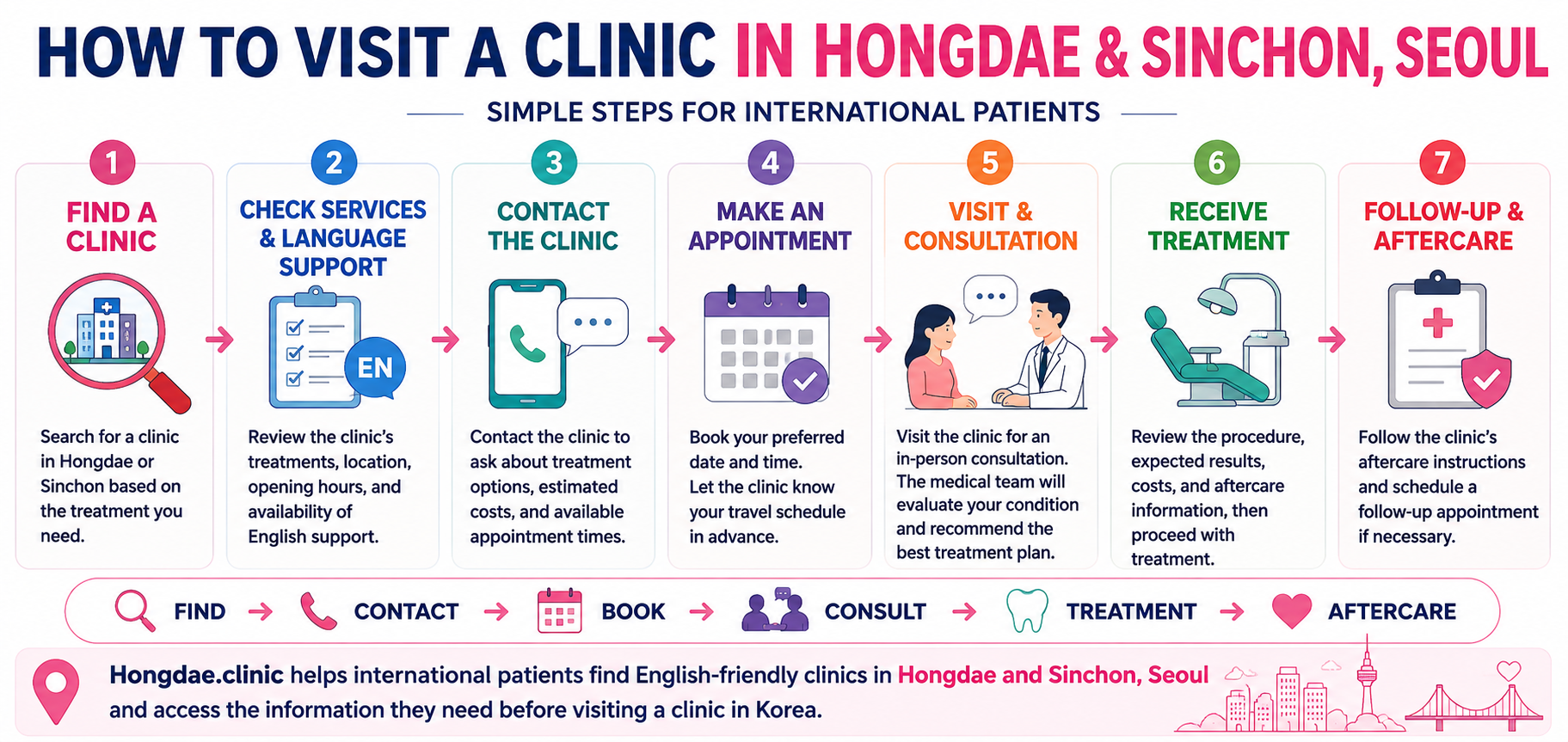
Cheek Reduction for International Patients
When contacting a plastic surgery clinic, consider asking:
- Is English consultation available?
- Is my cheek width caused mainly by bone or soft tissue?
- Do I need zygoma reduction or buccal fat reduction?
- Which osteotomy technique is recommended?
- How will the cheekbones be fixed?
- What is the risk of cheek drooping?
- Where will the incisions be located?
- What downtime should I expect?
- How long should I stay in Korea?
- Is postoperative follow-up included?
If you have previously undergone facial contouring, jaw surgery, cheekbone reduction, facelift, or facial fat procedures, tell the surgeon because previous procedures can affect surgical planning.
Choosing a Cheek Reduction Clinic in Hongdae or Sinchon
Consider:
- Qualified plastic or maxillofacial surgeon
- Experience with zygoma reduction
- Detailed 3D skeletal assessment
- Customized osteotomy planning
- Stable bone-fixation technique
- Evaluation of soft-tissue support
- Clear discussion of cheek-drooping risk
- Ability to distinguish bone from soft-tissue fullness
- English communication
- Transparent surgery costs
Reduction malarplasty requires careful preoperative analysis because the zygomatic body, arch, surrounding soft tissues, and overall facial proportions must be considered together.
Hongdae & Sinchon Medical Care
Hongdae is convenient for patients around:
Hongik University · Yeonnam-dong · Hapjeong · Sangsu · Mapo
Sinchon is convenient for patients around:
Yonsei University · Ewha Womans University · Seodaemun · Mapo
Common searches include:
- Cheek Reduction Hongdae
- Cheekbone Reduction Hongdae
- Zygoma Reduction Hongdae
- Cheek Reduction Sinchon
- Malar Reduction Sinchon
- English speaking facial contouring clinic Sinchon
Frequently Asked Questions
What is Cheek Reduction Surgery?
Cheek Reduction commonly refers to zygomatic or malar reduction surgery, which reshapes or repositions prominent cheekbones to reduce midface width.
Is Cheek Reduction the same as Buccal Fat Removal?
No. Cheekbone reduction modifies bone, while buccal fat removal reduces selected soft-tissue volume inside the cheek.
Can Cheek Reduction make my face look narrower?
Yes. Repositioning a prominent zygomatic body or arch can reduce visible midface width in appropriately selected patients.
Can Cheek Reduction cause sagging?
Yes. Cheek drooping is a recognized complication of reduction malarplasty, although risk varies according to anatomy and surgical technique.
Can foreigners get Cheek Reduction in Seoul?
Yes. International patients can contact plastic surgery or maxillofacial clinics in Seoul regarding facial assessment, surgical planning, recovery, postoperative monitoring, and English-language support.