Hongdae & Sinchon Chin Reduction Surgery
in Seoul, Korea
Chin reduction surgery is a procedure designed to reduce chin size or projection and create a more balanced facial profile.
Treatment may involve reshaping or removing part of the chin bone based on individual anatomy and aesthetic goals.
Patients seeking
chin reduction surgery in Hongdae or Sinchon should consider surgical technique, facial proportions, and recovery needs.
If you are concerned about a long, wide, square, or overly projecting chin, Chin Reduction Surgery may be considered to create more balanced lower-face proportions. Depending on the anatomy, surgery can reduce vertical chin height, horizontal projection, transverse width, or a combination of these dimensions through customized osseous genioplasty techniques.
Hongdae and Sinchon are convenient areas for chin reduction consultations in Seoul, especially for international residents, students, and travelers seeking facial contouring procedures.
What Is Chin Reduction Surgery?
Chin Reduction Surgery is a form of osseous genioplasty that reshapes or repositions the bony chin to reduce excessive size or prominence.
Depending on the facial structure, the procedure may involve vertical reduction, setback, narrowing genioplasty, or three-dimensional reshaping. Unlike simple surface contouring, genioplasty can modify the position and dimensions of the chin itself.
Consultation → facial and skeletal assessment → 3D planning → chin osteotomy or contouring → bone repositioning → fixation → recovery → follow-up.
When Might You Consider Chin Reduction Surgery?
Chin Reduction Surgery may be considered for:
- Long or vertically excessive chin
- Wide or square chin
- Excessive chin projection
- Heavy-looking lower face
- Chin asymmetry
- Disproportion between the chin and other facial features
- Desire for a narrower lower-face contour
- Chin concerns after previous jaw or facial contouring surgery
The appropriate correction depends on whether the problem involves height, width, projection, asymmetry, or several dimensions together. Clinical series of narrowing genioplasty demonstrate that chin shape can significantly influence the overall appearance of the lower face.
Common Types of Chin Reduction
Vertical Chin Reduction
Vertical reduction genioplasty decreases excessive chin height.
A segment of bone may be removed or repositioned so the lower facial third becomes shorter. In a clinical study of 40 patients undergoing vertical height reduction genioplasty, the skeletal result remained stable through one-year follow-up, although soft-tissue change did not reproduce the amount of bone reduction exactly.
Chin Setback
When the chin projects too far forward, selected osteotomy techniques can reposition the chin posteriorly.
Sagittal reduction can be technically challenging because simple posterior reduction may produce inferior-border notching, step deformity, or unpredictable soft-tissue changes, which is why osteotomy design must be individualized.
Narrowing Genioplasty
For a broad or square chin, narrowing genioplasty modifies the frontal width and shape of the bony chin.
Techniques such as T-shaped osteotomy and other narrowing sliding osteotomies have been used extensively in East Asian facial contouring. A series of 117 patients undergoing a home plate-shaped narrowing genioplasty reported successful reshaping with a 6% minor-complication rate and no major complications in that series.
Chin Reduction Surgery Process
A typical surgical process may include:
- Plastic or maxillofacial surgery consultation
- Assessment of chin height, width, and projection
- Evaluation of jaw position and dental bite
- Facial imaging and customized osteotomy planning
- Intraoral exposure of the chin bone
- Bone reduction, repositioning, and fixation
- Mentalis muscle repair and postoperative follow-up
Careful planning is important because changing the bone also changes the overlying lower lip, mentalis muscle, chin soft tissue, and lower facial proportions.
Chin Reduction vs Chin Contouring
These terms may overlap, but they are not always identical.
Chin Reduction Surgery generally involves meaningful reduction or repositioning of the bony chin.
Chin contouring may describe more limited reshaping of the outer bone surface or smoothing around an osteotomy.
For significant problems involving chin height, projection, or width, an osteotomy-based genioplasty may provide greater three-dimensional control than superficial bone shaving alone.
Chin Reduction vs V-Line Surgery
A Chin Reduction is not automatically the same as V-Line Surgery.
Chin Reduction focuses on the chin itself, while V-line facial contouring may combine:
- Chin narrowing
- Mandibular body contouring
- Mandibular angle reduction
- Lower-border contouring
Clinical reports from Korea have described T-shaped or narrowing genioplasty combined with mandibular contouring when both the chin and jaw width contribute to a broad lower face.
Patients with an isolated large chin may not require full jaw-angle reduction.
Chin Reduction vs Jaw Surgery
These operations serve different purposes.
Chin Reduction Surgery modifies the chin, while orthognathic jaw surgery changes the position of the mandible, maxilla, or both and may also correct dental occlusion.
For example, a patient with a long chin and mandibular prognathism may require a combination of mandibular setback and reduction genioplasty rather than chin surgery alone. A clinical series of patients treated with this combination documented improvements in chin profile, facial proportions, and occlusion.
Can Chin Reduction Make the Face Look Smaller?
Yes, when excessive chin dimensions contribute to the appearance of a long or broad lower face.
Reducing chin width or modifying its shape can create a narrower frontal contour, particularly when a broad or square chin is the main concern. Clinical studies of narrowing genioplasty have reported slimmer and more proportionate lower-face contours after treatment.
However, facial width may also come from the mandibular angles, soft tissue, or overall skeletal structure.
Can Chin Reduction Shorten a Long Face?
It can shorten the lower facial third when excessive chin height contributes to the long-face appearance.
Vertical reduction genioplasty removes or repositions bone to reduce chin height. Long-term clinical measurements have shown stable skeletal reduction after appropriately planned vertical genioplasty.
However, reducing the chin cannot correct excessive vertical height originating from the upper jaw or entire facial skeleton.
Can Chin Reduction Correct Asymmetry?
Selected chin asymmetry can be improved by designing different bone movements on each side.
Sliding genioplasty is capable of modifying:
- Chin position
- Vertical height
- Width
- Projection
- Left-right symmetry
Because asymmetry may also originate from the mandible, dental midline, or surrounding soft tissues, complete facial symmetry cannot be guaranteed with chin surgery alone.
Will the Soft Tissue Reduce Exactly Like the Bone?
Not necessarily.
The skin, muscle, and soft tissues surrounding the chin do not always move in a one-to-one relationship with the underlying bone.
In a clinical study of vertical reduction genioplasty, the skeletal position remained stable, but the investigators found that soft-tissue reduction did not equal 100% of the bony reduction.
This is why surgical planning should consider the expected soft-tissue response, not only the amount of bone removed.
Mentalis Muscle and Chin Shape
The mentalis muscle is an important structure covering the front of the chin.
During intraoral genioplasty, this muscle may need to be released to access the bone. Careful reattachment is important because inadequate restoration of the mentalis can contribute to chin ptosis or an unnatural lower-lip and chin contour.
Modern surgical planning therefore considers both skeletal reduction and soft-tissue support.
Numbness After Chin Reduction
Temporary numbness or altered sensation around the lower lip and chin can occur after osseous genioplasty.
The mental nerves and inferior alveolar nerve are located near the osteotomy region. Anatomical and clinical studies emphasize maintaining an appropriate safety distance between the osteotomy and nerve canal to reduce nerve-injury risk.
A clinical analysis of genioplasty complications identified temporary neurosensory disturbance as one of the most common postoperative issues.
Persistent sensory changes are less common but possible.
Possible Risks and Complications
Potential complications may include:
- Bleeding
- Infection
- Temporary or persistent numbness
- Chin asymmetry
- Bone displacement
- Irregular mandibular contour
- Step deformity or notching
- Mentalis muscle dysfunction
- Chin ptosis
- Dental or periodontal injury
- Unsatisfactory reduction
- Need for revision surgery
Clinical reports of genioplasty complications have documented mental nerve injury, neurosensory deficits, hematoma, infection, secondary bone displacement, defective healing, mental ptosis, and irregular mandibular contours.
Can Chin Reduction Cause Chin Sagging?
Yes, in some circumstances.
Reducing a large amount of bone can leave the surrounding soft tissue with less skeletal support. Vertical shortening may also affect the muscles attached around the lower mandibular border.
Recent reduction-genioplasty techniques have specifically been developed to reduce the risk of submental soft-tissue relaxation and chin ptosis by preserving important muscular attachments and carefully repositioning the tissues.
The amount of reduction should therefore be balanced with soft-tissue support.
Does Chin Reduction Leave a Visible Scar?
Most osseous genioplasty procedures are performed through an intraoral incision inside the lower lip, allowing access to the chin without a routine external facial scar.
However, internal healing, temporary swelling, muscle repair, and sensory changes remain important aspects of recovery.
The exact approach depends on the osteotomy design and whether additional mandibular contouring is performed.
When Do Results Appear?
The skeletal change occurs immediately during surgery, but swelling can temporarily make the lower face appear larger, uneven, or stiff.
The visible contour gradually becomes clearer as swelling decreases and the soft tissue adapts to the altered bone.
Long-term studies of vertical reduction genioplasty show that skeletal stability can remain favorable after healing, while the soft tissues continue adapting during the postoperative period.
What Is Recovery Like?
Temporary postoperative symptoms may include:
- Chin and lower-face swelling
- Bruising
- Tightness
- Lower-lip stiffness
- Temporary numbness
- Difficulty chewing
- Temporary asymmetry
- Intraoral discomfort
Recovery depends on the extent of bone reduction, fixation method, additional jaw contouring, and individual healing.
Sensory changes are particularly important to discuss before surgery because temporary lower-lip or chin paresthesia is well documented after genioplasty.
How Stable Are Chin Reduction Results?
When the bone heals successfully, the skeletal change can be long-lasting.
In a 40-patient study of vertical height reduction genioplasty, the mean change in the menton position between immediately after surgery and one year was only 0.22 mm, with no statistically significant skeletal change during follow-up.
Long-term appearance can still change because of aging, weight changes, soft-tissue adaptation, or further facial surgery.
Revision Chin Reduction Surgery
Revision surgery may be considered for:
- Residual chin width
- Remaining excessive projection
- Chin asymmetry
- Step deformity
- Irregular contour
- Changes after previous jaw surgery
- Dissatisfaction with previous facial contouring
Secondary genioplasty has been used to correct lower-face shape after previous orthognathic or mandibular contouring surgery, but revision treatment requires careful assessment of previous osteotomies, fixation, scar tissue, nerve location, and remaining bone.
Can Chin Reduction Look Natural?
Yes.
Natural-looking results depend on balancing:
- Chin height
- Chin width
- Chin projection
- Jawline contour
- Lower-face length
- Lip-to-chin proportions
- Soft-tissue support
The goal should not be to make the chin as small as possible. Instead, the amount of reduction should be selected to maintain facial proportion and sufficient skeletal support for the surrounding soft tissues.
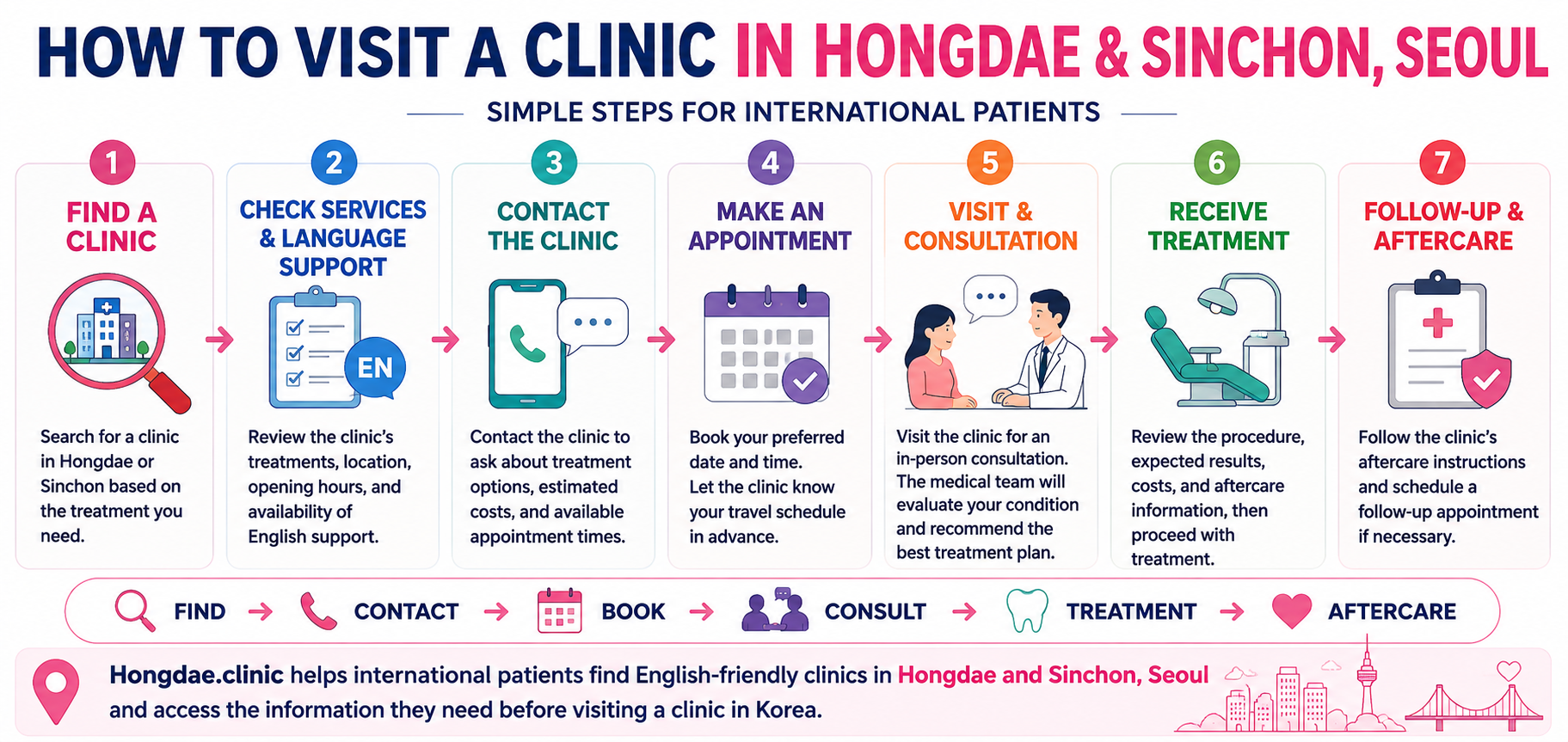
Chin Reduction Surgery for International Patients
When contacting a plastic surgery clinic, consider asking:
- Is English consultation available?
- Is my chin too long, wide, projected, or a combination?
- Which genioplasty technique is recommended?
- How many millimeters of reduction are planned?
- Do I need chin surgery alone or V-Line surgery?
- Where are my mental nerves relative to the osteotomy?
- How will the mentalis muscle be repaired?
- What downtime should I expect?
- How long should I stay in Korea?
- Is postoperative follow-up included?
If you have previously undergone jaw surgery, V-Line surgery, chin augmentation, genioplasty, or mandibular contouring, tell the surgeon because previous bone changes can influence the surgical plan.
Choosing a Chin Reduction Clinic in Hongdae or Sinchon
Consider:
- Qualified plastic or maxillofacial surgeon
- Experience with reduction genioplasty
- Detailed 3D skeletal assessment
- Evaluation of chin height, width, and projection
- Knowledge of mental nerve anatomy
- Careful mentalis muscle management
- Customized osteotomy and fixation planning
- Experience with revision facial contouring
- English communication
- Transparent surgery costs
Published clinical studies show that Chin Reduction can produce stable and significant contour changes, but outcomes depend on osteotomy design, nerve protection, soft-tissue management, and appropriate patient selection.
Hongdae & Sinchon Medical Care
Hongdae is convenient for patients around:
Hongik University · Yeonnam-dong · Hapjeong · Sangsu · Mapo
Sinchon is convenient for patients around:
Yonsei University · Ewha Womans University · Seodaemun · Mapo
Common searches include:
- Chin Reduction Surgery Hongdae
- Reduction Genioplasty Hongdae
- Chin Contouring Hongdae
- Chin Reduction Surgery Sinchon
- V-Line Chin Surgery Sinchon
- English speaking facial contouring clinic Sinchon
Frequently Asked Questions
What is Chin Reduction Surgery?
Chin Reduction Surgery is an osseous genioplasty procedure that reduces or reshapes the height, width, projection, or overall dimensions of the bony chin.
Can Chin Reduction shorten a long chin?
Yes. Vertical reduction genioplasty can reduce excessive chin height, and clinical follow-up has demonstrated stable skeletal results after appropriately planned surgery.
Can Chin Reduction make a wide chin narrower?
Yes. Narrowing genioplasty techniques can reshape a broad or square chin and create a slimmer frontal lower-face contour.
Can Chin Reduction cause numbness?
Yes. Temporary lower-lip or chin numbness can occur because the mental and inferior alveolar nerves are close to the surgical area. Persistent sensory changes are possible but less common.
Can foreigners get Chin Reduction Surgery in Seoul?
Yes. International patients can contact plastic surgery or maxillofacial clinics in Seoul regarding skeletal assessment, surgical planning, recovery, postoperative monitoring, and English-language support.