Hongdae & Sinchon Ethnic Rhinoplasty
in Seoul, Korea
Ethnic rhinoplasty is a nose surgery designed to improve nasal shape while respecting each patient’s natural facial features and ethnic characteristics. Treatment may address the bridge, tip, nostrils, or overall proportion based on individual anatomy and aesthetic goals. Patients seeking ethnic rhinoplasty in Hongdae or Sinchon should consider surgical approach, facial balance, and personalized consultation.
If you are considering rhinoplasty while preserving your natural ethnic features and overall facial identity, ethnic rhinoplasty may provide a more individualized approach to nasal reshaping. Modern rhinoplasty planning should be based on individual anatomy, facial proportions, and personal aesthetic goals, rather than applying one standardized nose shape to an entire ethnic group.
Hongdae and Sinchon are convenient areas for plastic surgery consultations in Seoul, especially for international residents, students, and travelers.
What Is Ethnic Rhinoplasty?
Ethnic rhinoplasty refers to rhinoplasty performed with careful consideration of a patient’s individual nasal anatomy, facial proportions, cultural background, and aesthetic preferences.
The goal is generally to improve nasal shape and balance while avoiding unnecessary loss of features that contribute to the patient’s identity.
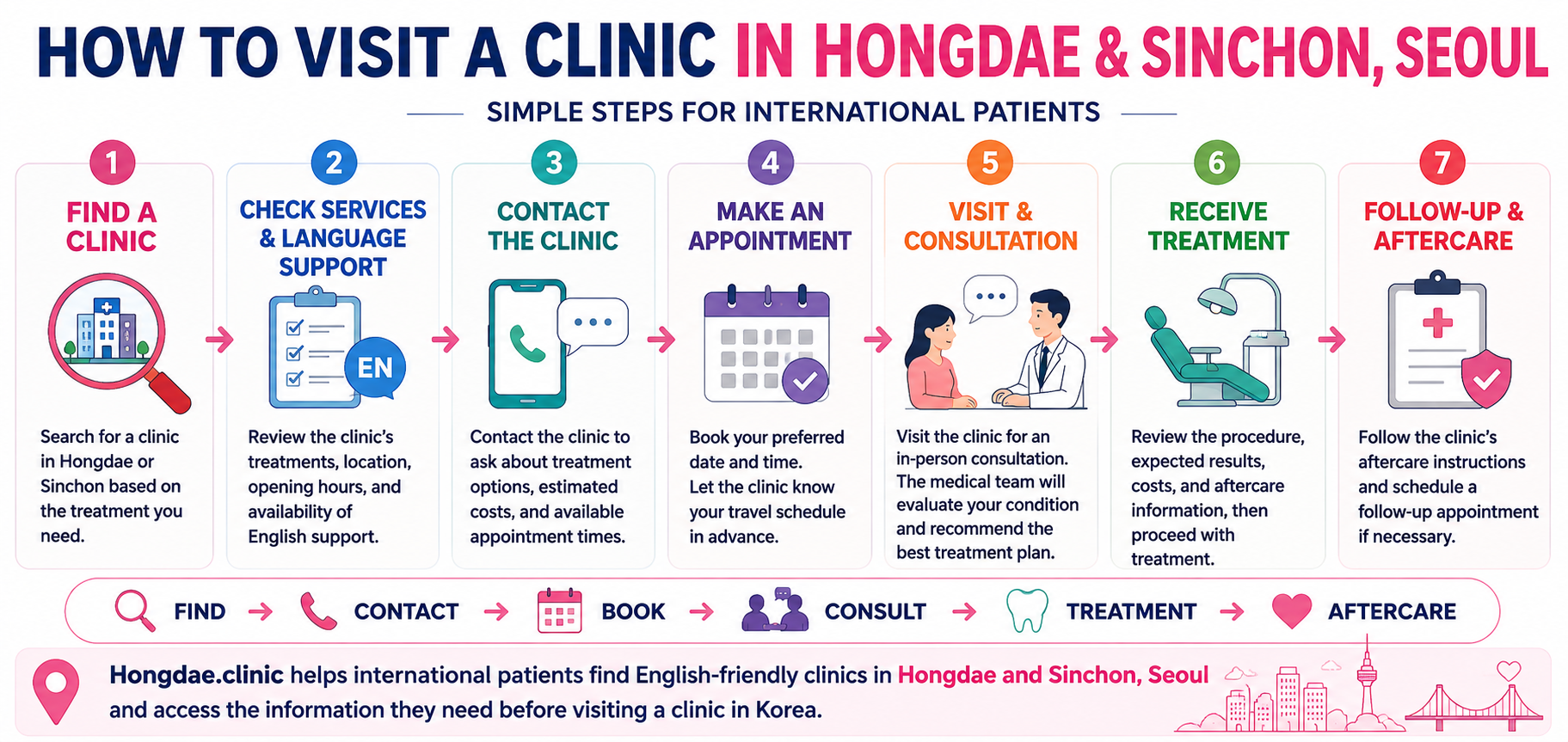
Consultation → facial analysis → surgical planning → rhinoplasty → recovery → follow-up.
When Might You Consider Ethnic Rhinoplasty?
Rhinoplasty may be considered for concerns such as:
- Low or flat nasal bridge
- Reduced nasal tip projection
- Wide nasal base
- Short nose
- Nasal asymmetry
- Dorsal hump
- Deviated nose
- Previous rhinoplasty concerns
The appropriate surgical plan depends on individual anatomy rather than ethnicity alone, because substantial anatomical variation exists within every population.
Common Ethnic Rhinoplasty Goals
Bridge Augmentation
Some patients may want to increase nasal bridge height or definition while maintaining natural facial proportions.
Tip Refinement
Rhinoplasty can modify tip projection, rotation, support, or definition according to the patient’s anatomy and desired appearance.
Nasal Base & Overall Balance
Selected patients may also consider changes to nasal width, nostril shape, asymmetry, or overall proportion with the rest of the face.
Ethnic Rhinoplasty Treatment Process
A typical surgical process may include:
- Plastic surgery consultation
- Detailed facial and nasal assessment
- Discussion of desired changes
- Surgical planning and photography
- Rhinoplasty under anesthesia
- Postoperative recovery
- Follow-up evaluation
Successful planning requires consideration of both nasal appearance and structural function.
Asian Rhinoplasty Considerations
East Asian rhinoplasty frequently involves different structural considerations from conventional reduction-focused rhinoplasty.
Published reviews describe common concerns including lower dorsal height, limited tip projection, thicker soft tissue, and weaker cartilage support, although individual anatomy varies considerably.
For this reason, augmentation and structural support may play an important role in selected patients.
Cartilage Grafts & Implants
Rhinoplasty may use different materials depending on the amount of structural support required.
Options may include:
- Septal cartilage
- Ear cartilage
- Rib cartilage
- Selected synthetic implants
Autologous cartilage can be used to strengthen or reshape the nasal framework. Rib cartilage may provide additional material when substantial augmentation or reconstruction is required.
The appropriate material should be selected individually after discussing its benefits and limitations.
Ethnic Rhinoplasty vs Standard Rhinoplasty
The surgical techniques themselves may overlap, but ethnic rhinoplasty places additional emphasis on individual anatomical and cultural characteristics.
Rather than aiming for one universal aesthetic ideal, modern approaches focus on achieving facial harmony, improved definition, and results consistent with the patient’s own preferences.
When Do Results Appear?
Changes in nasal shape are visible after surgery, but postoperative swelling can temporarily obscure the final result.
Rhinoplasty healing is gradual, and the nose—particularly the tip—can continue changing as swelling resolves and tissues settle.
Final evaluation should therefore be based on longer-term healing rather than the appearance immediately after surgery.
What Is Recovery Like?
Temporary postoperative symptoms may include:
- Swelling
- Bruising around the eyes
- Nasal congestion
- Tenderness
- Temporary numbness
- Mild asymmetry during early healing
Recovery time varies according to the surgical technique, amount of structural work, and individual healing response.
Possible Risks and Complications
As with any rhinoplasty, possible complications may include:
- Bleeding
- Infection
- Scarring
- Nasal asymmetry
- Breathing difficulties
- Implant or graft-related problems
- Persistent swelling
- Unsatisfactory cosmetic results
- Need for revision surgery
Silicone implant-related deformities and complications have been specifically described in East Asian rhinoplasty literature, making careful implant selection and long-term planning important.
Revision Ethnic Rhinoplasty
Revision surgery may be considered when a previous rhinoplasty has resulted in:
- Unnatural nasal shape
- Implant-related problems
- Tip deformity
- Shortened nose
- Nasal asymmetry
- Breathing problems
- Insufficient or excessive augmentation
Revision rhinoplasty can be more complex because previous surgery may alter cartilage, scar tissue, and structural support.
Ethnic Rhinoplasty for International Patients
When contacting a plastic surgery clinic, consider asking:
- Is English consultation available?
- Does the surgeon regularly perform ethnic rhinoplasty?
- How will my natural facial features be considered?
- Will cartilage grafting or an implant be needed?
- Where will graft material come from?
- What recovery time should I expect?
- Is postoperative follow-up included?
Bringing reference photos and clearly explaining which features you want to preserve or change can help communicate your aesthetic goals during consultation.
Choosing an Ethnic Rhinoplasty Clinic in Hongdae or Sinchon
Consider:
- Qualified plastic surgeon
- Detailed facial and nasal analysis
- Experience with diverse nasal anatomy
- Customized surgical planning
- Functional breathing assessment
- Experience with cartilage grafting
- Clear discussion of implant options
- English communication
- Transparent surgery costs
Research emphasizes that rhinoplasty should account for individual and regional anatomical differences rather than relying on generalized ethnic categories.
Hongdae & Sinchon Medical Care
Hongdae is convenient for patients around:
Hongik University · Yeonnam-dong · Hapjeong · Sangsu · Mapo
Sinchon is convenient for patients around:
Yonsei University · Ewha Womans University · Seodaemun · Mapo
Common searches include:
- Ethnic Rhinoplasty Hongdae
- Asian Rhinoplasty Hongdae
- Nose Surgery Hongdae
- Ethnic Rhinoplasty Sinchon
- Asian Rhinoplasty Sinchon
- English speaking plastic surgery clinic Sinchon
Frequently Asked Questions
What is ethnic rhinoplasty?
Ethnic rhinoplasty is an individualized approach to nose surgery that considers nasal anatomy, facial proportions, cultural identity, and the patient’s personal aesthetic goals.
Can foreigners get ethnic rhinoplasty in Seoul?
Yes. International patients can contact plastic surgery clinics in Seoul regarding consultation, surgical planning, recovery, and English-language support.
Does ethnic rhinoplasty mean changing my ethnicity?
No. Modern ethnic rhinoplasty generally aims to improve nasal balance while respecting features the patient wishes to preserve, rather than creating a standardized Westernized appearance.
Is cartilage needed for ethnic rhinoplasty?
Sometimes. Septal, ear, or rib cartilage may be used when additional bridge or tip support is needed, depending on the patient's anatomy and surgical goals.
Can ethnic rhinoplasty correct both appearance and breathing?
Yes, when structural or septal problems are present, rhinoplasty planning can address
both aesthetic concerns and nasal function. The exact approach depends on the individual examination.