Hongdae & Sinchon Eye Procedures
in Seoul, Korea
Eye procedures include surgical and non-surgical treatments designed to improve eye shape, symmetry, and overall facial balance.
Treatment options may include eyelid surgery, ptosis correction, canthoplasty, or under-eye procedures depending on individual concerns. Patients seeking
eye procedures in Hongdae or Sinchon should consider treatment goals, surgical approach, and recovery needs.
Eye Procedures in Korea
Explore personalized eye procedures in Korea designed to improve eye shape, symmetry, definition, and overall facial balance. Treatment plans are created according to individual anatomy, eyelid structure, skin condition, and desired results.
For international patients, clinics experienced with foreign visitors focus on detailed consultation, natural-looking outcomes, clear communication, and structured aftercare throughout the process.
Comprehensive Eye Procedures
Eye procedures can address the upper eyelids, lower eyelids, eye corners, and surrounding structures.
Common procedures include:
- Double Eyelid Surgery – Creates or enhances an upper eyelid crease for more defined eyes
- Ptosis Correction – Improves eyelid opening when the upper eyelid appears droopy or weak
- Upper Blepharoplasty – Removes or repositions excess upper eyelid skin and tissue
- Lower Blepharoplasty – Improves under-eye bags, puffiness, or sagging skin
- Epicanthoplasty – Adjusts the inner eye corners to change eye shape and openness
- Lateral Canthoplasty – Refines the outer corners of the eyes for a wider appearance
- Lower Canthoplasty – Adjusts the lower outer eyelid area to modify eye shape
- Under-Eye Fat Repositioning – Redistributes under-eye fat to improve puffiness and hollow areas
- Revision Eye Surgery – Corrective surgery for patients who have undergone previous eyelid procedures
Personalized Eye Consultation
Every patient has different eyelid anatomy and facial proportions, so eye surgery should be individually planned.
During the consultation, the surgeon may evaluate:
- Eyelid crease and skin thickness
- Eye width and height
- Eyelid symmetry
- Brow-to-eye distance
- Inner and outer eye corners
- Under-eye volume and puffiness
- Eyelid muscle function
- Previous eye procedures
- Desired eye shape and overall look
This helps create a treatment plan that matches the patient's facial features rather than applying the same eye shape to everyone.
Natural-Looking Eye Enhancement
For many international patients, the goal is not simply to make the eyes look larger.
A balanced result considers:
- Natural eyelid movement
- Symmetry between both eyes
- Harmony with the nose and brows
- Appropriate crease height
- Facial proportions
- Individual ethnic and anatomical characteristics
The aim is to create a refreshed and balanced appearance while maintaining natural facial identity.
Upper & Lower Eyelid Procedures
Different concerns require different surgical approaches.
Upper Eyelid Procedures
Upper eyelid surgery may help address:
- Undefined or uneven eyelid creases
- Drooping upper eyelids
- Excess eyelid skin
- Weak eyelid opening
- Asymmetry between both eyes
Procedures may include double eyelid surgery, ptosis correction, or upper blepharoplasty depending on the condition.
Lower Eyelid Procedures
Lower eyelid treatments may focus on:
- Under-eye bags
- Puffy lower eyelids
- Tear trough hollowness
- Sagging skin
- Uneven under-eye contours
Lower blepharoplasty or under-eye fat repositioning may be recommended depending on the patient's anatomy.
Revision Eye Surgery
Patients who have undergone previous eye surgery may seek revision because of asymmetry, an overly high or low crease, visible scarring, or changes in eyelid shape.
Revision procedures can be more complex because the surgeon must consider:
- Existing scar tissue
- Previous surgical methods
- Remaining skin and tissue
- Eyelid muscle function
- Current symmetry and structure
A detailed consultation is especially important before planning revision surgery.
What to Expect During Recovery
Recovery varies depending on the type and extent of the procedure.
Patients may experience:
- Swelling
- Bruising
- Temporary tightness
- Mild discomfort
- Temporary asymmetry during early healing
- Gradual changes as swelling decreases
Visible swelling usually improves over time, while the final eye shape may continue to settle for several weeks or longer.
International patients should plan enough time in Korea for initial recovery and recommended follow-up visits.
Foreigner-Friendly Eye Surgery Experience
Clear communication is especially important when undergoing cosmetic surgery abroad.
Foreigner-friendly services may include:
- Detailed pre-surgery consultation
- Language assistance when available
- Explanation of procedure options
- Transparent information about expected costs
- Preoperative examination guidance
- Postoperative care instructions
- Follow-up scheduling for international patients
Patients should discuss their desired results, previous procedures, medical history, and travel schedule before surgery.
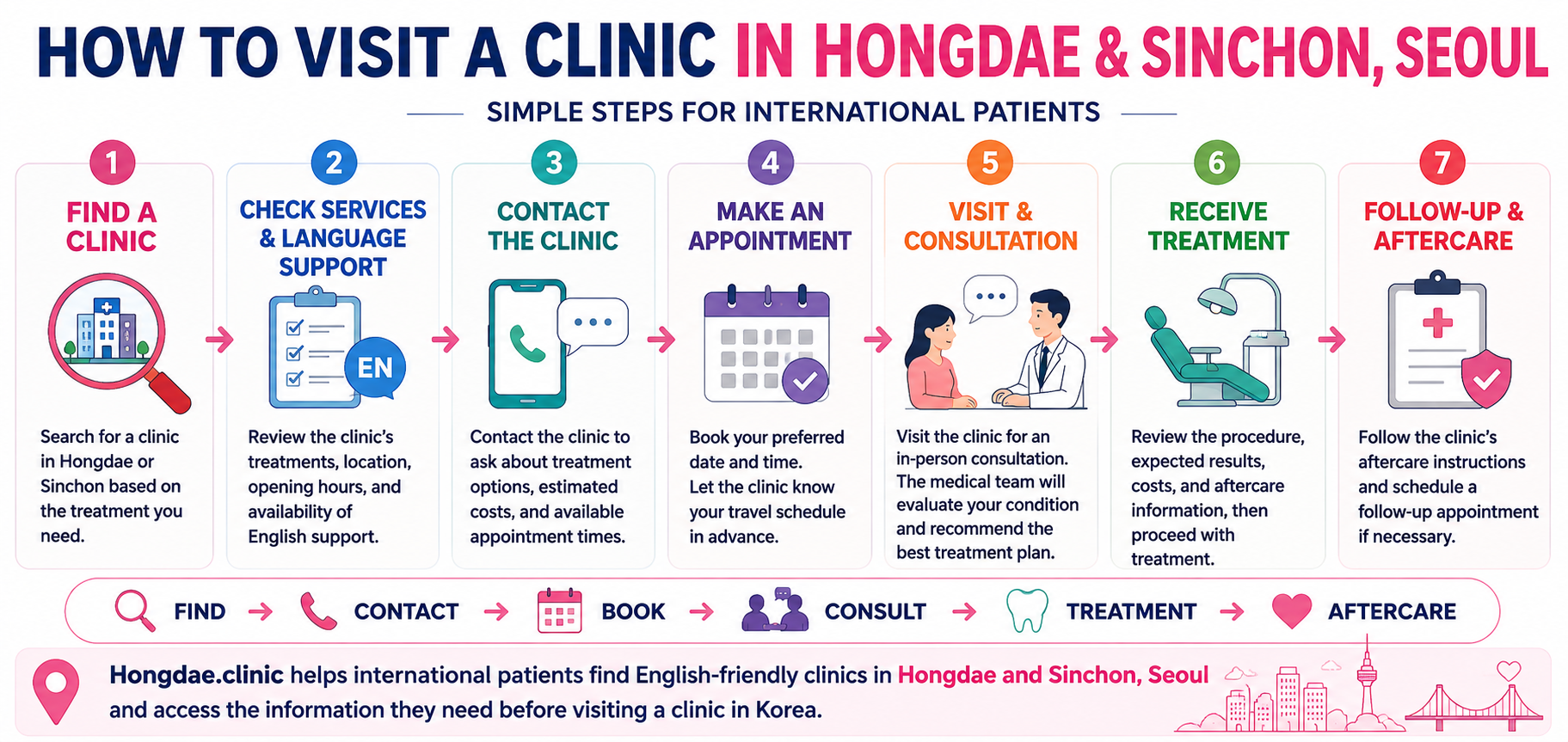
How the Eye Procedure Process Works
1. Consultation
Discuss your eye concerns, desired appearance, previous procedures, and medical history.
2. Eye & Facial Evaluation
The surgeon examines your eyelid structure, eye shape, symmetry, and facial proportions.
3. Surgical Planning
The recommended procedure, expected changes, recovery, and possible limitations are explained.
4. Procedure
Surgery is performed according to your personalized treatment plan.
5. Recovery & Follow-Up
Aftercare and follow-up appointments help monitor healing and recovery.
Plan Your Eye Procedure in Korea
Whether you are considering double eyelid surgery, ptosis correction, canthoplasty, under-eye fat repositioning, blepharoplasty, or revision eye surgery, a personalized consultation can help determine the most appropriate approach.
International patients can plan their procedure according to their eye anatomy, desired results, recovery period, and travel schedule.
For procedure recommendations, appointment availability, and estimated costs, contact the clinic in advance with your main concerns, previous surgery history if applicable, and expected visit dates.