Hongdae & Sinchon Face & Facial Contouring Procedures
in Seoul, Korea
Face and facial contouring procedures are designed to improve facial shape, balance, definition, and overall proportion.
Treatment options may include surgical contouring, lifting, fat reduction, or injectables depending on individual anatomy and goals.
Patients seeking
facial contouring procedures in Hongdae or Sinchon should consider treatment method, expected results, and recovery needs.
Face & Facial Contouring Procedures in Korea
Explore personalized face and facial contouring procedures in Korea designed to improve facial proportions, definition, symmetry, volume, and overall balance. Procedures can address concerns involving the jawline, cheekbones, chin, facial volume, sagging, and facial shape.
For international patients, clinics experienced with foreign visitors focus on detailed consultation, individualized planning, natural-looking results, clear communication, and structured aftercare throughout the treatment process.
Comprehensive Facial Contouring Procedures
Facial contouring can involve surgical or non-surgical approaches depending on the patient's facial structure and desired results.
Common procedures include:
- V-Line Surgery – Reshapes the lower face to create a slimmer and more defined facial contour
- Square Jaw Reduction – Reduces prominent jaw angles to create a smoother lower facial line
- Cheekbone Reduction – Adjusts prominent cheekbones to improve facial width and balance
- Chin Augmentation – Enhances chin projection and proportion using suitable surgical techniques
- Genioplasty – Repositions or reshapes the chin to improve facial profile and balance
- Facial Asymmetry Correction – Addresses differences between the left and right sides of the face
- Facial Fat Grafting – Transfers the patient's own fat to restore or enhance volume in selected facial areas
- Facial Liposuction – Removes localized fat around areas such as the cheeks, jawline, or under the chin
- Buccal Fat Reduction – Reduces selected cheek fat to create greater facial definition when appropriate
- Facelift Surgery – Addresses facial sagging and tissue descent for a firmer appearance
- Mini Facelift – A more limited lifting procedure for selected patients with mild to moderate concerns
- Neck Lift – Improves loose skin and contour around the neck and lower face
Personalized Facial Analysis
Facial contouring should not focus on a single feature alone. The surgeon evaluates how different facial structures work together before recommending a procedure.
During the consultation, the surgeon may assess:
- Facial width and length
- Jawbone shape
- Cheekbone prominence
- Chin projection
- Jawline definition
- Facial symmetry
- Soft tissue and facial fat distribution
- Skin elasticity and sagging
- Forehead, nose, lips, and chin proportions
- Previous facial procedures
- Desired facial shape
This helps create a plan based on the patient's individual anatomy and overall facial balance.
Jawline & V-Line Contouring
For patients concerned about a wide or angular lower face, jawline procedures may help create a smoother and more balanced contour.
Treatment options may include:
- Square jaw reduction
- V-line surgery
- Chin reshaping
- Facial liposuction
- Double-chin contouring
The most appropriate approach depends on whether facial width is mainly caused by bone structure, muscle, fat, soft tissue, or a combination of factors.
Cheekbone & Midface Contouring
Prominent cheekbones can influence the overall width and shape of the face.
Cheekbone reduction surgery may be considered when the goal is to reduce lateral facial width or create smoother facial transitions.
For patients concerned with volume rather than bone structure, alternatives such as facial fat grafting or other volume treatments may be more appropriate.
A detailed facial evaluation helps determine which approach best matches the patient's anatomy.
Chin & Facial Profile Procedures
The chin plays an important role in balancing the lower face and side profile.
Depending on the patient's facial structure, treatment may involve:
- Chin augmentation
- Genioplasty
- Chin reduction or reshaping
- Fat grafting
- Facial contouring procedures combined with other treatments
The goal is to improve the relationship between the forehead, nose, lips, chin, and jawline rather than changing the chin independently.
Facial Volume & Fat Contouring
Facial contouring is not always about reducing facial size. Some patients may benefit from adding volume to create smoother and more balanced proportions.
Facial Fat Grafting
Fat can be transferred to areas such as the:
- Forehead
- Temples
- Cheeks
- Under-eye area
- Nasolabial region
- Chin
The amount and placement of fat should be customized according to facial structure and desired results.
Facial Fat Reduction
For selected patients, localized fat reduction may help improve definition around the:
- Cheeks
- Jawline
- Lower face
- Double chin
The appropriate procedure depends on skin elasticity, facial anatomy, and the location of excess volume.
Facelift & Facial Rejuvenation
Facial aging may involve sagging skin, changes in facial volume, and loss of jawline definition.
Depending on the degree of aging and individual goals, procedures may include:
- Facelift
- Mini facelift
- Neck lift
- Facial fat grafting
- Combined facial rejuvenation procedures
The treatment plan is designed according to the location and severity of facial aging rather than age alone.
Natural-Looking Facial Balance
Successful facial contouring is not simply about creating the smallest or sharpest face.
A balanced result considers:
- Individual bone structure
- Facial proportions
- Soft tissue and skin condition
- Natural facial movement
- Front and side profiles
- Personal aesthetic preferences
For international patients, maintaining natural characteristics while improving proportion and symmetry may be an important part of treatment planning.
What to Expect During Recovery
Recovery depends significantly on the type and extent of the procedure.
Patients may experience:
- Swelling
- Bruising
- Temporary tightness
- Numbness or changes in sensation
- Temporary facial asymmetry during healing
- Limited facial movement or chewing after certain procedures
Initial swelling generally decreases gradually, while the final facial contour may continue to develop over several weeks or months.
International patients should allow sufficient time in Korea for initial recovery and recommended postoperative follow-up.
Foreigner-Friendly Facial Contouring Experience
Planning facial surgery abroad requires clear communication and careful preparation.
Foreigner-friendly services may include:
- Detailed pre-surgery consultation
- Language assistance when available
- Clear explanation of procedure options
- Transparent information about expected costs
- Preoperative examination guidance
- Recovery and aftercare instructions
- Follow-up scheduling for international patients
Patients should discuss previous procedures, medical history, desired results, and travel plans before surgery.
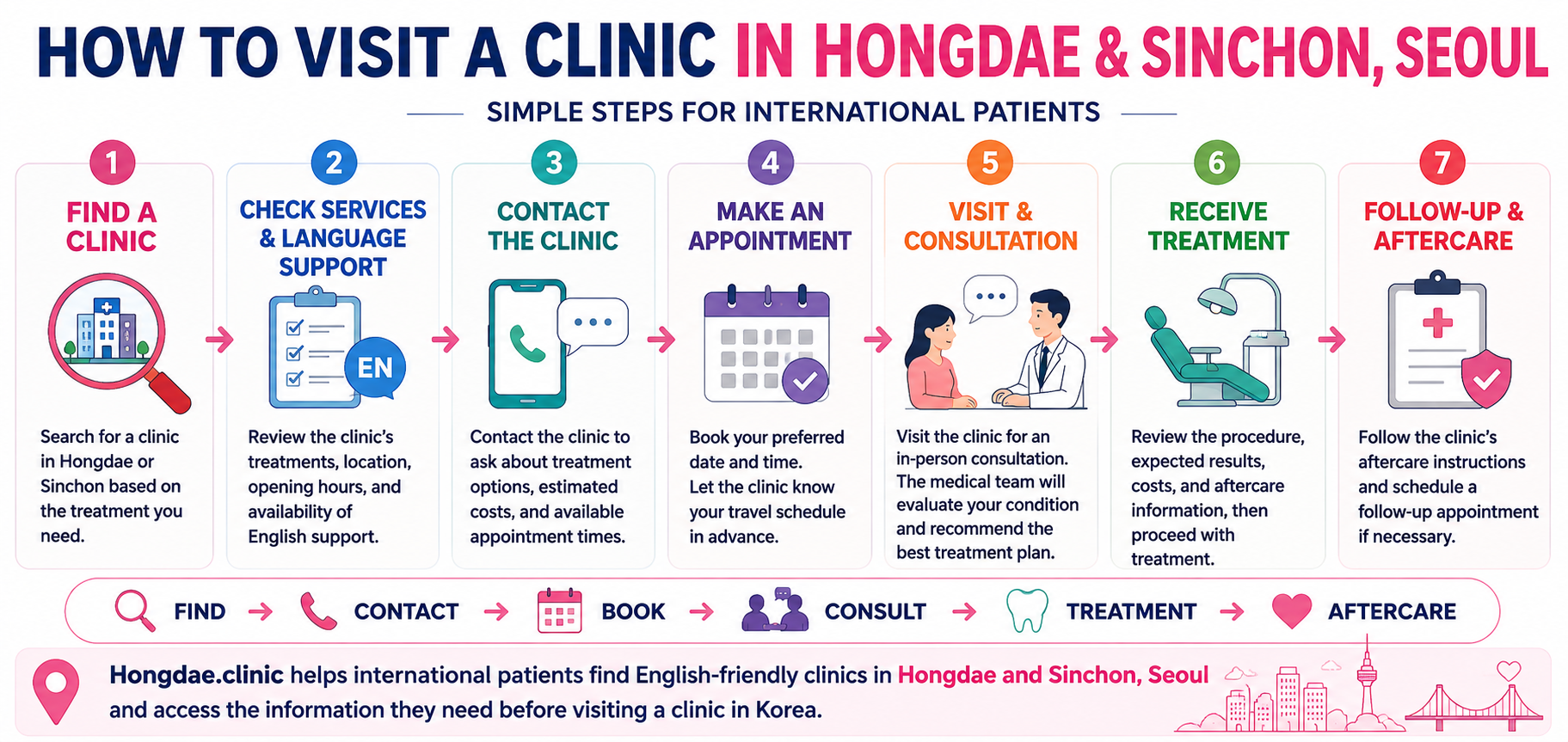
How the Facial Contouring Process Works
1. Consultation
Discuss your facial concerns, desired changes, previous procedures, and medical history.
2. Facial & Structural Evaluation
The surgeon evaluates facial proportions, bone structure, soft tissue, and symmetry.
3. Surgical Planning
The recommended procedure, expected changes, recovery period, and possible limitations are explained.
4. Procedure
Treatment is performed according to your personalized surgical plan.
5. Recovery & Follow-Up
Postoperative care and scheduled follow-up visits help monitor healing and facial changes.
Plan Your Facial Contouring Procedure in Korea
Whether you are considering V-line surgery, jaw reduction, cheekbone reduction, chin surgery, facial fat grafting, liposuction, or facelift procedures, a personalized consultation can help determine the most appropriate approach.
International patients can plan their treatment according to their facial anatomy, desired results, recovery period, and travel schedule.
For procedure recommendations, appointment availability, and estimated costs, contact the clinic in advance with your main concerns, previous surgery history if applicable, and expected visit dates.