Hongdae & Sinchon Gynecomastia
in Seoul, Korea
Gynecomastia is a condition involving enlarged male breast tissue that may affect chest shape, symmetry, and confidence.
Treatment may include liposuction, gland removal, or a combination of techniques depending on the cause and individual anatomy.
Patients seeking
gynecomastia treatment in Hongdae or Sinchon should consider surgical method, scarring, and recovery needs.
If you are concerned about enlarged male breast tissue, puffy nipples, chest fullness, or breast asymmetry, gynecomastia evaluation and treatment may be considered. Gynecomastia refers to benign enlargement of male breast glandular tissue and can be related to hormonal changes, medications, medical conditions, or no clearly identifiable cause.
Hongdae and Sinchon are convenient areas for gynecomastia consultations in Seoul, especially for international residents, students, and travelers.
What Is Gynecomastia?
Gynecomastia is enlargement of male breast tissue caused by proliferation of glandular tissue, often influenced by the balance between estrogen and androgen activity. It can affect one or both sides and may occur during adolescence or adulthood.
Treatment depends on the cause, duration, severity, symptoms, and amount of glandular tissue, fat, and excess skin.
Consultation → medical assessment → diagnosis → treatment planning → medical or surgical treatment → recovery → follow-up.
Common Signs of Gynecomastia
Gynecomastia may present as:
- Enlarged male breast tissue
- Puffy or projecting nipples
- Firm tissue beneath the nipple
- One breast larger than the other
- Chest tenderness or sensitivity
- Persistent chest fullness despite weight loss
- Cosmetic concern about chest shape
- Psychological discomfort related to breast enlargement
A proper examination is important because true gynecomastia and fatty chest enlargement are not the same condition.
What Causes Gynecomastia?
Gynecomastia can have many possible causes.
Common factors include:
- Puberty-related hormonal changes
- Aging-related hormonal changes
- Certain medications
- Anabolic steroid use
- Testosterone deficiency
- Thyroid disorders
- Liver or kidney disease
- Testicular disorders
- Other endocrine conditions
- Idiopathic gynecomastia with no clear cause
Clinical guidelines recommend reviewing medical history, medications, substance use, and possible hormonal or systemic conditions when evaluating gynecomastia.
Gynecomastia vs Chest Fat
True Gynecomastia
True gynecomastia involves glandular breast tissue, typically concentrated beneath or around the nipple-areola complex.
Pseudogynecomastia
Pseudogynecomastia refers primarily to fat accumulation in the male chest without the same degree of glandular proliferation.
Some patients have both fat and glandular tissue, which is why physical examination is important before deciding whether weight loss, liposuction, gland removal, or combined treatment is appropriate.
How Is Gynecomastia Evaluated?
A typical evaluation may include:
- Medical history
- Medication and supplement review
- Physical examination of the chest
- Assessment of glandular tissue and fat
- Evaluation of testicular or hormonal symptoms
- Laboratory testing when indicated
- Imaging or further evaluation when findings are unusual
European Academy of Andrology guidelines recommend evaluating potential underlying causes rather than automatically treating gynecomastia as a cosmetic condition.
Does Gynecomastia Always Need Treatment?
No.
Some cases, particularly during puberty, may improve without surgery. Treatment depends on factors such as:
- Duration of the condition
- Severity
- Pain or tenderness
- Underlying cause
- Age
- Psychological impact
- Amount of established fibrous tissue
Medical treatment may be considered in selected early cases, while persistent or long-standing gynecomastia may be more likely to require surgical correction if treatment is desired.
Medical Treatment for Gynecomastia
Some patients may be treated by addressing an underlying cause, such as changing a contributing medication or treating an endocrine condition under medical supervision.
Tamoxifen, a selective estrogen receptor modulator, has been studied for selected gynecomastia patients, particularly adolescents and patients with painful or relatively recent gynecomastia. However, available evidence is limited in quality, and medication should only be used after appropriate medical evaluation.
Long-standing fibrotic gynecomastia is generally less likely to respond completely to medication.
Gynecomastia Surgery
Surgery may be considered when gynecomastia is:
- Persistent
- Long-standing
- Associated with significant glandular tissue
- Resistant to conservative management
- Causing substantial cosmetic concern
- Associated with excess skin or significant chest enlargement
Surgical treatment can include liposuction, direct glandular excision, skin removal, or combined techniques.
Liposuction for Gynecomastia
Liposuction removes fatty tissue and helps contour the chest.
It may be especially useful when a significant portion of the enlargement consists of fat. However, dense glandular tissue beneath the nipple may remain if liposuction is used alone.
For mixed gynecomastia, liposuction may be combined with glandular excision.
Gland Removal
Direct glandular excision removes dense breast tissue that cannot be adequately treated with liposuction.
The incision is commonly positioned around part of the areola border to provide access to tissue beneath the nipple.
Careful tissue removal is important because excessive excision can create a depressed or irregular chest contour.
Liposuction + Gland Excision
Many gynecomastia patients have both fatty and glandular components.
Combining liposuction with glandular excision can address both tissue types and help create a smoother transition between the chest and nipple-areola complex. A systematic review involving thousands of patients found that combined approaches were widely used and reported favorable outcomes, although complication rates varied between studies.
Do Severe Cases Need Skin Removal?
Sometimes.
Patients with substantial breast enlargement or major weight loss may have significant loose skin and a low nipple position.
In these cases, additional procedures may be required to:
- Remove excess skin
- Reshape the chest
- Reduce or reposition the areola
- Reposition the nipple-areola complex
More extensive surgery generally creates longer scars than liposuction or limited gland excision.
Can Gynecomastia Cause Puffy Nipples?
Yes.
Firm glandular tissue directly beneath the nipple can push the nipple-areola complex outward, creating a puffy nipple appearance.
When glandular tissue is the main cause, weight loss alone may not completely flatten the area.
Surgical treatment may reduce the underlying gland while preserving enough tissue to maintain a natural chest contour.
Does Weight Loss Fix Gynecomastia?
Weight loss can reduce fat-related chest fullness, especially in pseudogynecomastia.
However, true glandular tissue may remain even after substantial weight loss.
This is why patients with persistent chest enlargement after weight loss may benefit from an examination to determine whether glandular tissue is present.
When Should Gynecomastia Be Medically Checked?
Medical evaluation is especially important when there is:
- New or rapidly developing enlargement
- A hard or irregular breast lump
- Significant one-sided enlargement
- Nipple discharge
- Nipple retraction
- Skin changes
- Testicular symptoms
- Unexplained hormonal symptoms
Gynecomastia itself is benign, but clinical guidelines emphasize evaluating atypical findings and excluding other breast or systemic conditions when appropriate.
What Is Recovery Like After Gynecomastia Surgery?
Temporary postoperative symptoms may include:
- Swelling
- Bruising
- Chest tenderness
- Tightness
- Temporary numbness
- Firmness during healing
- Mild asymmetry
Depending on the procedure, patients may be asked to wear a compression garment and temporarily avoid strenuous exercise or heavy upper-body activity.
Recovery varies according to the amount of liposuction, gland removal, and skin treatment performed.
Possible Risks and Complications
Potential complications may include:
- Hematoma
- Seroma
- Infection
- Visible scarring
- Asymmetry
- Contour irregularities
- Under-correction
- Excessive tissue removal
- Nipple sensation changes
- Skin or nipple healing problems
- Need for revision surgery
A systematic review of 94 studies involving 7,294 patients found that complications varied considerably according to surgical approach, with hematoma, seroma, and other postoperative issues reported across techniques.
Can Gynecomastia Come Back?
Recurrence is possible, especially if a contributing factor remains.
Potential factors include:
- Significant weight gain
- Hormonal disorders
- Anabolic steroid use
- Certain medications
- Persistent underlying medical conditions
- Residual glandular tissue
Identifying and managing contributing factors before surgery is an important part of long-term treatment planning.
Can Gynecomastia Treatment Look Natural?
Yes. Natural-looking chest contouring depends on balancing:
- Gland removal
- Fat reduction
- Chest symmetry
- Nipple position
- Skin elasticity
- Pectoral muscle contour
The goal is generally not to remove every possible piece of breast tissue. Instead, treatment aims to create a smooth and proportionate male chest contour while avoiding excessive flattening or indentation.
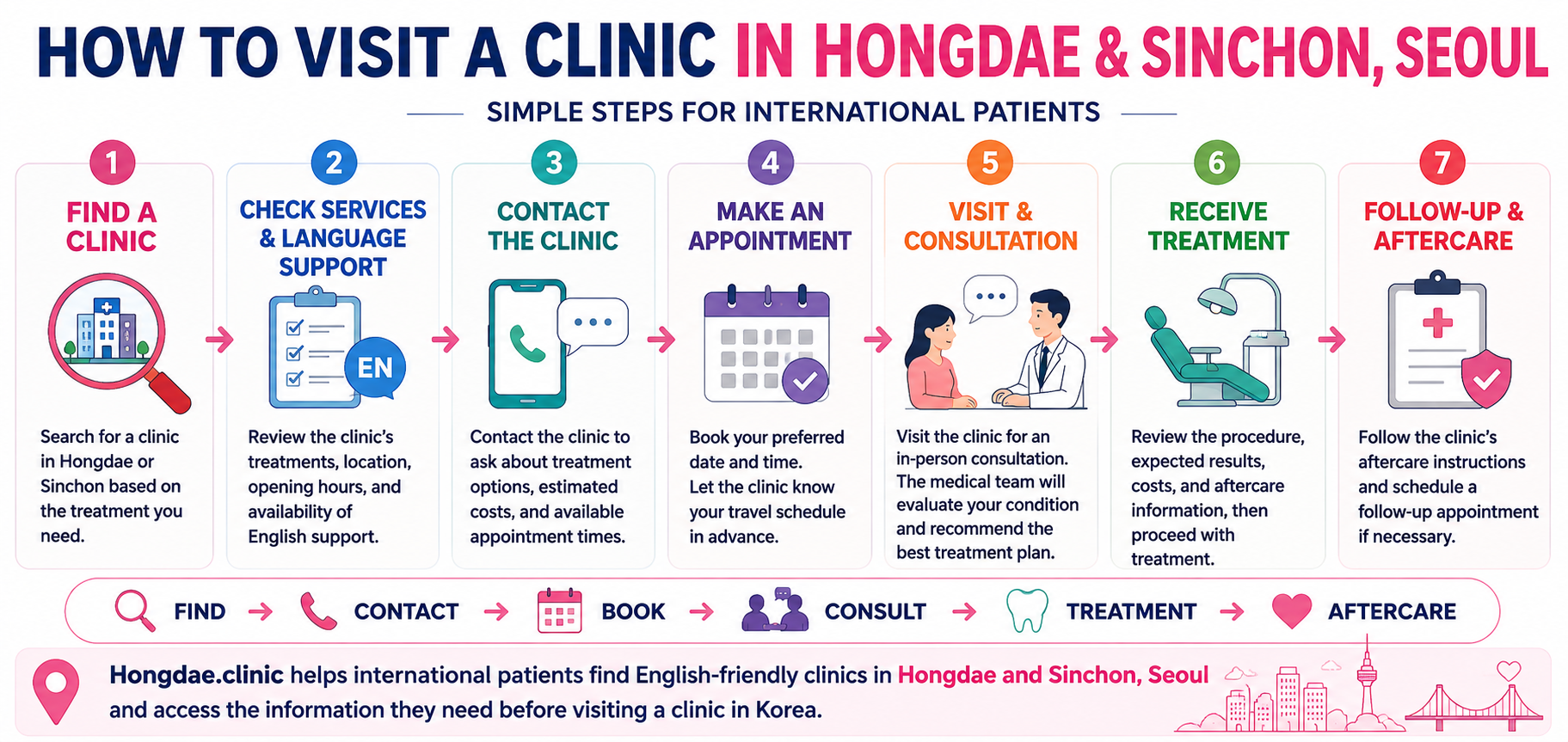
Gynecomastia Treatment for International Patients
When contacting a clinic, consider asking:
- Is English consultation available?
- Do I have true gynecomastia or mainly chest fat?
- Should I have a hormonal or medical evaluation?
- Do I need liposuction, gland removal, or both?
- Will skin removal be necessary?
- Where will the scars be located?
- What downtime should I expect?
- How long should I stay in Korea?
- Is postoperative follow-up included?
Tell the doctor about any medications, supplements, testosterone therapy, anabolic steroids, or previous chest surgery, because these can affect diagnosis and treatment planning.
Choosing a Gynecomastia Clinic in Hongdae or Sinchon
Consider:
- Qualified plastic surgeon
- Proper medical evaluation before surgery
- Experience with male breast reduction
- Assessment of gland, fat, and skin
- Liposuction and gland-excision options
- Natural male chest contour planning
- Clear discussion of scars and complications
- English communication
- Transparent surgery costs
Because gynecomastia varies considerably in severity and tissue composition, treatment should be customized to the individual rather than based on one standard surgical technique.
Hongdae & Sinchon Medical Care
Hongdae is convenient for patients around:
Hongik University · Yeonnam-dong · Hapjeong · Sangsu · Mapo
Sinchon is convenient for patients around:
Yonsei University · Ewha Womans University · Seodaemun · Mapo
Common searches include:
- Gynecomastia Hongdae
- Gynecomastia Surgery Hongdae
- Male Breast Reduction Hongdae
- Gynecomastia Sinchon
- Puffy Nipple Surgery Sinchon
- English speaking plastic surgery clinic Sinchon
Frequently Asked Questions
What is gynecomastia?
Gynecomastia is benign enlargement of male breast glandular tissue, commonly related to changes in the balance between estrogen and androgen activity.
Is gynecomastia the same as chest fat?
No. True gynecomastia involves glandular tissue, while pseudogynecomastia mainly involves excess fat. Some patients have both.
Can exercise remove gynecomastia?
Exercise and weight loss can reduce chest fat but generally cannot directly remove established glandular breast tissue. Persistent enlargement should be evaluated to determine whether gland tissue is present.
Does gynecomastia always require surgery?
No. Some cases may resolve spontaneously or improve after treating an underlying cause. Persistent cases with established tissue may be considered for surgery when appropriate.
Can foreigners get gynecomastia treatment in Seoul?
Yes. International patients can contact clinics in Seoul regarding medical evaluation, surgical planning, recovery, and English-language support.