Hongdae & Sinchon Jaw Surgery
in Seoul, Korea
Jaw surgery is a surgical procedure designed to correct jaw alignment, facial asymmetry, bite problems, and overall facial balance.
Treatment may involve repositioning the upper jaw, lower jaw, or both depending on individual anatomy and functional needs.
Patients seeking
jaw surgery in Hongdae or Sinchon should consider surgical planning, expected results, and recovery needs.
If you are concerned about jaw misalignment, underbite, overbite, open bite, facial asymmetry, or difficulty with chewing and bite function, jaw surgery may be considered. In this context, jaw surgery usually refers to orthognathic surgery, which surgically repositions the upper jaw, lower jaw, or both to improve skeletal alignment, facial balance, and dental function.
Hongdae and Sinchon are convenient areas for jaw surgery consultations in Seoul, especially for international residents, students, and travelers seeking oral and maxillofacial or facial surgery treatment.
What Is Jaw Surgery?
Jaw Surgery, or orthognathic surgery, corrects skeletal differences involving the maxilla (upper jaw), mandible (lower jaw), or both jaws.
Unlike procedures that only change superficial facial contours, orthognathic surgery changes the position of the jaw bones and can influence bite alignment, chewing, facial proportions, and airway anatomy.
Consultation → orthodontic and skeletal assessment → 3D surgical planning → jaw repositioning → fixation → recovery → orthodontic follow-up.
When Might You Consider Jaw Surgery?
Jaw surgery may be considered for:
- Significant underbite
- Significant overbite
- Open bite
- Jaw asymmetry
- Facial skeletal imbalance
- Protruding or retruded lower jaw
- Upper-jaw deficiency or excess
- Bite problems that cannot be corrected with orthodontics alone
- Selected airway-related skeletal problems
Orthognathic surgery is intended for dentofacial skeletal deformities, and treatment planning generally combines assessment of facial appearance with dental occlusion and oral function.
Common Types of Jaw Surgery
Lower Jaw Surgery – BSSO
Bilateral Sagittal Split Osteotomy (BSSO) is one of the principal techniques used to reposition the mandible.
The lower jaw can be moved forward, backward, or adjusted asymmetrically depending on the skeletal condition. Because the inferior alveolar nerve runs through the mandible, temporary or persistent lower-lip and chin sensory changes are an important consideration.
Upper Jaw Surgery – Le Fort I Osteotomy
A Le Fort I osteotomy allows the maxilla to be repositioned vertically, horizontally, or transversely.
It can be used to correct problems involving upper-jaw position, open bite, facial asymmetry, and other maxillary skeletal discrepancies.
Two-Jaw Surgery
Bimaxillary or two-jaw surgery repositions both the upper and lower jaws.
It may be considered when the skeletal discrepancy involves both jaws or when coordinated movement is required to achieve appropriate bite and facial balance.
Jaw Surgery Treatment Process
A typical treatment process may include:
- Oral and maxillofacial or plastic surgery consultation
- Dental and orthodontic evaluation
- Facial photographs and imaging
- 3D skeletal and bite planning
- Upper jaw, lower jaw, or two-jaw surgery
- Internal fixation of the repositioned bones
- Postoperative and orthodontic follow-up
Orthognathic treatment requires coordinated planning because the goal is to achieve both skeletal stability and a functional dental bite.
One-Jaw vs Two-Jaw Surgery
One-jaw surgery repositions either the maxilla or mandible.
Two-jaw surgery moves both jaws during the same operation.
The appropriate choice depends on:
- Skeletal Class II or Class III relationship
- Degree of facial asymmetry
- Upper and lower jaw position
- Occlusion
- Vertical facial proportions
- Airway considerations
- Desired facial balance
More extensive surgery is not automatically better. The surgical plan should use the minimum movements necessary to achieve functional and stable correction.
Jaw Surgery vs V-Line or Facial Contouring
These procedures are not the same.
Orthognathic jaw surgery changes the position of the jaws and bite, while cosmetic facial contouring procedures generally reshape portions of the jawbone without intentionally correcting dental occlusion.
A patient with a prominent lower face may therefore require very different treatment depending on whether the concern comes from:
- Jaw position
- Jaw width
- Chin shape
- Bite alignment
- Facial asymmetry
A detailed skeletal and dental evaluation is important before choosing the procedure.
Jaw Surgery for Underbite
An underbite commonly occurs when the lower jaw sits relatively forward, the upper jaw sits relatively backward, or both conditions are present.
Depending on the skeletal pattern, treatment may involve:
- Mandibular setback
- Maxillary advancement
- Two-jaw surgery
- Combination with chin surgery when appropriate
Patients with skeletal Class III deformities generally report improvements in quality of life after appropriately planned orthognathic treatment.
Jaw Surgery for Overbite or Retruded Jaw
A retruded lower jaw may contribute to a Class II skeletal relationship, reduced chin projection, or functional bite problems.
Mandibular advancement may be used when the lower jaw needs to be repositioned forward.
The exact movement should be planned according to bite, facial proportions, condylar position, and long-term skeletal stability.
Jaw Surgery for Facial Asymmetry
Jaw asymmetry can involve differences in:
- Mandibular length
- Chin position
- Maxillary height
- Dental midlines
- Occlusal cant
- Overall facial skeletal balance
Orthognathic surgery may reposition one or both jaws to improve alignment.
However, perfect facial symmetry cannot be guaranteed, because residual soft-tissue and skeletal differences may remain even after successful bone repositioning.
Jaw Surgery and Orthodontics
Many jaw surgery patients require orthodontic treatment as part of the overall plan.
In a conventional treatment sequence, orthodontics may be used before surgery to position the teeth appropriately within each jaw, followed by surgery and additional orthodontic refinement.
A surgery-first approach is also used in selected patients. Systematic reviews suggest it can shorten or alter the treatment sequence in appropriate cases, although patient selection and skeletal stability remain important.
Can Jaw Surgery Improve Chewing and Function?
Yes, when functional problems are caused by skeletal malalignment.
Recent systematic-review evidence has found improvements in oral function-related quality of life, including areas such as chewing and speech, after orthognathic treatment, although short-term function may temporarily worsen during recovery.
Orthognathic surgery has also consistently been associated with improvements in overall oral-health-related quality of life.
Jaw Surgery and Sleep Apnea
Selected patients with obstructive sleep apnea may undergo maxillomandibular advancement (MMA), which advances the upper and lower jaws to enlarge the skeletal framework surrounding the airway.
Systematic reviews and meta-analyses support MMA as an effective surgical option for appropriately selected obstructive sleep apnea patients.
However, sleep apnea treatment requires dedicated airway and sleep evaluation and should not be assumed to be part of routine cosmetic jaw surgery.
When Do Results Appear?
The skeletal change occurs during surgery, but significant postoperative swelling can temporarily obscure the final facial shape.
Early changes become more visible as swelling decreases, while soft tissues continue adapting to the new jaw position over subsequent months.
Long-term assessment also considers skeletal stability and possible relapse, rather than appearance alone.
What Is Recovery Like?
Temporary postoperative symptoms may include:
- Facial swelling
- Bruising
- Jaw stiffness
- Difficulty chewing
- Temporary limited mouth opening
- Numbness of the lips or chin
- Temporary facial asymmetry
- Dietary restrictions during early healing
Recovery is generally more substantial than after minor facial cosmetic surgery because orthognathic procedures involve bone osteotomies, repositioning, fixation, and changes in the dental bite.
Quality of life can temporarily decrease during the surgical treatment period before improving after recovery.
Numbness After Jaw Surgery
Sensory changes are particularly important after mandibular surgery.
The inferior alveolar nerve travels through the lower jaw and may be stretched or disturbed during BSSO.
A recent systematic review found neurosensory disturbances to be among the most frequent postoperative issues after orthognathic surgery, with most improving over time but a smaller proportion persisting long term.
Patients should discuss the possibility of temporary and permanent lower-lip or chin numbness before surgery.
Possible Risks and Complications
Potential complications may include:
- Bleeding
- Infection
- Swelling
- Nerve-related numbness
- Bite changes
- Jaw asymmetry
- Hardware problems
- Unfavorable bone split
- Temporomandibular joint symptoms
- Skeletal relapse
- Need for additional surgery
Recent systematic-review evidence confirms that orthognathic surgery generally produces favorable outcomes but still carries meaningful risks of neurosensory disturbance, relapse, and other surgical complications.
Can the Jaw Move Back After Surgery?
Some degree of skeletal relapse can occur after orthognathic surgery.
Factors influencing stability may include:
- Direction and amount of jaw movement
- Type of skeletal deformity
- Fixation
- Muscle forces
- Condylar position
- Orthodontic factors
- Individual healing
Systematic reviews confirm that measurable relapse can occur after orthognathic procedures, so long-term orthodontic and surgical follow-up remains important.
Can Jaw Surgery Look Natural?
Yes. Natural-looking results depend on coordinating:
- Jaw position
- Bite alignment
- Chin projection
- Facial width
- Midface proportions
- Lip support
- Soft-tissue response
The objective should not be to create one standardized facial shape.
Orthognathic surgery has been associated with high patient satisfaction and improvements in aesthetic, functional, and psychosocial quality-of-life measures when appropriately planned.
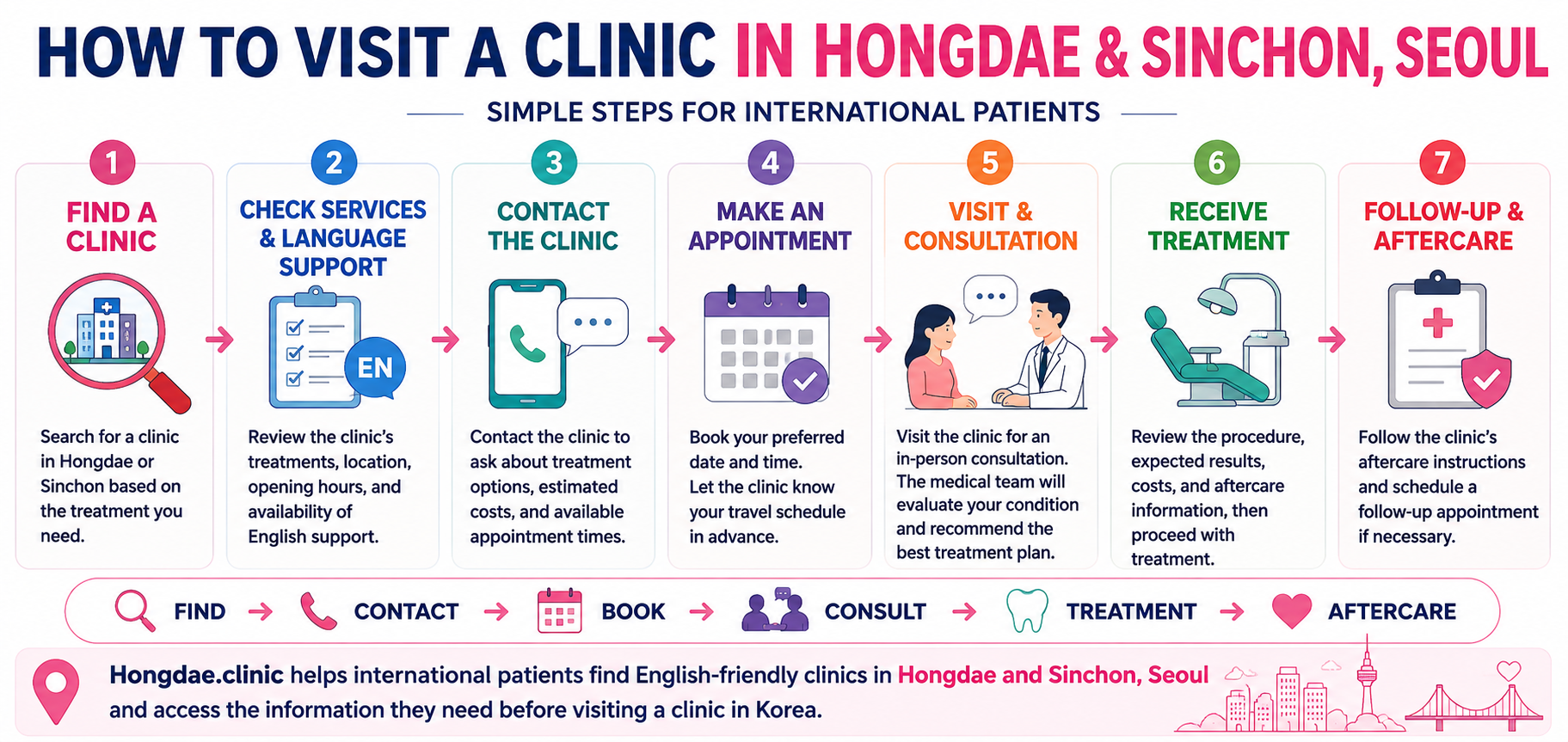
Jaw Surgery for International Patients
When contacting a clinic, consider asking:
- Is English consultation available?
- Is my concern skeletal, dental, or both?
- Do I need upper jaw, lower jaw, or two-jaw surgery?
- Will orthodontic treatment be required?
- Is a surgery-first approach suitable for me?
- What degree of numbness should I expect?
- How long should I stay in Korea?
- How will postoperative bite and healing be monitored?
- Is long-term follow-up included?
International patients should consider that jaw surgery often requires multiple postoperative evaluations and orthodontic coordination, making follow-up planning especially important.
Choosing a Jaw Surgery Clinic in Hongdae or Sinchon
Consider:
- Qualified surgeon experienced in orthognathic surgery
- Detailed dental and skeletal assessment
- 3D surgical planning
- Coordination with orthodontic treatment
- Experience with one-jaw and two-jaw surgery
- Clear explanation of nerve-related risks
- Long-term skeletal stability planning
- Postoperative bite management
- English communication
- Transparent surgery costs
Recent evidence emphasizes careful patient selection, informed consent, and long-term follow-up because successful jaw surgery involves functional, skeletal, and aesthetic outcomes together.
Hongdae & Sinchon Medical Care
Hongdae is convenient for patients around:
Hongik University · Yeonnam-dong · Hapjeong · Sangsu · Mapo
Sinchon is convenient for patients around:
Yonsei University · Ewha Womans University · Seodaemun · Mapo
Common searches include:
- Jaw Surgery Hongdae
- Orthognathic Surgery Hongdae
- Two Jaw Surgery Hongdae
- Jaw Surgery Sinchon
- Underbite Surgery Sinchon
- English speaking jaw surgery clinic Sinchon
Frequently Asked Questions
What is Jaw Surgery?
Jaw surgery, or orthognathic surgery, surgically repositions the upper jaw, lower jaw, or both to correct skeletal jaw discrepancies and improve bite, facial balance, and function.
Is Jaw Surgery the same as Two-Jaw Surgery?
No. Jaw surgery is the broader category. Two-jaw surgery specifically means that both the upper and lower jaws are repositioned during the operation.
Do I need braces before Jaw Surgery?
Many patients undergo orthodontic treatment before and after surgery, although selected patients may be suitable for a surgery-first approach. The correct sequence depends on dental alignment and skeletal anatomy.
Can Jaw Surgery cause permanent numbness?
Yes. Temporary numbness is particularly common after mandibular osteotomy, and a smaller proportion of patients can experience persistent sensory changes.
Can foreigners get Jaw Surgery in Seoul?
Yes. International patients can contact clinics in Seoul regarding jaw assessment, orthodontic coordination, surgical planning, recovery, postoperative monitoring, and English-language support.