Hongdae & Sinchon Lower Blepharoplasty
in Seoul, Korea
Lower blepharoplasty is a surgical procedure designed to reduce under-eye bags, excess skin, and puffiness for a smoother appearance. Treatment may involve removing or repositioning fat and tightening skin depending on individual under-eye concerns.
Patients seeking
lower blepharoplasty in Hongdae or Sinchon should consider surgical approach, expected results, and recovery needs.
If you are concerned about under-eye bags, excess lower-eyelid skin, tear troughs, or a tired-looking lower eye area, lower blepharoplasty may be considered to improve the contour between the lower eyelid and cheek. Modern techniques may involve fat removal, fat repositioning, skin treatment, or a combination, depending on individual anatomy.
Hongdae and Sinchon are convenient areas for plastic surgery consultations in Seoul, especially for international residents, students, and travelers.
What Is Lower Blepharoplasty?
Lower blepharoplasty is surgery designed to improve aging or structural concerns involving the lower eyelids.
The procedure may address protruding orbital fat, excess skin, tear trough hollows, and the lower eyelid–cheek junction. Treatment should be customized according to the patient's skin, fat distribution, eyelid support, and facial anatomy.
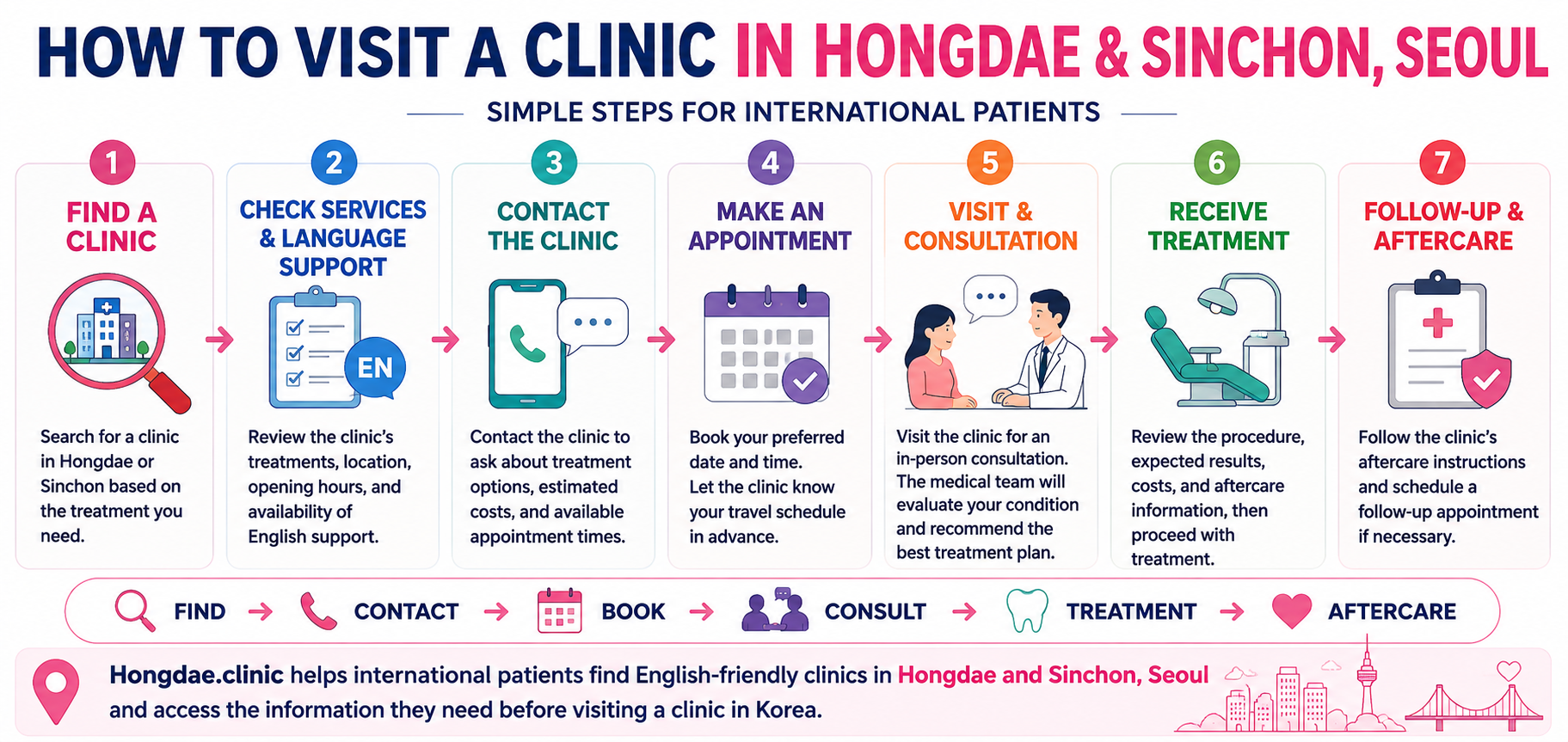
Consultation → lower-eyelid assessment → surgical planning → lower blepharoplasty → recovery → follow-up.
When Might You Consider Lower Blepharoplasty?
Lower blepharoplasty may be considered for:
- Under-eye bags
- Bulging lower-eyelid fat
- Excess lower-eyelid skin
- Tear trough hollows
- Lower eyelid–cheek contour concerns
- Tired-looking under-eye appearance
- Mild lower-eyelid asymmetry
- Aging-related lower-eyelid changes
Age-related changes can include fat prolapse, tear trough hollowing, skin changes, and descent of surrounding tissues.
Common Lower Blepharoplasty Techniques
Fat Removal
Selected protruding orbital fat may be reduced when excessive fullness is the primary concern.
However, excessive removal may contribute to a hollow or sunken under-eye appearance, particularly in patients who already have tear troughs.
Fat Repositioning
Existing orbital fat can be repositioned toward the tear trough or lid-cheek junction to smooth the transition between the lower eyelid and cheek.
Skin Treatment
Patients with significant loose or excess lower-eyelid skin may require additional skin removal or tightening as part of the procedure.
Lower Blepharoplasty Treatment Process
A typical surgical process may include:
- Plastic surgery consultation
- Detailed lower-eyelid assessment
- Evaluation of fat, skin, and tear troughs
- Selection of surgical approach
- Fat removal or repositioning
- Skin treatment when necessary
- Postoperative follow-up
Modern lower blepharoplasty increasingly emphasizes individualized anatomy and preservation of appropriate under-eye volume rather than routine aggressive fat removal.
Transconjunctival vs Transcutaneous Lower Blepharoplasty
Transconjunctival Approach
The incision is placed inside the lower eyelid, providing access to the orbital fat without a routine external skin incision.
It can be used for fat removal or repositioning, especially when significant excess skin is not present.
Transcutaneous Approach
An external incision is made around the lower eyelid, allowing more direct treatment of skin and underlying tissues.
A recent systematic review found that both transconjunctival and transcutaneous approaches can be used for fat-preserving lower blepharoplasty, with technique selection depending on anatomy and surgical goals.
Lower Blepharoplasty vs Under Eye Fat Repositioning
Lower blepharoplasty is a broader surgical category, while under-eye fat repositioning is one technique that can be performed during lower blepharoplasty.
Patients with primarily protruding fat may need reduction, while patients with both eye bags and tear trough hollows may benefit from repositioning existing fat.
The most appropriate treatment depends on the relationship between fullness and hollowness.
Lower Blepharoplasty vs Under-Eye Filler
Lower blepharoplasty surgically modifies under-eye tissues, while filler adds volume to selected hollow areas without removing protruding orbital fat.
Filler may be suitable for selected tear trough concerns, but prominent eye bags, substantial skin laxity, or structural lower-eyelid problems may require surgical evaluation.
Patients who have previously received under-eye filler should tell the surgeon before lower blepharoplasty.
Can Younger Patients Have Lower Blepharoplasty?
Yes.
Prominent under-eye bags may result from individual orbital anatomy and fat distribution, not only aging.
Younger patients with protruding orbital fat but minimal skin laxity may sometimes be candidates for a transconjunctival approach, while older patients or those with greater skin laxity may require a different surgical plan.
When Do Results Appear?
Changes in under-eye fullness are visible after surgery, but swelling and bruising can temporarily affect the early result.
The lower eyelid–cheek contour gradually becomes smoother as swelling decreases and tissues settle.
Lower blepharoplasty studies generally report favorable aesthetic results, although long-term outcome reporting varies considerably between studies.
What Is Recovery Like?
Temporary postoperative symptoms may include:
- Swelling
- Bruising
- Tenderness
- Tightness
- Conjunctival redness
- Watery or irritated eyes
- Temporary dryness
- Mild asymmetry during healing
The degree of recovery depends on whether surgery involves fat removal, fat repositioning, skin removal, or additional eyelid-support procedures.
Possible Risks and Complications
Potential complications may include:
- Bleeding
- Infection
- Persistent swelling
- Under- or over-correction
- Irregular under-eye contour
- Dry-eye symptoms
- Chemosis
- Lower-eyelid retraction
- Ectropion
- Asymmetry
- Need for revision surgery
A recent systematic review found that major complications after lower blepharoplasty are generally uncommon, but lower-eyelid malposition and other functional or aesthetic complications remain important considerations.
What Is Lower Eyelid Ectropion?
Ectropion occurs when the lower eyelid turns outward or loses normal contact with the eye.
It is an important potential complication because lower blepharoplasty can alter the structures supporting the lower eyelid.
Patients with pre-existing eyelid laxity may require additional support procedures such as canthopexy or canthoplasty depending on their anatomy.
Can Lower Blepharoplasty Cause Hollow Eyes?
Yes, particularly if excessive orbital fat is removed.
For this reason, contemporary lower blepharoplasty often emphasizes fat preservation, repositioning, or grafting when appropriate to maintain a smooth transition between the eyelid and cheek.
The goal is generally to reduce unwanted bulging without creating an unnaturally hollow appearance.
Can Lower Blepharoplasty Look Natural?
Yes. Natural-looking results depend on balancing:
- Orbital fat
- Tear trough depth
- Lower-eyelid skin
- Eyelid support
- Cheek volume
- Overall facial proportions
A detailed understanding of lower-eyelid anatomy is particularly important because the area contains several delicate supporting structures that influence both appearance and eyelid function.
Lower Blepharoplasty for International Patients
When contacting a plastic surgery clinic, consider asking:
- Is English consultation available?
- Are my concerns caused by fat, skin, or both?
- Is transconjunctival or transcutaneous surgery recommended?
- Will fat be removed or repositioned?
- Do I need additional lower-eyelid support?
- What downtime should I expect?
- How long should I stay in Korea?
- Is postoperative follow-up included?
If you have previously received under-eye filler, fat grafting, eye bag surgery, or other eyelid procedures, tell the surgeon before treatment.
Choosing a Lower Blepharoplasty Clinic in Hongdae or Sinchon
Consider:
- Qualified plastic surgeon
- Detailed lower-eyelid assessment
- Experience with lower blepharoplasty
- Fat-preserving and repositioning techniques
- Evaluation of lower-eyelid support
- Assessment of tear troughs and skin laxity
- Conservative surgical planning
- English communication
- Transparent surgery costs
Current evidence emphasizes tailoring lower blepharoplasty to individual anatomy and the specific combination of fat prolapse, skin excess, tear troughs, and eyelid support.
Hongdae & Sinchon Medical Care
Hongdae is convenient for patients around:
Hongik University · Yeonnam-dong · Hapjeong · Sangsu · Mapo
Sinchon is convenient for patients around:
Yonsei University · Ewha Womans University · Seodaemun · Mapo
Common searches include:
- Lower Blepharoplasty Hongdae
- Lower Eyelid Surgery Hongdae
- Eye Bag Surgery Hongdae
- Lower Blepharoplasty Sinchon
- Under Eye Surgery Sinchon
- English speaking plastic surgery clinic Sinchon
Frequently Asked Questions
What is lower blepharoplasty?
Lower blepharoplasty is surgery that treats under-eye bags, excess lower-eyelid skin, tear troughs, or lower eyelid–cheek contour concerns using techniques such as fat removal or repositioning.
Can foreigners get lower blepharoplasty in Seoul?
Yes. International patients can contact plastic surgery clinics in Seoul regarding consultation, surgical planning, recovery, and English-language support.
Does lower blepharoplasty leave a visible scar?
A transconjunctival approach places the incision inside the lower eyelid, while a transcutaneous approach uses an external incision when skin treatment or broader access is required.
Is fat removal or fat repositioning better?
Neither is automatically better. Fat reduction may suit selected prominent eye bags, while fat repositioning may be useful when protruding fat occurs together with tear trough hollowness.
Can lower blepharoplasty cause ectropion?
Yes, although it is uncommon.
Lower-eyelid malposition, including ectropion, is a recognized complication and is one reason lower-eyelid support should be assessed before surgery.