Hongdae & Sinchon Male Rhinoplasty
in Seoul, Korea
Male rhinoplasty is a nose surgery designed to improve nasal shape, proportion, or function while maintaining masculine facial balance. Treatment may refine the bridge, tip, nostrils, or overall nasal structure based on individual anatomy and goals.
Patients seeking
male rhinoplasty in Hongdae or Sinchon should consider facial proportions, surgical approach, and recovery needs.
If you are considering nose reshaping while maintaining a natural or traditionally masculine facial appearance, male rhinoplasty can be customized according to your nasal anatomy, facial proportions, ethnicity, and personal aesthetic goals. Research shows that nasal aesthetic preferences can differ by sex and cultural background, so there is no single ideal male nose.
Hongdae and Sinchon are convenient areas for plastic surgery consultations in Seoul, especially for international residents, students, and travelers.
What Is Male Rhinoplasty?
Male rhinoplasty refers to rhinoplasty planned specifically around an individual male patient's nasal structure, facial proportions, functional needs, and preferred appearance.
Depending on the patient, surgery may modify the nasal bridge, tip, width, nostrils, septum, or overall profile while avoiding changes that conflict with the desired facial character.
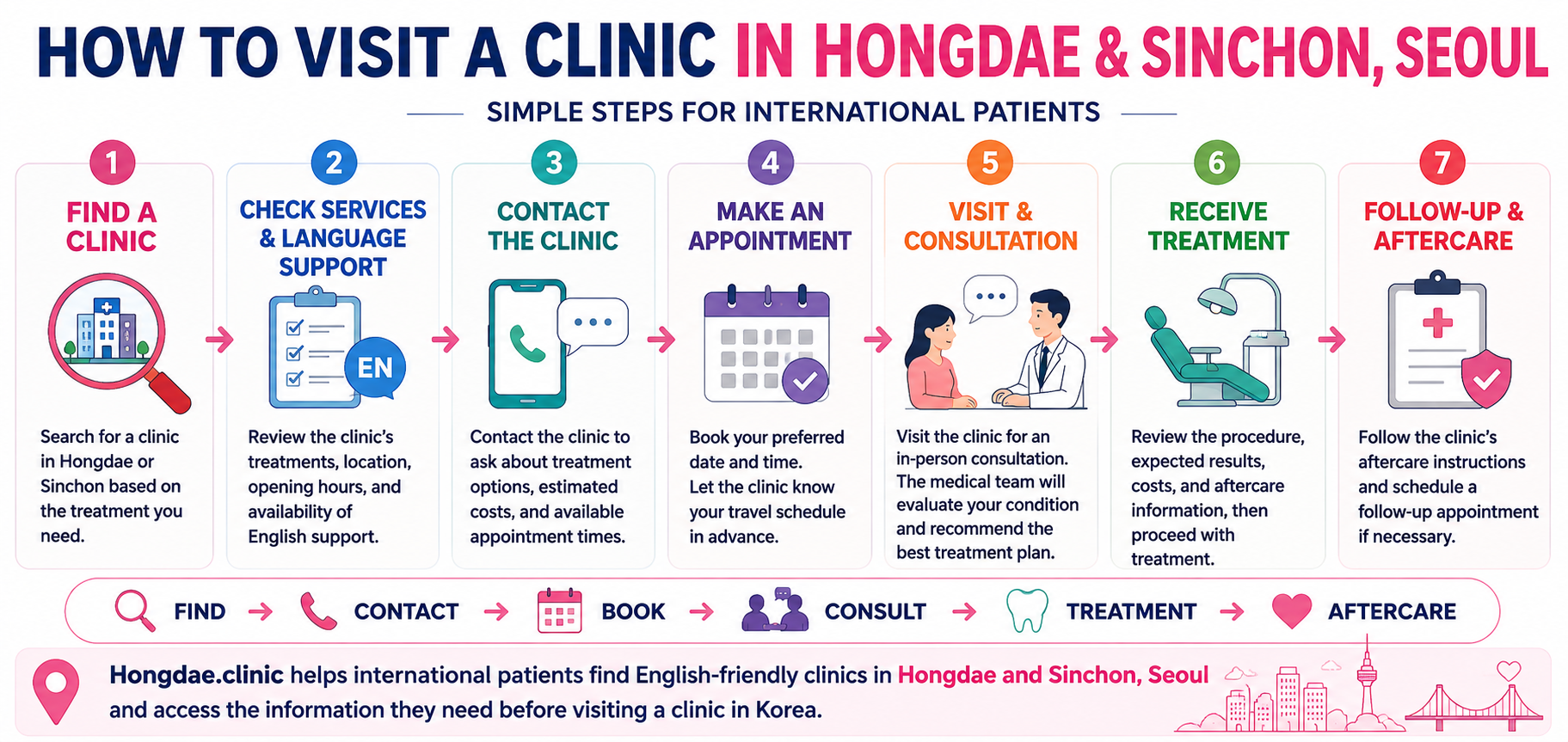
Consultation → facial analysis → surgical planning → rhinoplasty → recovery → follow-up.
When Might You Consider Male Rhinoplasty?
Male rhinoplasty may be considered for:
- Prominent dorsal hump
- Wide or broad nose
- Bulbous nasal tip
- Drooping nasal tip
- Low or flat nasal bridge
- Nasal asymmetry
- Deviated nose
- Breathing concerns
The surgical plan should be based on individual anatomy rather than applying one standardized masculine nose shape.
Common Male Rhinoplasty Goals
Bridge Refinement
A dorsal hump may be reduced or the bridge may be reshaped while maintaining an appropriate relationship between the nose, forehead, and chin. Studies of nasal aesthetics have found subtle sex-related differences in preferred dorsal and nasion proportions.
Tip Refinement
The nasal tip may be reshaped to improve definition, projection, rotation, or symmetry without creating an excessively narrow or upturned appearance unless specifically desired.
Overall Facial Balance
The goal is usually to create a nose that fits the forehead, eyes, cheeks, lips, and chin, rather than evaluating the nose in isolation. Precise nasofacial analysis is an important part of male rhinoplasty planning.
Male Rhinoplasty Treatment Process
A typical surgical process may include:
- Plastic surgery consultation
- Detailed facial and nasal assessment
- Photography and surgical planning
- Open or closed rhinoplasty
- Cartilage and bone modification
- Structural grafting when necessary
- Postoperative follow-up
The exact technique depends on the patient's nasal structure, skin thickness, functional concerns, and desired degree of change.
Male vs Female Rhinoplasty
The surgical techniques used in male and female rhinoplasty often overlap, but the aesthetic planning may differ.
Studies evaluating nasal shape preferences have reported that male noses are often preferred with a relatively straighter profile and different tip or nasolabial-angle characteristics compared with female noses. However, these preferences vary between individuals, ethnic groups, and cultures.
For this reason, surgery should reflect the patient's own desired appearance rather than rigid gender-based measurements.
Open vs Closed Male Rhinoplasty
Male rhinoplasty can be performed using either an open or closed approach.
Open rhinoplasty provides wider direct access to the nasal cartilage and may be useful when substantial tip reconstruction, grafting, or asymmetry correction is required.
Closed rhinoplasty uses internal incisions and may be appropriate for selected patients requiring less extensive structural modification.
The surgical approach should be selected according to the required correction rather than gender alone.
Male Rhinoplasty for a Dorsal Hump
A prominent dorsal hump is a common reason patients consider rhinoplasty.
Treatment may involve conventional hump reduction or selected dorsal preservation techniques. A recent meta-analysis found favorable patient-reported outcomes with both preservation and conventional approaches, with technique selection depending on anatomy and surgical goals.
Careful reduction is important when the patient wishes to maintain a strong, straight nasal profile rather than creating excessive concavity.
Male Nasal Tip Surgery
Tip surgery may address:
- Bulbous tip
- Drooping tip
- Poor tip definition
- Tip asymmetry
- Excessive or insufficient projection
- Tip rotation concerns
Skin thickness is particularly relevant because thicker nasal-tip skin can reduce how clearly underlying cartilage definition appears after surgery.
Structural support may therefore be an important part of treatment planning.
Male Rhinoplasty for Asian Patients
Asian male rhinoplasty may involve concerns such as bridge augmentation, tip projection, nasal width, or alar shape, although anatomy varies substantially between individuals.
A Korean case series involving young Asian men undergoing rhinoplasty and septoplasty highlights the importance of maintaining natural contours of the tip, nostrils, and alar region during augmentation procedures.
Treatment should always be based on the patient's individual anatomy and goals rather than ethnicity alone.
Thick Skin and Male Rhinoplasty
Some male patients have relatively thick nasal skin, particularly around the tip.
Thicker skin can make subtle cartilage definition more difficult to show and may influence postoperative tip appearance. Studies have identified nasal skin thickness as an important factor affecting rhinoplasty outcomes.
The surgeon may therefore adjust structural support and tip-shaping techniques according to skin thickness.
When Do Results Appear?
Changes in nasal shape are visible after surgery, but swelling can temporarily affect the final appearance.
The bridge often becomes clearer earlier, while the nasal tip may take longer to settle, especially in patients with thicker skin or extensive tip surgery. Skin thickness has been associated with differences in postoperative tip outcomes.
Final results should therefore be evaluated after sufficient healing.
What Is Recovery Like?
Temporary postoperative symptoms may include:
- Swelling
- Bruising around the eyes
- Nasal congestion
- Tenderness
- Temporary numbness
- Tip stiffness
- Mild asymmetry during early healing
Recovery varies according to whether surgery includes osteotomies, hump reduction, tip reconstruction, septoplasty, or cartilage grafting.
Possible Risks and Complications
Potential rhinoplasty complications may include:
- Bleeding
- Infection
- Persistent swelling
- Nasal asymmetry
- Breathing difficulties
- Irregular bridge contour
- Tip-shape concerns
- Graft-related problems
- Unsatisfactory cosmetic results
- Need for revision surgery
Prospective research has shown that rhinoplasty can improve both aesthetic satisfaction and nasal function in appropriately selected patients, but outcomes vary and careful preoperative planning remains essential.
Can Male Rhinoplasty Look Natural?
Yes. Natural-looking male rhinoplasty generally focuses on facial harmony rather than dramatic or standardized changes.
Research on gender-related nasal aesthetics indicates that differences between preferred male and female nasal shapes can be relatively subtle, reinforcing the importance of individualized planning.
The surgeon should discuss which characteristics you want to preserve, strengthen, soften, or change before surgery.
Male Rhinoplasty for International Patients
When contacting a plastic surgery clinic, consider asking:
- Is English consultation available?
- Does the surgeon regularly perform male rhinoplasty?
- How will my facial proportions be analyzed?
- Will an open or closed approach be used?
- Will cartilage grafting be required?
- Can breathing problems be treated simultaneously?
- How long should I stay in Korea?
- Is postoperative follow-up included?
Bringing reference photos and clearly explaining whether you prefer a stronger, straighter, softer, or more refined nasal appearance can help communicate your goals.
Choosing a Male Rhinoplasty Clinic in Hongdae or Sinchon
Consider:
- Qualified plastic surgeon
- Detailed male facial analysis
- Experience with male rhinoplasty
- Customized bridge and tip planning
- Experience with diverse nasal anatomy
- Functional breathing assessment
- Cartilage grafting experience
- English communication
- Transparent surgery costs
Because aesthetic preferences differ by sex, ethnicity, culture, and individual preference, the surgical plan should prioritize the patient's own facial proportions and desired appearance rather than relying solely on standardized measurements.
Hongdae & Sinchon Medical Care
Hongdae is convenient for patients around:
Hongik University · Yeonnam-dong · Hapjeong · Sangsu · Mapo
Sinchon is convenient for patients around:
Yonsei University · Ewha Womans University · Seodaemun · Mapo
Common searches include:
- Male Rhinoplasty Hongdae
- Men’s Nose Surgery Hongdae
- Male Nose Job Hongdae
- Male Rhinoplasty Sinchon
- Men’s Rhinoplasty Sinchon
- English speaking plastic surgery clinic Sinchon
Frequently Asked Questions
What is male rhinoplasty?
Male rhinoplasty is nose surgery planned according to a man's individual nasal anatomy, facial proportions, functional needs, and aesthetic preferences.
Can foreigners get male rhinoplasty in Seoul?
Yes. International patients can contact plastic surgery clinics in Seoul regarding consultation, surgical planning, recovery, and English-language support.
Is male rhinoplasty different from female rhinoplasty?
The surgical techniques may overlap, but aesthetic goals and preferred nasal proportions can differ. Research also shows considerable variation between cultures and individuals.
Can male rhinoplasty reduce a dorsal hump?
Yes. A dorsal hump may be treated using conventional reduction or selected preservation rhinoplasty techniques depending on the nasal structure and desired profile.
Can male rhinoplasty correct breathing problems?
Yes. When structural obstruction is present, functional procedures such as
septal correction may be incorporated into rhinoplasty planning. Prospective research has demonstrated improvement in both appearance and nasal-function measures after appropriately planned rhinoplasty.