Hongdae & Sinchon Post Weight Loss Surgery
in Seoul, Korea
Post weight loss surgery includes procedures designed to remove excess skin and improve body shape after significant weight loss.
Treatment may include a tummy tuck, body lift, arm lift, or thigh lift depending on individual anatomy and concerns.
Patients seeking
post weight loss surgery in Hongdae or Sinchon should consider treatment areas, scarring, and recovery needs.
If you have achieved significant weight loss but are left with loose skin, hanging tissue, persistent skin folds, or changes in body proportions, Post Weight Loss Surgery may be considered to reshape the affected areas. Treatment may involve Tummy Tuck, Panniculectomy, Arm Lift, Thigh Lift, Lower Body Lift, breast or chest contouring, and selected Liposuction, depending on your anatomy and priorities.
Hongdae and Sinchon are convenient areas for Post Weight Loss Surgery consultations in Seoul, especially for international residents and travelers considering staged or multi-area body contouring.
What Is Post Weight Loss Surgery?
Post Weight Loss Surgery refers to plastic surgery performed after substantial weight reduction to remove redundant skin and reshape areas that do not naturally contract enough after weight loss.
Common treatment areas include:
- Abdomen and waist
- Upper arms
- Inner thighs
- Back and flanks
- Buttocks
- Breasts or chest
- Lower body
Patients often have concerns in several regions, so surgery is usually customized rather than performed as one standardized operation.
Consultation → weight and health assessment → skin evaluation → procedure prioritization → staged or combined surgery → tissue removal and contouring → recovery → follow-up.
When Might You Consider Post Weight Loss Surgery?
Post Weight Loss Surgery may be considered for:
- Hanging abdominal skin
- Loose upper-arm skin
- Inner-thigh laxity
- Skin folds around the waist or back
- Deflated breasts or chest tissues
- Sagging around the buttocks
- Recurrent irritation beneath skin folds
- Difficulty exercising or fitting clothing
- Multiple areas of redundant skin
Prospective research has found that body contouring after substantial weight loss can improve several aspects of physical function, body image, and quality of life in appropriately selected patients.
Common Post Weight Loss Procedures
Tummy Tuck
A Tummy Tuck, or abdominoplasty, removes excess abdominal skin and may include abdominal-wall tightening when rectus diastasis is present.
It is often considered when weight loss leaves a loose abdominal apron or significant lower-abdominal skin redundancy.
Panniculectomy
A Panniculectomy primarily removes a hanging lower-abdominal pannus.
The focus may be functional as well as cosmetic, particularly when redundant tissue contributes to irritation, hygiene difficulties, or physical discomfort.
Arm Lift
Brachioplasty removes hanging upper-arm skin that cannot be adequately corrected through Liposuction alone.
Thigh Lift
Thighplasty removes redundant thigh skin, commonly from the medial thigh. Vertical, horizontal, or combined incision patterns may be considered according to the distribution of laxity.
Lower Body Lift
A Lower Body Lift addresses more extensive circumferential laxity involving areas such as the abdomen, waist, hips, and buttocks.
Post Weight Loss Surgery Process
A typical treatment process may include:
- Plastic surgery consultation
- Review of weight-loss history
- Assessment of current weight stability
- Evaluation of loose skin and remaining fat
- Medical and nutritional assessment
- Planning of staged or combined procedures
- Postoperative wound care and follow-up
Patients with several areas requiring treatment may benefit from prioritizing the regions that cause the greatest functional or aesthetic concern rather than attempting to correct everything during one operation.
Post Weight Loss Surgery After Bariatric Surgery
Post Weight Loss Surgery is commonly performed after substantial weight reduction following bariatric procedures.
Loose skin after weight loss may affect:
- Mobility
- Exercise
- Hygiene
- Clothing fit
- Body image
- Satisfaction with appearance
A prospective matched study found significantly better health-related quality-of-life outcomes among patients who underwent body contouring after bariatric surgery compared with patients who had bariatric surgery without subsequent contouring.
Longer-term international data using the BODY-Q have also shown sustained improvements in appearance satisfaction and health-related quality of life among patients who proceeded with body contouring.
Post Weight Loss Surgery After GLP-1 Weight Loss
Patients may also seek surgery after major weight loss achieved with GLP-1 medications, lifestyle modification, or a combination of approaches.
A 2026 cohort of 1,002 post-weight-loss body-contouring patients found that complication rates did not differ significantly according to whether weight loss resulted from bariatric surgery, GLP-1 pharmacotherapy, combined treatment, or lifestyle modification. Instead, higher BMI at the time of surgery and diabetes independently predicted increased postoperative risk.
The current health and anatomy of the patient are therefore more important than assuming one method of weight loss is automatically safer for subsequent surgery.
Should Your Weight Be Stable Before Surgery?
Weight stability is an important consideration before major skin-removal surgery.
Further substantial weight loss can create additional loose skin, while significant weight regain can stretch the remaining tissues and alter the result.
In a 2026 multicenter study of massive-weight-loss patients, optimized candidates selected for combined procedures included patients with stable weight for at least six months, BMI of 30 kg/m² or less, corrected micronutrient deficiencies, and favorable general health status.
These were study selection criteria rather than universal rules, so timing should still be individualized.
Why Is Nutrition Important?
Nutritional deficiencies can occur after significant weight loss, particularly following bariatric surgery.
A prospective study of 100 bariatric patients presenting for plastic surgery found that nutritional inadequacies were common in this population.
Another prospective cohort of 140 post-bariatric body-contouring patients evaluated a structured nutritional optimization program and found that wound complications remained an important concern; adequate postoperative protein intake showed a possible protective association.
Preoperative assessment may therefore include nutritional history, laboratory evaluation when appropriate, and correction of identified deficiencies.
Should Several Procedures Be Combined?
Sometimes, but combining more procedures increases surgical complexity.
A 2026 multicenter study involving 1,182 massive-weight-loss patients reported overall complication rates of:
- 3.6% with one procedure
- 5.1% with two procedures
- 20.2% with three procedures
- 22.4% with four procedures
The higher complication rates in the three- and four-procedure groups were driven predominantly by wound dehiscence, and these groups also had longer operations and hospital stays.
For some patients, combining two carefully selected procedures may be reasonable, while more extensive treatment may be better divided into separate operations.
What Is Staged Post Weight Loss Surgery?
Staged surgery divides body contouring into different surgical sessions.
For example:
Stage 1: Abdomen and waist
Stage 2: Arms and breast or chest region
Stage 3: Thighs or lower body
Staging may be considered when:
- Several large areas require treatment
- A single operation would be excessively long
- Medical risks are elevated
- Multiple large wounds would make recovery difficult
- Different areas require significantly different postoperative restrictions
Prospective clinical data have supported staging as a practical alternative when multiple procedures should not all be performed simultaneously.
Post Weight Loss Surgery vs Liposuction
These treatments address different concerns.
Post Weight Loss Skin Removal
- Removes redundant skin
- Treats hanging tissue
- Requires longer surgical scars
- Can reshape multiple body regions
Liposuction
- Removes localized subcutaneous fat
- Does not directly remove substantial loose skin
- Uses smaller cannula access sites
- May complement skin-removal surgery
A patient whose primary problem is skin redundancy may receive limited improvement from Liposuction alone.
Will Post Weight Loss Surgery Leave Scars?
Yes.
Removing significant amounts of loose skin requires permanent incisions.
Depending on the procedure, scars may be located:
- Across the lower abdomen
- Circumferentially around the lower torso
- Along the inner or posterior upper arms
- Within the groin or along the inner thighs
- Around the breasts or chest
The main tradeoff is usually improved body contour and reduction of redundant tissue in exchange for permanent scars.
Wound Healing After Post Weight Loss Surgery
Wound-healing problems are among the most important considerations after extensive body contouring.
A prospective cohort of 606 reconstructive body-contouring patients reported an overall postoperative complication rate of 37.5%, with wound-healing disorders being the most frequent complication at 21.5%.
Reported rates vary widely between studies because patient populations, procedure types, and definitions of complications differ.
Factors that may influence wound risk include:
- Current BMI
- Diabetes
- Nutritional status
- Procedure extent
- Number of simultaneous procedures
- Tissue quality
- Previous surgical scars
Current post-weight-loss data specifically identify higher BMI and diabetes as independent predictors of adverse outcomes.
Seroma After Post Weight Loss Surgery
A seroma is a collection of fluid beneath surgically treated tissues.
It may occur after procedures that create larger tissue planes, such as:
- Tummy Tuck
- Panniculectomy
- Lower Body Lift
- Thigh Lift
Clinical studies of post-weight-loss patients consistently identify seroma among the postoperative problems requiring monitoring, aspiration, drainage, or other management depending on severity.
Possible Risks and Complications
Potential complications vary by procedure but may include:
- Wound dehiscence
- Delayed healing
- Seroma
- Hematoma
- Infection
- Skin or fat necrosis
- Unfavorable scarring
- Temporary or persistent numbness
- Asymmetry
- Persistent swelling
- Venous thromboembolism
- Need for revision surgery
A large prospective national dataset of 1,797 body-contouring patients reported minor wound complications in 6.3%, major surgical morbidity in 6.8%, and medical complications in 2.2%, demonstrating the importance of individualized preoperative risk assessment.
Blood Clot Risk
Deep vein thrombosis and pulmonary embolism are uncommon but potentially serious complications of major body-contouring surgery.
Risk assessment may consider:
- Previous blood clots
- BMI
- Procedure duration
- Reduced mobility
- Multiple simultaneous operations
- Hormonal medications
- Other medical conditions
International patients should also ask their surgical team about long-distance flight timing after surgery, because postoperative mobility and clot-prevention planning are particularly relevant when traveling internationally.
Does Post Weight Loss Surgery Improve Quality of Life?
It can.
An international longitudinal cohort incorporating 5,620 bariatric patients and more than 24,000 BODY-Q assessments found that patients undergoing subsequent body-contouring surgery maintained improvements in satisfaction with appearance and health-related quality of life over long-term follow-up.
Prospective matched research has similarly demonstrated significant functional improvements after post-bariatric body contouring.
Individual experiences vary, and surgery cannot guarantee psychological or functional outcomes.
What Is Recovery Like?
Recovery depends strongly on which procedures are performed.
Temporary postoperative effects may include:
- Swelling
- Bruising
- Tightness
- Incision discomfort
- Temporary numbness
- Reduced mobility
- Drain management
- Compression garments
- Scar redness
More extensive combinations generally require longer surgery and more demanding recovery. Recent multicenter data found increasing operative time and hospital stay when three or four body-contouring procedures were performed together.
Can Post Weight Loss Surgery Look Natural?
Yes.
Natural-looking results generally depend on:
- Balanced removal of redundant tissue
- Smooth transitions between treated regions
- Appropriate scar placement
- Avoiding excessive skin tension
- Maintaining left-right proportion
- Coordinating skin removal with remaining fat
- Sensible staging when several areas require correction
The goal should be a more proportionate body contour rather than removing the maximum possible amount of skin during one operation.
Revision Post Weight Loss Surgery
Revision may be considered for:
- Residual loose skin
- Widened scars
- Hypertrophic scars
- Dog ears at incision ends
- Left-right asymmetry
- Contour irregularities
- Recurrent laxity
- Residual fat deposits
Secondary procedures may include scar revision, additional skin removal, Liposuction, fat grafting, or another stage of body contouring.
Because several areas are often involved after major weight loss, more than one operation may form part of the overall treatment plan rather than representing an unsuccessful first surgery.
Post Weight Loss Surgery for International Patients
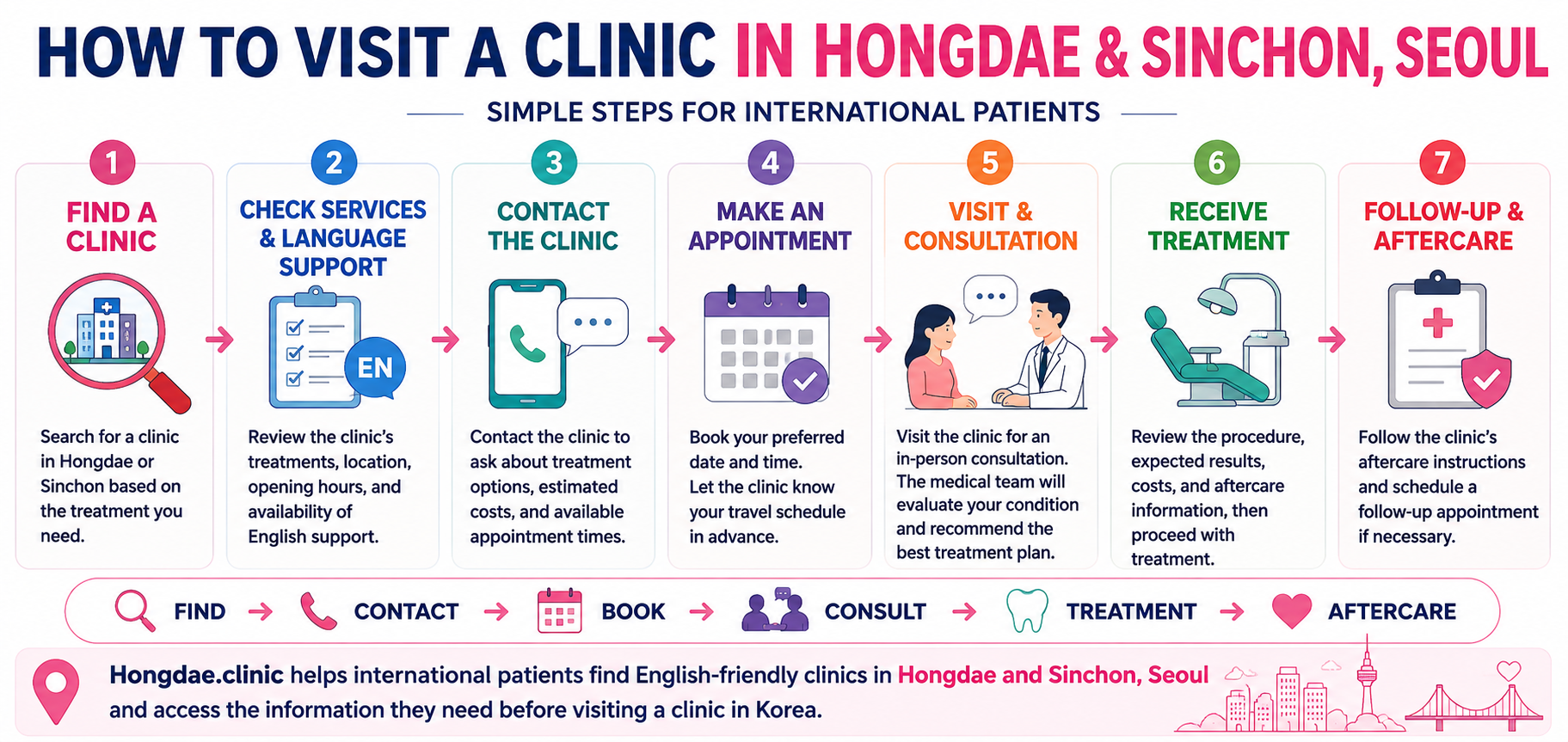
When contacting a plastic surgery clinic, consider asking:
- Is English consultation available?
- Which body areas should be treated first?
- Is my weight sufficiently stable?
- Should my procedures be combined or staged?
- Do I need skin removal, Liposuction, or both?
- What scars should I expect?
- Do I need nutritional or blood testing?
- What is my personal wound-healing risk?
- How will blood-clot risk be managed?
- How long should I stay in Korea?
- When can I safely take a long-distance flight?
- Is postoperative follow-up included?
Tell the surgeon whether your weight loss resulted from bariatric surgery, GLP-1 medications, lifestyle modification, or combined treatment. Current evidence indicates that present BMI, diabetes, overall health, and procedure complexity may be more important predictors of complications than the method of weight loss itself.
Choosing a Post Weight Loss Surgery Clinic in Hongdae or Sinchon
Consider:
- Qualified plastic surgeon
- Experience with post-weight-loss body contouring
- Detailed full-body assessment
- Customized procedure prioritization
- Clear combined vs staged surgery plan
- Medical and nutritional evaluation
- Careful wound and scar management
- Blood-clot prevention planning
- English communication
- Transparent surgery costs
Current evidence shows that Post Weight Loss Surgery should be treated as an individualized multi-stage body-contouring process, particularly when several anatomical areas require correction.
Hongdae & Sinchon Medical Care
Hongdae is convenient for patients around:
Hongik University · Yeonnam-dong · Hapjeong · Sangsu · Mapo
Sinchon is convenient for patients around:
Yonsei University · Ewha Womans University · Seodaemun · Mapo
Common searches include:
- Post Weight Loss Surgery Hongdae
- Post Bariatric Surgery Hongdae
- Loose Skin Removal Hongdae
- Post Weight Loss Surgery Sinchon
- Post Bariatric Body Contouring Sinchon
- English speaking plastic surgery clinic Sinchon
Frequently Asked Questions
What is Post Weight Loss Surgery?
Post Weight Loss Surgery includes procedures used to remove redundant skin and reshape the body after substantial weight reduction. Treatment may involve the abdomen, arms, thighs, lower body, breasts, chest, or several areas.
Do I need bariatric surgery before Post Weight Loss Surgery?
No. Patients may seek surgery after weight loss achieved through bariatric procedures, GLP-1 medications, lifestyle changes, or combined approaches. A 2026 cohort found no significant difference in complication rates based solely on weight-loss method.
Can several areas be treated at the same time?
Yes, in selected patients. However, recent multicenter data found substantially higher complication rates when three or four procedures were combined, particularly because of wound-healing problems.
Does Post Weight Loss Surgery leave scars?
Yes. Removing substantial loose skin requires permanent incisions. The location and length depend on which areas are treated and how much redundant tissue must be removed.
Can foreigners get Post Weight Loss Surgery in Seoul?
Yes. International patients can contact plastic surgery clinics in Seoul regarding full-body assessment, staged surgery, scar planning, medical evaluation, recovery, postoperative monitoring, and English-language support.