Hongdae & Sinchon Zygoma Reduction
in Seoul, Korea
Zygoma reduction is a surgical procedure designed to reduce prominent cheekbones and create a smoother, more balanced facial contour. Treatment may involve repositioning or reshaping the cheekbone based on individual facial structure and aesthetic goals.
Patients seeking
zygoma reduction in Hongdae or Sinchon should consider surgical technique, facial proportions, and recovery needs.
If you are concerned about prominent cheekbones, a wide-looking midface, strong lateral cheek projection, or facial asymmetry, Zygoma Reduction may be considered to create a smoother and narrower facial contour. Also known as reduction malarplasty or cheekbone reduction, the procedure reshapes and repositions portions of the zygomatic bone and zygomatic arch.
Hongdae and Sinchon are convenient areas for zygoma reduction consultations in Seoul, especially for international residents, students, and travelers seeking facial contouring surgery.
What Is Zygoma Reduction?
Zygoma Reduction is a facial bone contouring procedure designed to reduce excessive prominence of the cheekbones.
Depending on individual anatomy, surgery may address the:
- Zygomatic body
- Zygomatic arch
- Front cheekbone projection
- Lateral facial width
- Differences between the left and right sides
The procedure usually involves carefully designed osteotomies, inward repositioning of the cheekbone, and fixation while the bone heals.
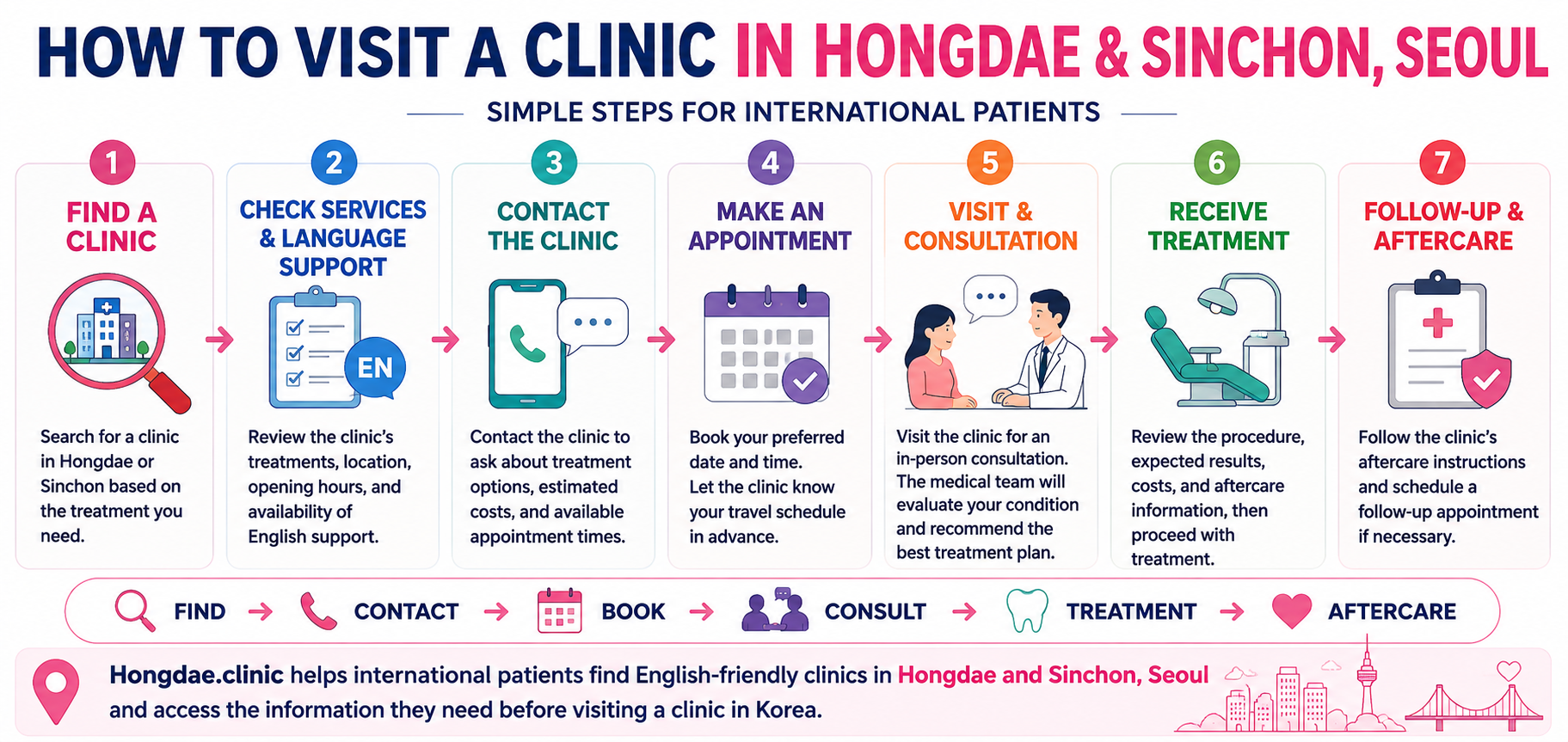
Consultation → 3D skeletal assessment → osteotomy planning → zygoma repositioning → fixation → recovery → follow-up.
When Might You Consider Zygoma Reduction?
Zygoma Reduction may be considered for:
- Prominent cheekbones
- Wide midface appearance
- Excessive lateral cheek projection
- Strong front cheekbone prominence
- Facial-width asymmetry
- Desire for softer facial contours
- Cheekbone prominence that remains despite weight loss
- Facial contouring combined with jaw or chin reduction
Before surgery, it is important to determine whether facial width comes primarily from bone, soft tissue, facial fat, or a combination.
Which Parts of the Cheekbone Are Reduced?
Zygomatic Body
The zygomatic body forms the prominent front portion of the cheekbone.
When this area projects strongly forward or diagonally, an osteotomy may allow the bone to be repositioned to create a smoother frontal and oblique facial contour.
Zygomatic Arch
The zygomatic arch extends toward the side of the face and contributes significantly to facial width.
Moving the arch inward can reduce lateral projection and create a narrower appearance from the front.
Combined Zygoma Reduction
Many modern techniques address both the zygomatic body and arch because reducing only one portion may not provide balanced contouring.
Zygoma Reduction Surgery Process
A typical surgical process may include:
- Plastic or maxillofacial surgery consultation
- Facial photography and CT assessment
- Evaluation of cheekbone width and asymmetry
- Customized osteotomy design
- Repositioning of the zygomatic body and/or arch
- Bone fixation where required
- Postoperative monitoring and follow-up
The degree of movement should be planned according to the patient's existing facial proportions rather than attempting maximum reduction.
Zygoma Reduction vs Cheek Reduction
These terms are often used interchangeably, but “Cheek Reduction” can have a broader meaning.
Zygoma Reduction
- Changes the cheekbone
- Reduces skeletal facial width
- Treats prominent zygomatic body or arch
Soft-Tissue Cheek Reduction
- Targets fat or other soft tissues
- Does not reposition the cheekbone
- May include procedures such as buccal fat reduction
A patient with prominent bones may gain little benefit from fat removal alone.
Zygoma Reduction vs Buccal Fat Removal
These procedures treat different anatomical causes of facial fullness.
Zygoma Reduction modifies bone, while Buccal Fat Removal reduces selected soft-tissue volume in the lower cheek.
Zygoma Reduction may be more appropriate when facial width is caused mainly by:
- Wide cheekbones
- Lateral zygomatic arches
- Prominent malar projection
Buccal Fat Removal may be considered when fullness is primarily related to the buccal fat pad.
Removing too much facial fat in a patient whose concern is actually skeletal can potentially create unwanted hollowing without adequately narrowing the face.
Zygoma Reduction vs Jaw Reduction
These procedures target different parts of the face.
Zygoma Reduction
- Targets the midface
- Reduces cheekbone prominence
- Can decrease visible bizygomatic width
Jaw Reduction
- Targets the lower face
- Reshapes mandibular angles or lower jaw width
- Creates a smoother lower-face contour
Some patients have both prominent cheekbones and a wide jaw and may discuss combined facial contouring, but more extensive surgery is not automatically necessary.
Zygoma Reduction and V-Line Surgery
V-Line Surgery generally focuses on the lower jaw and chin, whereas Zygoma Reduction focuses on the midface.
The procedures may be combined when a patient has:
- Wide cheekbones
- Prominent mandibular angles
- Broad chin
- Overall wide facial proportions
However, combining multiple bone procedures increases the extent of surgery and recovery, so treatment should remain anatomically justified.
Can Zygoma Reduction Make the Face Look Smaller?
Yes, particularly when prominent cheekbones are a major cause of facial width.
By repositioning the zygomatic arch and selected portions of the cheekbone inward, surgery can create a narrower midface and softer facial outline.
The visible effect depends on:
- Original cheekbone width
- Degree of lateral projection
- Front cheekbone prominence
- Jaw width
- Soft-tissue thickness
- Facial proportions
The goal should be balanced narrowing rather than making the cheekbones as small as technically possible.
Can Zygoma Reduction Correct Facial Asymmetry?
Selected cheekbone asymmetry may be improved by planning different movements on each side.
Evaluation should consider:
- Left-right zygomatic width
- Front cheekbone projection
- Zygomatic arch shape
- Jaw asymmetry
- Chin position
- Facial soft tissues
Perfect symmetry cannot be guaranteed because differences may remain in both bone and overlying soft tissue.
How Is the Zygoma Repositioned?
Depending on the technique, the surgeon may create osteotomies around the zygomatic body and arch and move the bone inward, backward, or in another customized direction.
The surgical vector is important because the cheekbone contributes not only to facial width but also to support of the overlying midface tissues.
Excessive reduction or poorly controlled movement can potentially produce an unnatural contour or insufficient soft-tissue support.
Why Is Bone Fixation Important?
Stable bone positioning is important while the osteotomy heals.
Depending on the surgical technique, fixation may use plates and screws to maintain the intended cheekbone position.
Insufficient stability may contribute to problems such as:
- Bone displacement
- Asymmetry
- Delayed union
- Nonunion
- Malunion
- Contour irregularity
Patients should ask how the repositioned bone will be stabilized after surgery.
Can Zygoma Reduction Cause Cheek Sagging?
Yes. Soft-tissue drooping is a recognized concern after reduction malarplasty.
The cheekbone supports surrounding facial tissues, and surgery requires some degree of soft-tissue dissection around the zygoma.
The likelihood of postoperative sagging may be influenced by:
- Amount of bone reduction
- Patient age
- Skin elasticity
- Existing facial laxity
- Soft-tissue dissection
- Fixation stability
- Surgical technique
Careful repositioning and preservation of soft-tissue support are therefore important parts of planning.
Can the Cheekbone Move After Surgery?
Unwanted displacement is possible if the repositioned bone does not remain stable during healing.
Potential consequences may include:
- Facial asymmetry
- Unnatural contour
- Palpable irregularity
- Delayed bone healing
- Nonunion
- Need for revision surgery
Appropriate osteotomy design, bone contact, and fixation can help reduce these risks.
Does Zygoma Reduction Leave a Visible Scar?
Many procedures use an intraoral incision to access the front portion of the zygoma.
Depending on the technique, an additional small incision may be placed near the sideburn or temporal hair-bearing area to manage the posterior zygomatic arch.
The exact incision pattern should be discussed before surgery because techniques vary.
Can Zygoma Reduction Affect Facial Nerves?
Nerve-related complications are possible.
Facial contouring takes place near important sensory and motor structures, and temporary numbness or unusual sensation may occur following surgery.
Potential symptoms can include:
- Cheek numbness
- Altered sensation
- Temporary weakness
- Facial asymmetry
Persistent nerve injury is less common but remains a possible surgical complication.
When Do Results Appear?
The cheekbone position changes immediately during surgery, but postoperative swelling can initially make the face appear wider than expected.
The contour generally becomes more visible as:
- Swelling decreases
- Bone healing progresses
- Soft tissues settle
- Facial asymmetry from swelling improves
Final results should not be judged during the earliest postoperative period.
What Is Recovery Like?
Temporary postoperative symptoms may include:
- Facial swelling
- Bruising
- Cheek tightness
- Temporary numbness
- Intraoral discomfort
- Limited mouth opening
- Temporary asymmetry
- Difficulty chewing harder foods
Recovery varies according to the amount of bone movement, fixation technique, and whether Jaw Reduction, Chin Reduction, or other procedures are performed simultaneously.
Possible Risks and Complications
Potential complications may include:
- Bleeding
- Infection
- Temporary sensory changes
- Cheek drooping
- Facial asymmetry
- Limited mouth opening
- Bone displacement
- Delayed union or nonunion
- Malunion
- Contour irregularity
- Facial nerve injury
- Unsatisfactory reduction
- Need for revision surgery
Because Zygoma Reduction changes both skeletal width and support for overlying facial tissues, conservative bone movement and stable fixation are important considerations.
Can Too Much Cheekbone Be Reduced?
Yes.
Excessive reduction can potentially produce:
- Overly narrow midface
- Flattened cheek contour
- Loss of natural facial structure
- Soft-tissue sagging
- Asymmetry
- Difficulty with revision surgery
The best surgical result is not necessarily the greatest possible reduction.
The amount of movement should preserve a natural relationship between the cheeks, eyes, jawline, and overall facial proportions.
Are Zygoma Reduction Results Permanent?
Once the repositioned bone has healed, the skeletal change is generally long-lasting.
However, the surrounding soft tissues continue to change with:
- Aging
- Weight changes
- Skin laxity
- Loss of facial volume
- Gravity
Future facial sagging can therefore develop even when the underlying cheekbone position remains stable.
Revision Zygoma Reduction
Revision surgery may be considered for:
- Remaining cheekbone prominence
- Facial asymmetry
- Bone displacement
- Irregular contour
- Insufficient reduction
- Excessive reduction
- Cheek sagging
- Problems related to previous fixation
Revision procedures can be more complex because the surgeon must consider previous osteotomy lines, fixation hardware, bone healing, scar tissue, and altered soft-tissue support.
A detailed CT evaluation is particularly important before secondary facial bone surgery.
Can Zygoma Reduction Look Natural?
Yes.
Natural-looking results generally depend on balancing:
- Cheekbone width
- Front cheek projection
- Zygomatic arch position
- Jaw width
- Chin shape
- Facial soft tissues
The goal should be to soften excessive cheekbone prominence while maintaining enough projection to support a natural three-dimensional facial contour.
Zygoma Reduction for International Patients
When contacting a plastic surgery clinic, consider asking:
- Is English consultation available?
- Is my facial width primarily caused by the zygomatic body or arch?
- How much inward movement is recommended?
- Which osteotomy technique will be used?
- How will the bone be fixed?
- What is the risk of cheek sagging?
- Will I have any external incisions?
- What downtime should I expect?
- How long should I stay in Korea?
- Is postoperative follow-up included?
If you have previously undergone Zygoma Reduction, Jaw Reduction, V-Line Surgery, Facelift, facial fat grafting, or other facial contouring procedures, tell the surgeon because previous treatment may influence surgical anatomy and planning.
Choosing a Zygoma Reduction Clinic in Hongdae or Sinchon
Consider:
- Qualified plastic or maxillofacial surgeon
- Experience with reduction malarplasty
- Detailed CT and 3D skeletal assessment
- Customized zygomatic osteotomy planning
- Stable bone-fixation strategy
- Careful management of facial soft tissues
- Clear discussion of cheek-sagging risk
- Experience with revision facial contouring
- English communication
- Transparent surgery costs
Zygoma Reduction should be planned according to individual cheekbone anatomy, facial proportions, soft-tissue support, and the amount of narrowing genuinely required, rather than using the same degree of reduction for every patient.
Hongdae & Sinchon Medical Care
Hongdae is convenient for patients around:
Hongik University · Yeonnam-dong · Hapjeong · Sangsu · Mapo
Sinchon is convenient for patients around:
Yonsei University · Ewha Womans University · Seodaemun · Mapo
Common searches include:
- Zygoma Reduction Hongdae
- Cheekbone Reduction Hongdae
- Reduction Malarplasty Hongdae
- Zygoma Reduction Sinchon
- Cheekbone Surgery Sinchon
- English speaking facial contouring clinic Sinchon
Frequently Asked Questions
What is Zygoma Reduction?
Zygoma Reduction, also called reduction malarplasty, is facial contouring surgery that reduces or repositions prominent portions of the cheekbone and zygomatic arch to create a narrower midface.
Is Zygoma Reduction the same as Cheek Reduction?
It is one type of Cheek Reduction. Zygoma Reduction modifies bone, while other cheek-reduction procedures may target facial fat or other soft tissues.
Can Zygoma Reduction make my face look narrower?
Yes. Moving prominent cheekbones or zygomatic arches inward can reduce apparent midface width in appropriately selected patients.
Can Zygoma Reduction cause sagging?
Yes. Cheek soft-tissue drooping is a recognized potential complication, particularly when significant bone reduction or soft-tissue dissection is performed.
Can foreigners get Zygoma Reduction in Seoul?
Yes. International patients can contact plastic surgery or maxillofacial clinics in Seoul regarding 3D skeletal assessment, surgical planning, recovery, postoperative monitoring, and English-language support.