Hongdae & Sinchon Erectile Dysfunction
in Seoul, Korea
Erectile dysfunction is a condition in which achieving or maintaining an erection becomes difficult and may affect sexual confidence and quality of life. Treatment may include medication, lifestyle guidance, diagnostic testing, or other therapies depending on the underlying cause. Patients seeking erectile dysfunction treatment in Hongdae or Sinchon should consider medical evaluation, treatment options, and personalized care.
If you have difficulty getting or maintaining an erection firm enough for sexual activity, you may be experiencing erectile dysfunction (ED). ED can have physical, hormonal, medication-related, psychological, or lifestyle causes and sometimes may indicate another underlying health problem.
Hongdae and Sinchon are convenient areas for urology and men’s health consultations in Seoul, especially for international residents, students, and long-term visitors.
What Is Erectile Dysfunction?
Erectile dysfunction (ED) is the recurrent or persistent difficulty achieving or maintaining an erection sufficient for satisfactory sexual activity.
Occasional erection difficulties can occur, but persistent symptoms should be evaluated because ED may be associated with cardiovascular disease, diabetes, hormonal problems, neurological conditions, medications, or psychological factors.
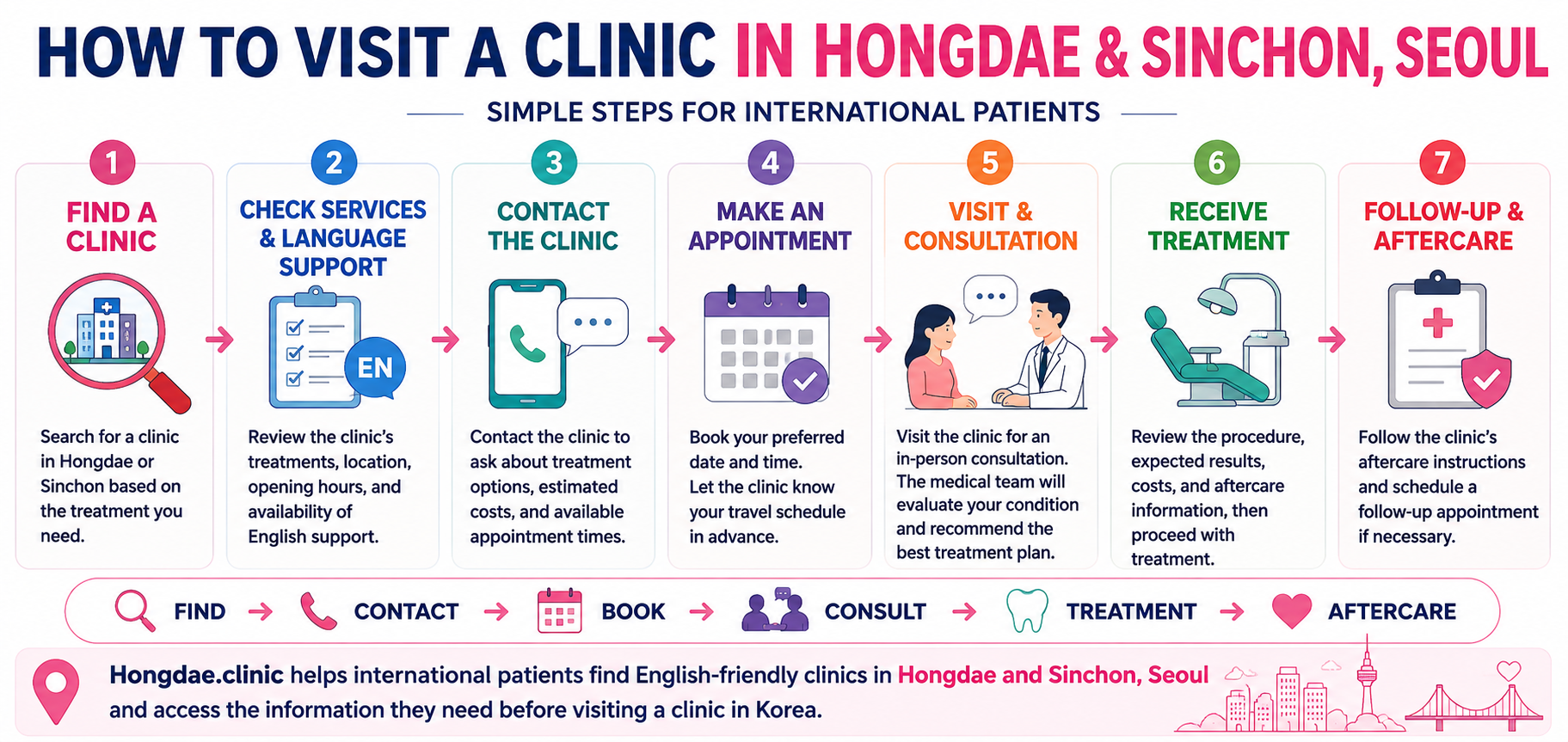
Consultation → medical assessment → cause evaluation → customized treatment → follow-up.
When Might You Consider an ED Consultation?
A urology consultation may be appropriate if you experience:
- Difficulty getting an erection
- Difficulty maintaining an erection
- Reduced erection firmness
- Frequent loss of erection during sexual activity
- New or worsening erectile problems
- ED associated with diabetes or cardiovascular disease
- Performance anxiety or stress affecting erections
The AUA recommends a thorough medical, sexual, and psychosocial history, physical examination, and selective laboratory testing when evaluating ED.
What Causes Erectile Dysfunction?
Blood Flow & Cardiovascular Conditions
High blood pressure, atherosclerosis, heart disease, diabetes, and obesity can affect circulation and contribute to erectile problems.
Hormonal or Neurological Causes
Low testosterone, thyroid disorders, nerve damage, spinal cord conditions, and pelvic surgery may contribute to ED.
Psychological & Lifestyle Factors
Stress, anxiety, depression, smoking, excessive alcohol consumption, and low physical activity may also contribute to or worsen ED.
Erectile Dysfunction Evaluation
A typical evaluation may include:
- Urology consultation
- Medical and sexual history
- Medication review
- Physical examination
- Blood or hormone testing when appropriate
- Assessment of cardiovascular risk factors
- Customized treatment planning
The AUA specifically recommends measuring morning total testosterone in men presenting with ED and advises counseling patients that ED may be a marker for underlying cardiovascular disease.
Common Erectile Dysfunction Treatments
Oral ED Medication
Medications known as PDE5 inhibitors improve blood flow to the penis and are commonly used to help achieve and maintain erections.
Injection or Urethral Medication
Medication may also be delivered by penile injection or urethral suppository when oral treatment is unsuitable or ineffective.
Vacuum & Surgical Options
Selected patients may consider mechanical erection devices or, when other treatments are unsuccessful, a penile prosthesis. FDA-approved penile prostheses are available for appropriate patients with ED.
Lifestyle & Psychological Treatment
Treating contributing health and lifestyle factors may be an important part of ED management.
Recommendations may include:
- Stopping smoking
- Reducing excessive alcohol use
- Increasing physical activity
- Maintaining a healthy weight
- Managing diabetes or cardiovascular conditions
- Addressing anxiety or relationship concerns
Counseling may also be considered when stress, anxiety, or emotional factors contribute to erectile difficulties.
ED Medication Safety
ED medications should be used after appropriate medical evaluation.
Sildenafil and similar medications can interact dangerously with nitrate medications such as nitroglycerin, potentially causing a significant drop in blood pressure.
Tell your doctor about heart medications, blood pressure medications, supplements, and other drugs before starting ED treatment.
When Do ED Treatments Work?
The response time depends on the treatment selected.
Oral medications may work around the time of sexual activity, while improvements from lifestyle modification or treatment of underlying medical conditions may develop more gradually.
If one treatment does not provide adequate results, a urologist may adjust the dose, change the treatment, or discuss another option.
Experimental ED Treatments
Some clinics promote treatments such as stem cells or platelet-rich plasma (PRP) for erectile dysfunction.
The AUA currently considers intracavernosal stem-cell therapy investigational and PRP therapy experimental, meaning these should not be presented as established standard ED treatments.
Patients should ask about the evidence and regulatory status before choosing regenerative treatments.
Erectile Dysfunction Treatment for International Patients
When contacting a urology clinic, consider asking:
- Is English consultation available?
- What may be causing my ED?
- Are blood or hormone tests recommended?
- Which medication or treatment is appropriate?
- Are my current medications safe with ED treatment?
- Is follow-up included?
- Are additional cardiovascular tests recommended?
Bring a list of your current medications, supplements, medical conditions, and previous ED treatments to the consultation.
Choosing an ED Clinic in Hongdae or Sinchon
Consider:
- Qualified urologist
- Detailed medical and sexual history
- Cardiovascular risk assessment
- Hormone testing when appropriate
- Evidence-based ED treatments
- Clear medication safety guidance
- English communication
- Transparent treatment costs
Because ED can sometimes be a sign of another health condition, evaluation should focus on both sexual function and underlying health, rather than simply prescribing medication.
Hongdae & Sinchon Medical Care
Hongdae is convenient for patients around:
Hongik University · Yeonnam-dong · Hapjeong · Sangsu · Mapo
Sinchon is convenient for patients around:
Yonsei University · Ewha Womans University · Seodaemun · Mapo
Common searches include:
- Erectile Dysfunction Hongdae
- ED Treatment Hongdae
- Urology Clinic Hongdae
- Erectile Dysfunction Sinchon
- ED Treatment Sinchon
- English speaking urology clinic Sinchon
Frequently Asked Questions
What is erectile dysfunction?
ED is the persistent or recurrent inability to get or maintain an erection sufficient for satisfactory sexual activity.
Can foreigners get ED treatment in Seoul?
Yes. International patients can contact urology and men’s health clinics in Seoul about consultation, testing, treatment options, and English-language support.
Can ED be a sign of another health problem?
Yes. ED can be associated with cardiovascular disease, diabetes, hormonal disorders, neurological conditions, medications, and psychological factors.
What treatments are available for ED?
Treatment options may include lifestyle changes, counseling, oral medication, injectable medication, vacuum devices, and penile prosthesis surgery depending on the cause and severity.
Can ED be treated successfully?
Many patients can improve erectile function after identifying the underlying cause and selecting an appropriate treatment. The best approach varies according to
overall health, medications, ED severity, and personal preferences.