Hongdae & Sinchon Nose Procedures
in Seoul, Korea
Nose procedures include surgical and non-surgical treatments designed to improve nasal shape, balance, function, or facial harmony. Treatment options may include rhinoplasty, fillers, or functional correction depending on individual anatomy and goals.
Patients seeking
nose procedures in Hongdae or Sinchon should consider treatment method, expected results, and recovery needs.
Nose Procedures in Korea
Explore personalized nose procedures in Korea designed to improve nasal shape, facial balance, breathing function, or a combination of both. Treatment plans can be customized according to your facial proportions, nasal structure, concerns, and desired results.
For international patients, clinics experienced with foreign visitors focus on detailed consultation, natural-looking results, clear communication, and structured aftercare throughout the process.
Comprehensive Nose Procedures
Nose procedures can address the bridge, tip, nostrils, overall proportions, and certain functional concerns.
Common procedures include:
- Rhinoplasty – Reshaping the nose to improve overall proportion and appearance
- Nasal Bridge Augmentation – Increasing bridge height or improving the nasal profile
- Nasal Tip Surgery – Refining the shape, projection, or definition of the nasal tip
- Alar Reduction – Reducing the width or appearance of the nostrils
- Hump Reduction – Smoothing or reducing a prominent nasal hump
- Short Nose Correction – Improving nasal length and overall proportions when appropriate
- Long Nose Correction – Adjusting an overly long or downward-pointing nasal appearance
- Crooked Nose Correction – Improving visible nasal asymmetry or deviation
- Revision Rhinoplasty – Corrective surgery for patients who have undergone previous nose surgery
- Septoplasty – Surgery to correct certain structural problems of the nasal septum that may affect breathing
Personalized Nose Consultation
Every nose has a different structure, so treatment should be planned according to both the nose itself and the patient's overall facial proportions.
During the consultation, the surgeon may evaluate:
- Nasal bridge height and width
- Tip shape and projection
- Nostril size and symmetry
- Nasal length
- Facial proportions
- Skin thickness
- Internal nasal structure
- Previous surgery or procedures
- Functional breathing concerns
- Desired changes and expectations
This helps create a treatment plan that suits the individual rather than following a single standard nose shape.
Natural-Looking Facial Balance
For many international patients, the goal of nose surgery is not simply to create a higher or smaller nose.
A well-planned procedure considers how the nose works with the:
- Forehead
- Eyes
- Cheeks
- Lips
- Chin
- Overall facial profile
The aim is generally to achieve a more balanced appearance while maintaining features that suit the patient's individual face.
Primary & Revision Rhinoplasty
Patients considering their first rhinoplasty and those seeking revision surgery may require different approaches.
Primary Rhinoplasty
Designed for patients undergoing nose surgery for the first time. Treatment may focus on the bridge, tip, nostrils, or overall nasal proportions.
Revision Rhinoplasty
Performed after previous nasal surgery when there are concerns related to shape, asymmetry, structural support, or other issues.
Revision procedures are often more complex, so a detailed evaluation of previous surgery and current nasal structure is especially important.
Aesthetic & Functional Nose Procedures
Some patients have both cosmetic and functional concerns.
Depending on the condition, treatment planning may consider:
- Visible nasal deviation
- Septal problems
- Structural asymmetry
- Difficulty breathing through the nose
- Previous nasal injury
- Changes following earlier surgery
When functional concerns are present, appropriate medical evaluation is necessary to determine whether structural treatment may be helpful.
What to Expect During Recovery
Recovery varies depending on the type and extent of the procedure.
Patients may experience:
- Swelling
- Bruising around the nose or eyes
- Temporary nasal congestion
- Mild discomfort or tightness
- Changes in appearance as swelling gradually decreases
Initial recovery may take several days to weeks, while the final nasal shape can continue to settle over a longer period.
International patients should consider their travel schedule and follow-up requirements when planning surgery in Korea.
Foreigner-Friendly Nose Surgery Experience
Having surgery in another country requires clear communication before and after the procedure.
Foreigner-friendly services may include:
- Detailed pre-surgery consultation
- Language assistance when available
- Clear explanation of surgical options
- Transparent information about expected costs
- Preoperative examination guidance
- Postoperative care instructions
- Follow-up scheduling for international patients
Patients are encouraged to discuss their desired results, previous procedures, medical history, and travel plans before surgery.
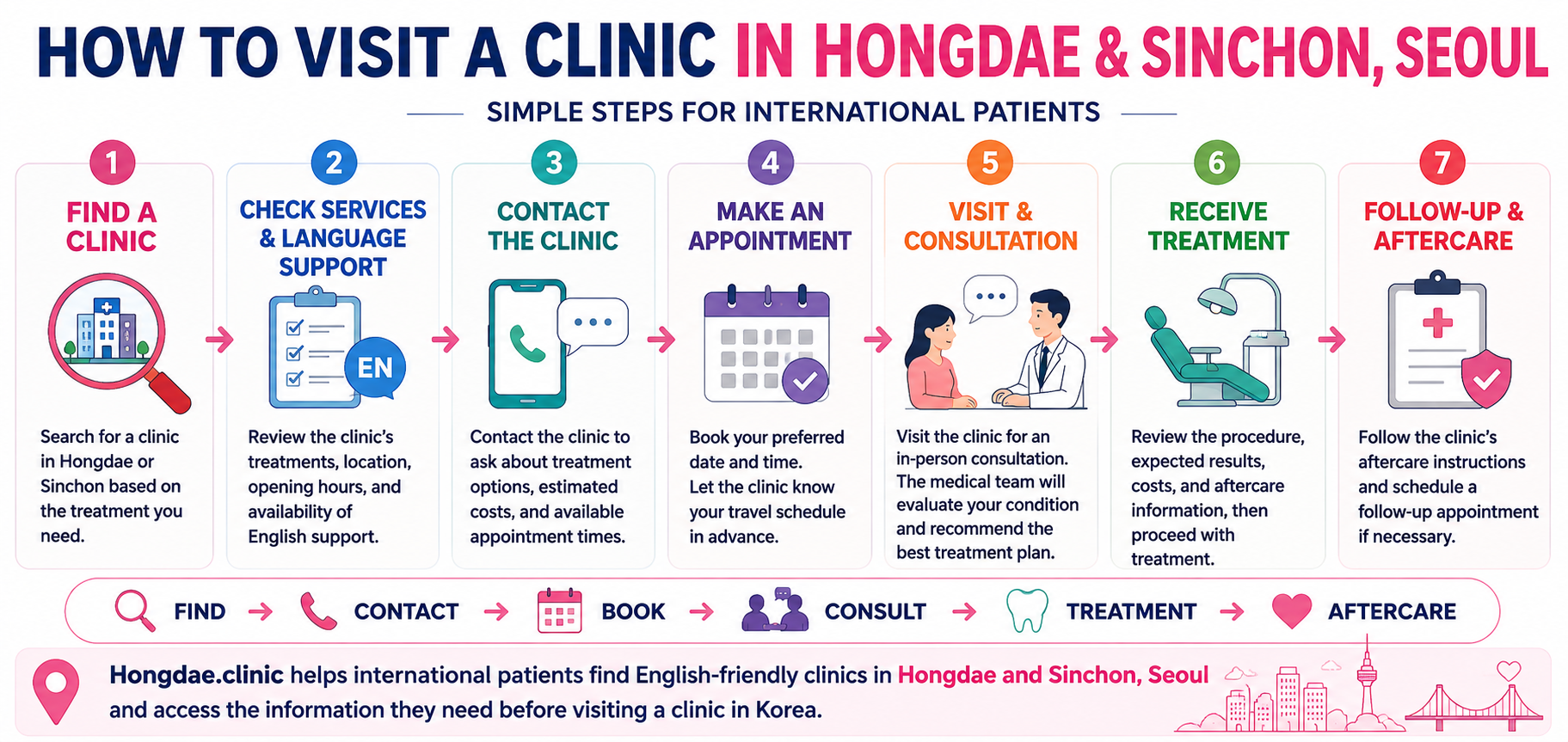
How the Nose Procedure Process Works
1. Consultation
Discuss your concerns, desired changes, previous procedures, and medical history.
2. Nasal & Facial Evaluation
The surgeon evaluates your nasal structure and overall facial proportions.
3. Surgical Planning
The recommended procedure, surgical approach, recovery, and expected changes are explained.
4. Procedure
Surgery is performed according to your personalized treatment plan.
5. Recovery & Follow-Up
Postoperative examinations and aftercare are provided to monitor healing.
Plan Your Nose Procedure in Korea
Whether you are considering rhinoplasty, tip refinement, bridge augmentation, alar reduction, revision surgery, or functional correction, a personalized consultation can help determine which approach is most appropriate.
International patients can plan their procedure according to their facial structure, desired results, recovery period, and travel schedule.
For procedure recommendations, appointment availability, and estimated costs, contact the clinic in advance with your main concerns, previous surgery history if applicable, and expected visit dates.