Hongdae & Sinchon Testosterone Replacement Therapy
in Seoul, Korea
Testosterone replacement therapy (TRT) is used to treat clinically low testosterone levels that may cause fatigue, reduced libido, or other symptoms. Treatment may include injections, gels, or other forms based on blood tests, symptoms, and individual health factors. Patients seeking testosterone replacement therapy in Hongdae or Sinchon should consider proper diagnosis, regular monitoring, and personalized medical care.
If you experience low libido, reduced energy, erectile difficulties, loss of muscle mass, or other symptoms associated with low testosterone, testosterone replacement therapy (TRT) may be considered when blood testing confirms testosterone deficiency. Diagnosis should be based on both compatible symptoms and consistently low testosterone levels, not symptoms alone.
Hongdae and Sinchon are convenient areas for urology and men’s hormone consultations in Seoul, especially for international residents, students, and long-term visitors.
What Is Testosterone Replacement Therapy?
Testosterone Replacement Therapy (TRT) provides testosterone to men whose bodies are not producing adequate amounts of the hormone.
TRT aims to restore testosterone to a physiological range and may improve symptoms related to properly diagnosed hypogonadism, including sexual function, anemia, bone health, muscle mass, and other testosterone-deficiency symptoms.
Consultation → hormone testing → cause assessment → treatment selection → testosterone monitoring → follow-up.
When Might You Consider TRT?
A testosterone evaluation may be appropriate if you experience:
- Reduced sexual desire
- Erectile difficulties
- Reduced energy
- Loss of muscle mass
- Reduced body hair
- Unexplained anemia
- Reduced bone density
- Symptoms associated with testicular or pituitary disorders
These symptoms can have many other causes, so low energy or reduced libido alone does not confirm testosterone deficiency.
How Is Low Testosterone Diagnosed?
A typical evaluation may include:
- Urology or hormone consultation
- Medical and sexual history
- Two early-morning testosterone blood tests
- LH and other hormone testing when appropriate
- Review of medications and underlying conditions
- Fertility discussion
- Treatment planning
The AUA uses a total testosterone level below 300 ng/dL as a reasonable diagnostic threshold and recommends confirming low testosterone with two separate early-morning measurements.
The Endocrine Society similarly emphasized in July 2026 that diagnosis requires symptoms plus consistently low testosterone measured with appropriate testing.
Common Types of Testosterone Therapy
Testosterone Injections
Testosterone can be administered by injection at intervals determined by the formulation and treatment plan.
Testosterone Gel
Daily testosterone gel is absorbed through the skin. Patients must follow instructions carefully because testosterone can potentially transfer to another person through skin contact before it has fully absorbed.
Other Testosterone Formulations
Depending on availability and medical suitability, testosterone can also be delivered through patches, pellets, nasal preparations, or other formulations.
What Benefits Can TRT Provide?
In appropriately diagnosed men, TRT may help improve:
- Sexual desire
- Erectile function in selected patients
- Anemia related to testosterone deficiency
- Bone mineral density
- Muscle mass
- Body composition
- Some symptoms of hypogonadism
Response varies considerably, and testosterone should not be prescribed solely to improve athletic performance or physical appearance.
TRT and Fertility
This is one of the most important issues to discuss before treatment.
External testosterone can suppress sperm production, sometimes causing severe oligospermia or azoospermia. The AUA recommends that testosterone therapy should not be prescribed to men currently trying to conceive.
Men who want to preserve fertility should tell their urologist before starting TRT. Depending on the underlying hormonal condition, alternatives such as hCG or selected hormone-modulating medications may sometimes be considered.
What Tests Are Needed Before TRT?
Testing should be individualized but may include:
- Total testosterone
- Repeat morning testosterone
- LH or other hormone tests
- Hemoglobin and hematocrit
- PSA when appropriate
- Assessment of fertility goals
- Evaluation of underlying medical conditions
The AUA recommends measuring hemoglobin and hematocrit before testosterone therapy because TRT can increase red blood cell production and cause polycythemia.
Possible Side Effects and Risks
Potential concerns associated with TRT can include:
- Increased hematocrit
- Acne or oily skin
- Fluid retention
- Changes in fertility
- Reduced sperm production
- Prostate-related monitoring needs
- Blood pressure changes in some patients
- Other formulation-specific side effects
Regular blood testing and clinical follow-up are therefore important during treatment.
TRT and Cardiovascular Health
Current evidence has changed the way cardiovascular risk is discussed.
The large TRAVERSE trial involving more than 5,200 men did not show a meaningful increase in major cardiovascular events such as cardiovascular death, heart attack, or stroke compared with placebo.
However, the Endocrine Society noted in 2026 that important long-term safety questions remain and highlighted increased pulmonary embolism and fracture findings in the trial, so individualized risk assessment is still necessary.
TRT and Prostate Health
Men considering TRT may require assessment of prostate symptoms, prostate cancer risk, and PSA testing when clinically appropriate.
In June 2026, the FDA revised testosterone product labeling, including updated safety information regarding prostate cancer and benign prostatic hyperplasia (BPH).
Long-term prostate safety remains an area requiring continued monitoring and research.
Does Aging Alone Mean You Need TRT?
No.
Testosterone levels can decline with age, but symptoms such as fatigue, reduced libido, and mood changes may also result from obesity, medications, sleep problems, chronic illness, or other conditions.
The Endocrine Society recommends identifying reversible contributors before assuming testosterone therapy is necessary. For some men with obesity-associated low testosterone and no other identified cause, weight loss may be the preferred first-line approach.
How Is TRT Monitored?
Patients receiving testosterone therapy usually require ongoing follow-up.
Monitoring may include:
- Testosterone levels
- Hemoglobin and hematocrit
- Symptom improvement
- Treatment side effects
- PSA or prostate evaluation when appropriate
- Blood pressure and general health
- Fertility considerations
Treatment should aim for a normal physiological testosterone range together with meaningful improvement in symptoms, rather than simply achieving the highest possible laboratory value.
Testosterone Replacement Therapy for International Patients
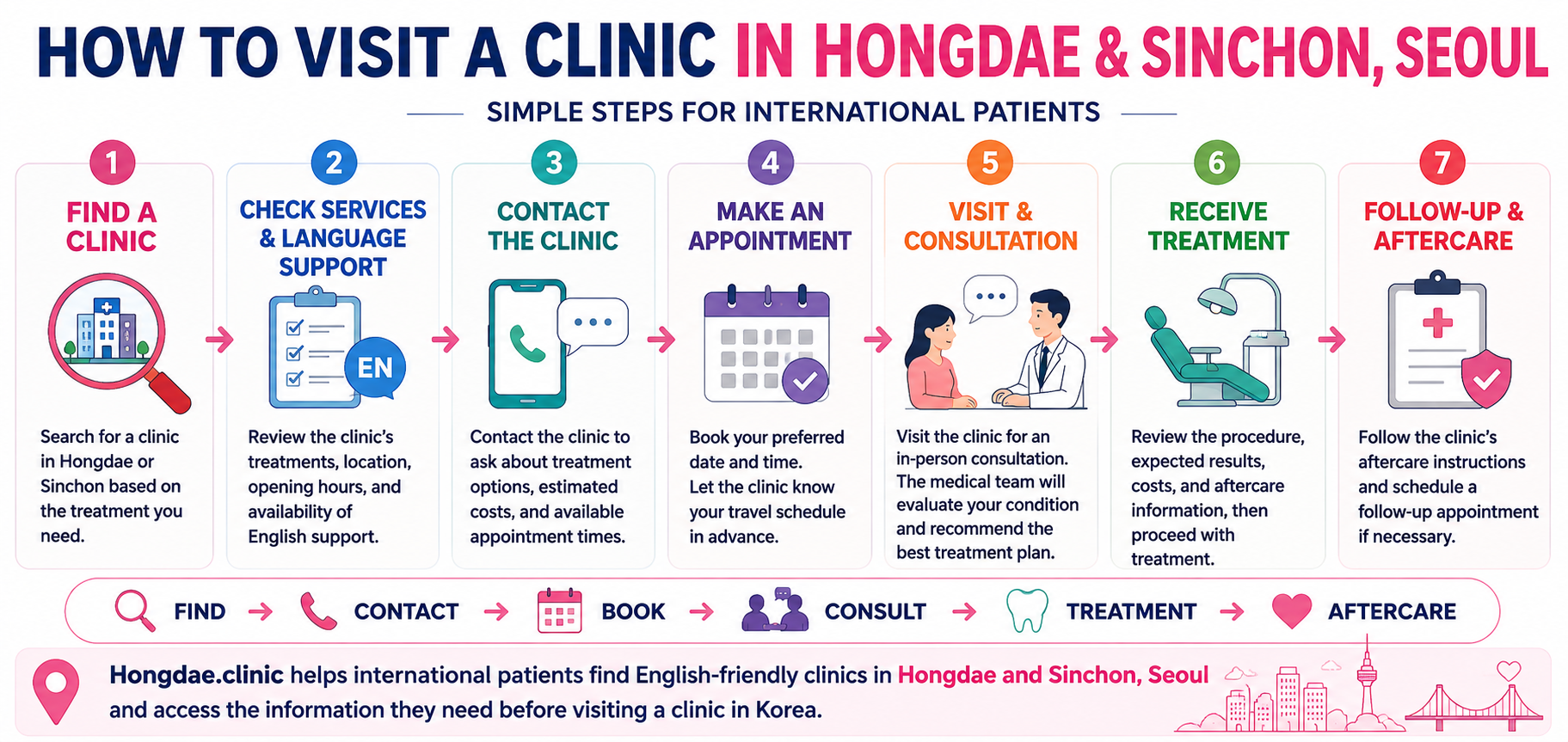
When contacting a clinic, consider asking:
- Is English consultation available?
- Can morning testosterone testing be performed?
- Do I need two testosterone tests?
- What may be causing my low testosterone?
- Which TRT formulation is recommended?
- Will TRT affect my fertility?
- What blood tests are required during treatment?
- Is follow-up included?
Bring information about current medications, supplements, fertility plans, previous testosterone results, prostate conditions, and previous hormone treatments when available.
Choosing a TRT Clinic in Hongdae or Sinchon
Consider:
- Qualified urologist or hormone specialist
- Two properly timed testosterone measurements
- Evaluation of the cause of low testosterone
- Fertility counseling before treatment
- Hemoglobin and hematocrit monitoring
- Prostate assessment when appropriate
- Individualized TRT dosing
- English communication
- Transparent treatment costs
In 2026, the Endocrine Society specifically emphasized accurate diagnosis and warned against testosterone prescribing without appropriate testing and clinical evaluation.
Hongdae & Sinchon Medical Care
Hongdae is convenient for patients around:
Hongik University · Yeonnam-dong · Hapjeong · Sangsu · Mapo
Sinchon is convenient for patients around:
Yonsei University · Ewha Womans University · Seodaemun · Mapo
Common searches include:
- Testosterone Replacement Therapy Hongdae
- Low Testosterone Treatment Hongdae
- Men’s Hormone Clinic Hongdae
- Testosterone Replacement Therapy Sinchon
- Low Testosterone Clinic Sinchon
- English speaking urology clinic Sinchon
Frequently Asked Questions
What is testosterone replacement therapy?
TRT provides testosterone to men with appropriately diagnosed testosterone deficiency to restore hormone levels and improve related symptoms.
Can foreigners get TRT in Seoul?
Yes. International patients can consult urology or hormone clinics in Seoul regarding testing, eligibility, treatment options, and English-language support.
How is low testosterone diagnosed?
Diagnosis generally requires symptoms together with two separate early-morning testosterone tests showing consistently low levels.
Does TRT affect fertility?
Yes. External testosterone can significantly suppress sperm production, so men who are currently trying to conceive should generally not receive testosterone monotherapy.
Do I need regular blood tests during TRT?
Yes. Testosterone levels,
hemoglobin/hematocrit, symptoms, side effects, and other health markers may need regular monitoring while treatment continues.