Hongdae & Sinchon Urinary Incontinence Treatment
in Seoul, Korea
Urinary incontinence treatment helps manage involuntary urine leakage and improve bladder control in daily life.
Treatment may include medication, pelvic floor therapy, lifestyle changes, or procedures depending on the type and severity of symptoms. Patients seeking
urinary incontinence treatment in Hongdae or Sinchon should consider proper diagnosis, treatment options, and follow-up care.
If you experience urine leakage when coughing or exercising, sudden urinary urgency, or difficulty reaching the bathroom in time, you may have urinary incontinence. Treatment depends on the type of leakage, underlying cause, severity, and individual health condition.
Hongdae and Sinchon are convenient areas for urology and bladder-control consultations in Seoul, especially for international residents, students, and long-term visitors.
What Is Urinary Incontinence?
Urinary incontinence (UI) means involuntary or accidental leakage of urine.
It is not one single disease. Pregnancy, childbirth, aging, menopause, prostate problems, neurological conditions, and other health factors can contribute to bladder-control problems.
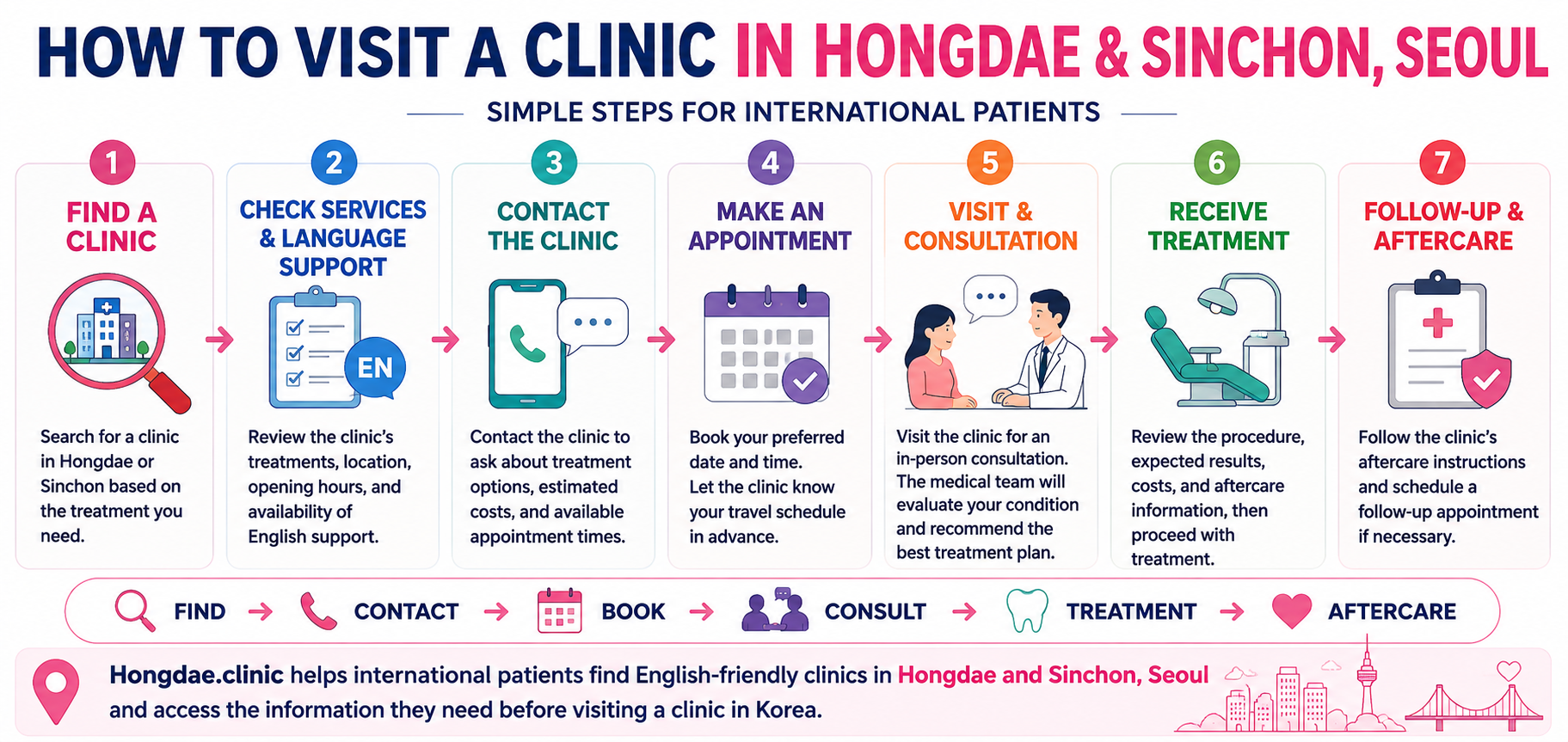
Consultation → symptom assessment → bladder evaluation → treatment selection → symptom monitoring → follow-up.
When Might You Need Treatment?
Consider a medical consultation if you experience:
- Urine leakage when coughing or sneezing
- Leakage during exercise or lifting
- Sudden strong urinary urgency
- Difficulty reaching the toilet in time
- Frequent urinary leakage
- Nighttime leakage
- Leakage after prostate treatment
- Symptoms affecting daily activities or confidence
Different patterns of leakage may require different treatment approaches, making accurate diagnosis important.
Common Types of Urinary Incontinence
Stress Urinary Incontinence
Urine leaks during activities that increase abdominal pressure, such as coughing, laughing, exercising, or lifting.
Urgency Urinary Incontinence
A sudden, difficult-to-control urge to urinate is followed by involuntary leakage.
Mixed Urinary Incontinence
Mixed incontinence includes both stress and urgency-related leakage. Treatment is often individualized according to the symptom causing the greatest difficulty.
Urinary Incontinence Evaluation
A typical appointment may include:
- Urology consultation
- Medical and urinary history
- Medication review
- Physical examination
- Urinalysis when appropriate
- Bladder diary
- Residual urine or additional testing when needed
Urodynamic testing may be recommended when the diagnosis is unclear or when the results could affect the choice of an invasive treatment, but it is not routinely required before first-line treatment for uncomplicated cases.
Pelvic Floor & Bladder Training
Pelvic Floor Exercises
Kegel exercises strengthen the muscles that help control urination and may reduce leakage in both women and men.
Bladder Training
Scheduled urination and gradually increasing the time between bathroom visits may help improve bladder control, particularly for urgency symptoms.
Lifestyle Changes
Treatment may also include:
- Maintaining a healthy weight
- Reducing excessive caffeine
- Managing constipation
- Adjusting fluid timing
- Quitting smoking
These conservative approaches are often among the first treatments considered.
Medication for Urinary Incontinence
Medication may be considered particularly for urgency urinary incontinence or overactive bladder symptoms.
Treatment options can include:
- Anticholinergic medications
- Beta-3 agonists
- Selected additional medications depending on the patient
Medication selection depends on symptoms, medical history, other medications, and possible side effects.
Botox & Nerve Stimulation
If urgency incontinence does not improve sufficiently with conservative treatment or medication, additional options may be considered.
Bladder Botox
Botulinum toxin A can be injected into the bladder muscle to reduce overactivity and urinary leakage. Potential risks include urinary retention and urinary tract infection.
Nerve Stimulation
Electrical nerve stimulation or sacral neuromodulation may be considered for selected patients with persistent urgency incontinence.
Surgical Treatment for Urinary Incontinence
Surgery may be considered when symptoms remain bothersome despite conservative treatment.
Options vary by the type and cause of incontinence and may include:
- Urethral bulking agents
- Sling procedures
- Artificial urinary sphincter
- Procedures addressing urinary obstruction
For women, sling surgery is commonly used for selected stress incontinence cases. In men, particularly after prostate treatment, options may include a male sling or artificial urinary sphincter.
Urinary Incontinence After Prostate Treatment
Some men develop stress urinary incontinence after prostate surgery or other prostate treatment.
Pelvic floor rehabilitation may improve leakage during recovery, while persistent cases may require additional procedures such as a male sling or artificial urinary sphincter.
Treatment should consider the severity of leakage, previous prostate treatment, and individual health condition.
When Should You Seek Medical Care?
Medical evaluation is recommended when urinary leakage is persistent, worsening, or interfering with daily life.
Seek prompt evaluation if incontinence occurs with:
- Blood in the urine
- Fever or significant urinary pain
- Difficulty emptying the bladder
- Complete inability to urinate
- New neurological symptoms
- Recurrent urinary infections
Acute urinary retention requires prompt bladder drainage and medical evaluation.
Urinary Incontinence Treatment for International Patients
When contacting a clinic, consider asking:
- Is English consultation available?
- What type of urinary incontinence do I have?
- Do I need urine or bladder testing?
- Are pelvic floor exercises recommended?
- Is medication appropriate for my symptoms?
- Are Botox or surgical treatments available?
- What follow-up is required?
Bring information about current medications, previous urinary treatments, prostate or pelvic surgery, childbirth history, and other bladder symptoms when relevant.
Choosing an Incontinence Clinic in Hongdae or Sinchon
Consider:
- Qualified urologist
- Detailed bladder and urinary assessment
- Urine testing when appropriate
- Pelvic floor and bladder-training options
- Medication and procedural treatment options
- Individualized treatment planning
- English communication
- Transparent treatment costs
Urinary incontinence treatment should be matched to the type of leakage and underlying cause, rather than applying the same treatment to every patient.
Hongdae & Sinchon Medical Care
Hongdae is convenient for patients around:
Hongik University · Yeonnam-dong · Hapjeong · Sangsu · Mapo
Sinchon is convenient for patients around:
Yonsei University · Ewha Womans University · Seodaemun · Mapo
Common searches include:
- Urinary Incontinence Treatment Hongdae
- Bladder Control Treatment Hongdae
- Urology Clinic Hongdae
- Urinary Incontinence Treatment Sinchon
- Bladder Clinic Sinchon
- English speaking urology clinic Sinchon
Frequently Asked Questions
What is urinary incontinence?
Urinary incontinence means involuntary or accidental leakage of urine and may occur for several different reasons.
Can foreigners get urinary incontinence treatment in Seoul?
Yes. International patients can contact urology clinics in Seoul about bladder evaluation, treatment options, and English-language support.
Can urinary incontinence be treated without surgery?
Yes. Depending on the type of incontinence, treatment may include pelvic floor exercises, bladder training, lifestyle changes, and medication.
Can men develop urinary incontinence?
Yes. Men may develop urinary leakage because of aging, prostate conditions, prostate treatment, bladder problems, or other medical conditions.
When is surgery needed?
Surgery may be considered when conservative treatments do not provide sufficient improvement or when the type and severity of incontinence make a procedural treatment more appropriate.